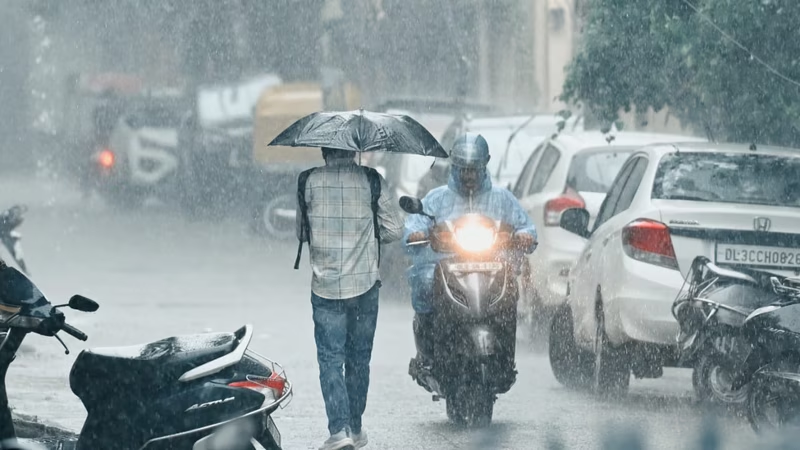
It was just past dawn on Friday, January 9th, 2026, when an unexpected visitor arrived in Delhi-NCR: rain. Not the gentle, cleansing kind we hope for during the smog-choked winter months, but a sharp, cold downpour that seemed to make the already biting air feel even more punishing. This surprise event has left residents wondering: what’s driving this intense Delhi-NCR cold wave, and why isn’t the rain clearing our hazardous skies?
Table of Contents
- Why the Delhi-NCR Cold Wave Is So Intense Right Now
- The Shocking Truth About Delhi’s Air Quality After the Rain
- IMD Forecast: What’s Next for Delhi-NCR Weather?
- Health Risks and How to Stay Safe During the Cold Wave
- Conclusion: Navigating an Unpredictable Winter
- Sources
Why the Delhi-NCR Cold Wave Is So Intense Right Now
The core of this severe cold spell lies in a significant drop in minimum temperatures, coupled with dense fog and now, these unseasonal showers. On the morning of January 9th, the chill factor plummeted as cold winds swept across the region alongside the rain . The India Meteorological Department (IMD) has confirmed that minimum temperatures are expected to hover around a frigid 5-6°C for the next several days, with conditions classified as a cold wave .
This isn’t just a case of a chilly winter; it’s a systemic weather pattern. A deep depression over the southwest Bay of Bengal has been influencing the weather systems over North India, leading to these spells of rain and persistent fog . The clear skies at night allow heat to escape rapidly, causing temperatures to nosedive, while the moisture from the rain and existing humidity creates the perfect recipe for dense, visibility-reducing fog—a hallmark of the Delhi-NCR cold wave .
The Shocking Truth About Delhi’s Air Quality After the Rain
For many, the sound of rain brings hope of cleaner air. Unfortunately, that hope was dashed this morning. Despite the precipitation, Delhi’s Air Quality Index (AQI) remains in the ‘Very Poor’ to ‘Severe’ category. Real-time data from multiple monitoring stations shows AQI levels stubbornly sitting between 300 and 400 [[9], [10], [11]]. Anand Vihar, one of the city’s most polluted areas, recorded an AQI of 385, solidly in the ‘very poor’ bracket .
So, why didn’t the rain help? The answer is in the type and intensity of the rainfall. The morning showers were too light and sporadic to effectively wash away the dense layer of pollutants trapped near the ground by a strong winter inversion layer. This meteorological lid prevents pollutants from dispersing vertically, meaning that even rain can’t provide a quick fix. For a significant improvement in air quality, a sustained period of heavier rain or a strong western disturbance is needed—neither of which is in the immediate forecast.
IMD Forecast: What’s Next for Delhi-NCR Weather?
According to the latest updates from the India Meteorological Department, residents should brace for more of the same. The IMD has issued a yellow alert for the region, forecasting that the current conditions will persist .
Key Predictions for the Coming Week:
- January 10-12: Minimum temperatures are likely to remain around 5°C, with maximums struggling to reach 20°C .
- Fog Conditions: Shallow to moderate fog is expected during the morning hours until at least January 13th, significantly impacting visibility and daily commutes [[19], [27]].
- Rain Chances: While the major system has passed, isolated pockets of light rain or drizzle cannot be ruled out, especially in the NCR regions like Noida and Gurugram .
For those planning their week, it’s wise to check real-time traffic and flight updates, as the dense fog is a major disruptor. You can find the official forecasts on the IMD website.
Health Risks and How to Stay Safe During the Cold Wave
The combination of extreme cold and toxic air creates a dangerous cocktail for public health. Vulnerable populations, including the elderly, young children, and those with pre-existing respiratory or cardiac conditions, are at the highest risk.
Practical Safety Tips:
- Limit Outdoor Exposure: Avoid going outside, especially during the early morning and late evening hours when both fog and pollution are at their peak.
- Layer Up: Dress in multiple layers of warm clothing to retain body heat. Don’t forget woolen caps, gloves, and socks.
- Indoor Air Quality: Keep windows closed and use air purifiers if available. For more on managing indoor pollution, see our guide on [INTERNAL_LINK:winter-air-purifier-guide].
- Stay Hydrated and Nourished: Drink warm fluids and eat a balanced diet to help your body maintain its core temperature.
Conclusion: Navigating an Unpredictable Winter
The unexpected rain on a cold January morning is a stark reminder of our changing climate and the complex interplay between weather and pollution in a megacity like Delhi. The Delhi-NCR cold wave is not just an inconvenience; it’s a serious environmental and public health challenge. Staying informed through credible sources like the IMD and taking proactive steps to protect yourself and your family is more important than ever. As we move through this harsh winter, vigilance and preparation are our best defenses.
Sources
- Times of India: Original Article
- India Meteorological Department (IMD): Official Forecasts and Alerts
- AQICN.org: Real-time Delhi Air Quality Data