Introduction: The 1am Knock That Shook a Neighborhood
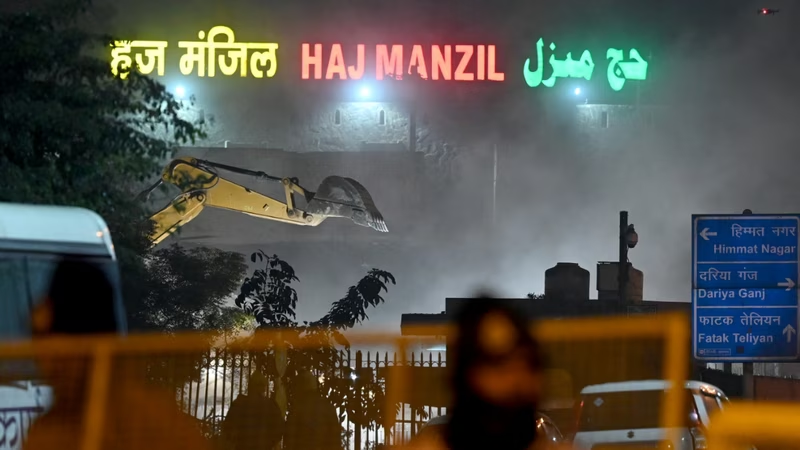
Just after 1 a.m., as most of Delhi slept, the roar of 32 excavators and the acrid sting of tear gas filled the narrow lanes near the historic Faiz-e-Ilahi Mosque in northwest Delhi. What the Municipal Corporation of Delhi (MCD) billed as a “routine enforcement” of a High Court order quickly spiraled into chaos—stone-pelting, injuries to police personnel, and mass detentions. Dubbed “The 1am Op” by locals, this Delhi mosque demolition drive has reignited national controversy over urban governance, religious sensitivity, and the ethics of midnight demolitions.
While authorities insist the action targeted only “illegal encroachments,” residents and activists accuse the civic body of using excessive force and targeting a vulnerable Muslim neighborhood under the cover of darkness. As FIRs are filed and CCTV footage reviewed, one question looms large: was this lawful enforcement—or state overreach?
Table of Contents
- What Happened: The 1am Operation Unfolds
- Delhi Mosque Demolition Drive: Legal Basis and High Court Order
- Security Response: Tear Gas, RAF, and Mass Detentions
- Community Reaction: Fear, Anger, and Allegations of Targeting
- Historical Context: Midnight Demolitions in Delhi
- Legal and Human Rights Concerns
- What Happens Next: Investigations and Political Fallout
- Conclusion: Balancing Law and Compassion
- Sources
/li>
What Happened: The 1am Operation Unfolds
Based on a detailed report from the Times of India, the MCD launched its operation in the early hours of January 5, 2026, near the Faiz-e-Ilahi Mosque in the Sultanpuri area. The goal: remove unauthorized commercial and residential structures built on public land, as directed by the Delhi High Court in a 2024 ruling.
However, the timing—1 a.m.—caught residents off guard. As heavy machinery moved in, a crowd gathered. Tensions escalated rapidly. According to police, “miscreants” began hurling stones, injuring at least three personnel. In response, Rapid Action Force (RAF) units fired tear gas shells and made multiple detentions.
By dawn, over 200 illegal structures—shops, kiosks, and even small homes—had been razed. The MCD claimed the action was “peaceful until provoked,” but videos circulating on social media show panicked families and clouds of smoke blanketing the area.
Delhi Mosque Demolition Drive: Legal Basis and High Court Order
The MCD’s legal justification stems from a 2024 Delhi High Court order that mandated the removal of all encroachments on public land, particularly around religious sites and green zones. The court noted that unchecked construction had blocked drainage, fire exits, and emergency access.
“The law applies equally to all,” stated an MCD official. “This wasn’t about religion—it was about reclaiming public space.”
However, critics question why similar actions aren’t taken in upscale neighborhoods like Vasant Kunj or Greater Kailash, where illegal basements and extensions are common. The selective enforcement narrative has fueled accusations of bias.
Security Response: Tear Gas, RAF, and Mass Detentions
The scale of the security deployment was extraordinary:
- 32 JCBs and excavators for structural demolition
- Over 200 police personnel from local and district units
- Rapid Action Force (RAF) contingents equipped with riot gear
- Tear gas and water cannons used to disperse crowds
An FIR has been registered under charges of rioting, unlawful assembly, and assault on public servants. Police are reviewing CCTV and mobile footage to identify stone-throwers. As of January 7, 12 individuals remain in custody.
Community Reaction: Fear, Anger, and Allegations of Targeting
Local residents, many of whom are daily wage earners, say they lost not just shops but livelihoods overnight. “We’ve been here for 15 years,” said Rahim Khan, a tea stall owner. “No one ever told us this was illegal. Now we have nothing.”
Community leaders allege the drive disproportionately targeted a Muslim-majority area. “Why 1 a.m.? Why not give notice? Why use tear gas on families?” asked activist Farha Naaz. “This feels like punishment, not policy.”
Religious organizations have called the timing “deliberately provocative,” noting that demolitions near mosques often spark communal tension—a concern echoed by civil society groups.
Historical Context: Midnight Demolitions in Delhi
This isn’t the first “1am operation” in Delhi:
- 2022: Jahangirpuri demolitions after communal clashes drew national outrage and a Supreme Court stay.
- 2023: Similar pre-dawn drives in Seelampur and Mustafabad targeted “illegal” structures with heavy police presence.
- 2024: MCD revised its demolition policy to include “advance notice”—yet exceptions like this one persist.
Critics argue these tactics avoid daytime scrutiny and media coverage, making accountability harder.
Legal and Human Rights Concerns
Human rights organizations, including Amnesty India, have raised alarms. “Even if structures are illegal, due process must be followed,” said a spokesperson. “Demolishing homes without rehabilitation violates basic dignity.”
Legal experts note that the Supreme Court has previously ruled that demolitions cannot be used as “punishment” and must include rehabilitation plans for affected families—something absent in this operation.
For more on urban displacement in India, see our analysis on [INTERNAL_LINK:impact-of-demolition-drives-on-urban-poor].
What Happens Next: Investigations and Political Fallout
The AAP-led Delhi government has demanded a probe, calling the action “high-handed.” The BJP, which controls the MCD, defends it as “lawful and necessary.” With municipal elections approaching, the issue is becoming deeply politicized.
Meanwhile, affected residents are planning a legal challenge, arguing lack of proper notice and violation of rehabilitation norms. The Delhi High Court may soon be asked to review whether this enforcement crossed the line from compliance to coercion.
Conclusion: Balancing Law and Compassion
The Delhi mosque demolition drive exposes a recurring fault line in urban India: how to enforce laws without erasing lives. While illegal encroachments strain infrastructure, solutions must balance legality with humanity. A 1 a.m. raid with tear gas may clear land—but it also clears trust. As Delhi rebuilds its streets, it must also rebuild its social contract—one that protects both public space and people’s dignity.