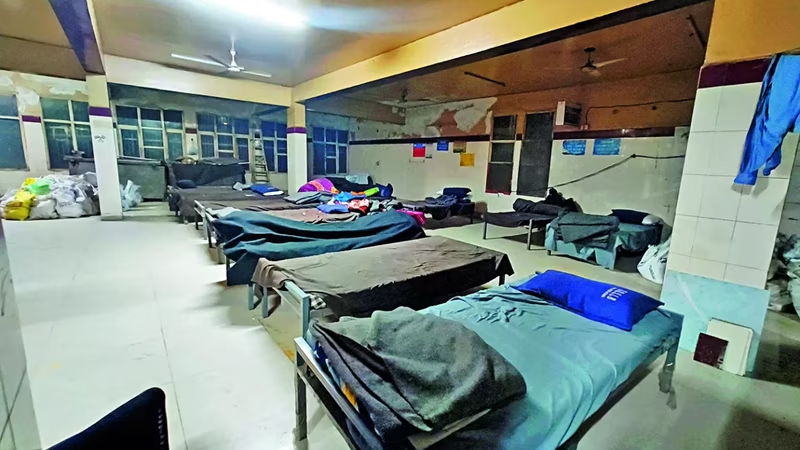
On paper, Delhi is prepared. Government files proudly state that the city offers **nearly 20,000 shelter beds** for its homeless population—a number that sounds robust, even compassionate. But step outside the bureaucracy and into the cold January night, and a far grimmer truth emerges. Shelters are locked, overcrowded, or missing essential supplies like mattresses and blankets. In some cases, the very shelters listed in official databases don’t physically exist. This chasm between data and reality isn’t just bureaucratic sloppiness—it’s a life-threatening failure that leaves thousands of vulnerable people stranded on the streets every single night .
The issue isn’t new. For over a decade, courts have mandated adequate winter and monsoon shelter for Delhi’s estimated 150,000+ homeless residents. Yet year after year, the same pattern repeats: inflated numbers, underfunded facilities, and a system that prioritizes paperwork over people. As temperatures dip below 10°C, the stakes couldn’t be higher. The Delhi homeless shelter beds crisis is not one of scarcity—it’s one of accountability.
Table of Contents
- The Official Claim vs. Ground Reality
- Why Shelters Fail: Mattresses Missing and Doors Locked
- The History of Delhi’s Shelter Policy: A Cycle of Neglect
- Who Is Responsible? Agencies and Accountability Gaps
- What Needs to Change: Policy Reforms and Transparency
- Conclusion: Numbers Don’t Lie—but They Can Hide Truths
- Sources
The Official Claim vs. Ground Reality
According to the Delhi Urban Shelter Improvement Board (DUSIB), the city operates 437 night shelters with a total capacity of **19,872 beds**. But independent audits by NGOs and journalists tell a different story:
- At least **30% of listed shelters were found non-functional** during surprise checks.
- Many “operational” shelters run at **less than 50% of claimed capacity** due to broken infrastructure or staff shortages.
- In North and East Delhi, some shelters listed as having 100 beds had fewer than 20 functional cots—and no mattresses.
This means the real available capacity may be closer to **10,000–12,000 beds**, far below what’s needed for a homeless population that swells during winter months .
Why Shelters Fail: Mattresses Missing and Doors Locked
Even when shelters exist, they often fail to provide basic dignity. Field reports from January 2026 revealed:
- No bedding: Multiple shelters had bare metal cots—no sheets, no pillows, no blankets.
- Late openings: Some shelters only opened after 10 PM, forcing people to wait in the cold.
- Discrimination: Women, transgender individuals, and migrants reported being turned away.
- Poor hygiene: Shared toilets without water, overflowing trash, and rodent infestations were common.
For many, sleeping on a sidewalk feels safer and cleaner than entering these substandard facilities. This isn’t shelter—it’s institutional neglect disguised as welfare.
The History of Delhi’s Shelter Policy: A Cycle of Neglect
Delhi’s shelter system was formalized after the landmark 2010 Supreme Court ruling in *Ajay Maken vs. Union of India*, which declared the right to shelter a fundamental part of the right to life under Article 21. Since then, multiple action plans have been launched—yet implementation remains abysmal.
Each winter, the same headlines appear: “Shelters full,” “Homeless die in cold,” “Court slams govt.” And each summer, the issue fades from public view—until the next crisis. This cyclical amnesia ensures that temporary fixes replace permanent solutions, and political blame-shifting takes precedence over systemic reform.
Who Is Responsible? Agencies and Accountability Gaps
Responsibility is fragmented across multiple bodies:
- DUSIB: The nodal agency, but chronically underfunded and understaffed.
- Municipal Corporations: Handle maintenance but often lack coordination.
- Delhi Police: Tasked with directing homeless individuals to shelters—but often unaware of real-time availability.
Worse, there’s no public dashboard showing real-time shelter occupancy or conditions. Citizens can’t verify claims, and oversight bodies rely on self-reported data. This opacity allows the system to hide behind inflated numbers while people suffer.
What Needs to Change: Policy Reforms and Transparency
Fixing this crisis requires more than goodwill—it demands structural change:
- Real-time monitoring: Mandate GPS-enabled occupancy trackers in all shelters, with public dashboards.
- Minimum standards law: Legally enforce bedding, sanitation, and opening hours.
- Community involvement: Partner with local NGOs for daily audits and feedback loops.
- Permanent housing focus: Shift from emergency shelters to transitional and permanent supportive housing.
As [INTERNAL_LINK:urban_housing_rights_india] experts argue, shelter is not charity—it’s a constitutional obligation.
Conclusion: Numbers Don’t Lie—but They Can Hide Truths
The fiction of **20,000 Delhi homeless shelter beds** is a convenient myth that lets authorities off the hook. But for the man shivering under a bridge in Seelampur or the woman clutching her child near a metro station, the truth is visceral and urgent. Until the government stops counting beds on paper and starts ensuring warmth, safety, and dignity on the ground, Delhi’s homeless will remain invisible in plain sight—abandoned by a system that claims to protect them.
Sources
- The Times of India: How Delhi’s failure to house homeless hides behind numbers; 20k beds in files
- Supreme Court of India: Ajay Maken vs. Union of India (2010)
- Centre for Equity Studies: Annual Reports on Urban Homelessness