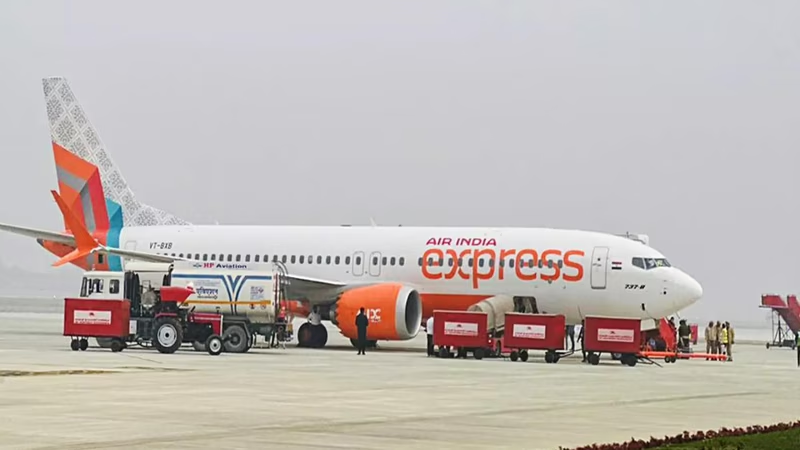
Winter in North India is beautiful—until it grounds your flight. Thick, impenetrable fog has once again turned Delhi’s Indira Gandhi International (IGI) Airport into a scene of travel chaos, with a staggering **118 flights cancelled** and 16 more diverted as visibility plummeted below operational limits. Passengers stranded for hours are facing cold terminals, uncertain itineraries, and mounting frustration. In response, the Civil Aviation Ministry has stepped in with a firm directive: airlines must uphold passenger rights without delay. If you’re flying to, from, or through Delhi this week, this isn’t just a weather update—it’s a critical travel alert about **Delhi flights cancelled due to fog** and what you’re legally owed.
Table of Contents
- The Fog Crisis: Impact on Delhi Airport Operations
- Delhi Flights Cancelled Due to Fog: What Passengers Are Owed
- Civil Aviation Ministry’s Emergency Advisory Explained
- How to Check Your Flight Status and Claim Compensation
- Why Delhi Is So Vulnerable to Winter Fog
- Conclusion: Stay Informed and Know Your Rights
- Sources
The Fog Crisis: Impact on Delhi Airport Operations
Delhi’s winter fog isn’t just haze—it’s a meteorological phenomenon that can reduce visibility to under 50 meters, well below the 125-meter minimum required for safe aircraft landings and takeoffs under Indian aviation rules . On December 29, 2025, this seasonal challenge reached crisis levels, disrupting more than 130 flight movements at India’s busiest airport . Domestic routes to and from cities like Mumbai, Bengaluru, Kolkata, and Srinagar were hit hardest, with major carriers including IndiGo, Air India, and Vistara forced to cancel services hours in advance .
Terminal 3, the primary hub for international and premium domestic traffic, quickly filled with anxious travelers, many of whom had no accommodation or contingency plans. Social media was flooded with photos of overcrowded lounges and long queues at airline desks—scenes all too familiar to frequent flyers during North India’s fog season.
Delhi Flights Cancelled Due to Fog: What Passengers Are Owed
While weather is an “extraordinary circumstance” under global aviation norms, Indian regulations—especially post-2023—clearly define passenger entitlements even during fog-related disruptions. According to the Directorate General of Civil Aviation (DGCA), airlines must provide:
- Free meals and refreshments during waiting periods (every 2 hours for the first 4 hours).
- Hotel accommodation if the delay exceeds 4 hours between 10 PM and 6 AM.
- Full refund or alternative booking without any fare difference.
- Baggage assistance and priority rebooking for connecting passengers.
- Real-time updates via SMS, email, or airport display systems.
Crucially, these services cannot be denied on the grounds of “weather conditions”—a common misconception .
Civil Aviation Ministry’s Emergency Advisory Explained
In a swift move, the Ministry issued a stern advisory urging all scheduled airlines to “strictly follow passenger facilitation norms” during the fog crisis . The directive emphasizes proactive communication and immediate service delivery. Airlines failing to comply face penalties under the DGCA’s Airline Passenger Charter, including potential fines and mandatory compensation payouts .
This advisory isn’t just bureaucratic language—it’s a signal that the government is monitoring the situation closely. With air travel demand at record highs, passenger trust is now a national aviation priority.
How to Check Your Flight Status and Claim Compensation
If you’re affected, here’s your action plan:
- Verify your flight status via the airline’s app, website, or IGI Airport’s official portal (newdelhiairport.in).
- Approach the airline counter immediately for rebooking or refund options—don’t wait in general queues.
- Request written confirmation of cancellation and entitlements (keep receipts for meals/hotels).
- File a grievance via the AirSewa portal (aiseva.gov.in) if services are denied.
- Allow extra travel time—even if your flight is “on time,” reach the airport at least 4 hours early during fog season.
Why Delhi Is So Vulnerable to Winter Fog
Delhi’s fog isn’t just cold air—it’s a toxic cocktail of low temperatures, high humidity, and air pollution. During December and January, northwesterly winds from the Himalayas trap moisture over the Indo-Gangetic Plain. Combine that with high levels of particulate matter (PM2.5) from crop stubble burning and urban emissions, and you get “radiation fog” that’s dense, persistent, and hazardous .
Unlike European or North American airports equipped with advanced CAT III Instrument Landing Systems (ILS) that allow landings in near-zero visibility, IGI Airport’s infrastructure is still being upgraded. Most Indian carriers also lack the full certification for such low-visibility operations, making cancellations the only safe option .
Conclusion: Stay Informed and Know Your Rights
The disruption caused by **Delhi flights cancelled due to fog** is a harsh but predictable reality of winter travel in North India. While nature sets the limits, your rights as a passenger are non-negotiable. The Civil Aviation Ministry’s strong stance is a welcome shift toward accountability. By staying informed, acting quickly, and demanding what you’re owed, you can turn a stressful delay into a manageable inconvenience. In the fog of uncertainty, knowledge is your clearest runway.
Sources
- Times of India: Over 100 flights hit as dense fog blankets Delhi
- Indira Gandhi International Airport: newdelhiairport.in
- AirSewa Portal: aiseva.gov.in
- DGCA Passenger Charter Guidelines: ,
- Meteorological & Aviation Reports: , , , , ,