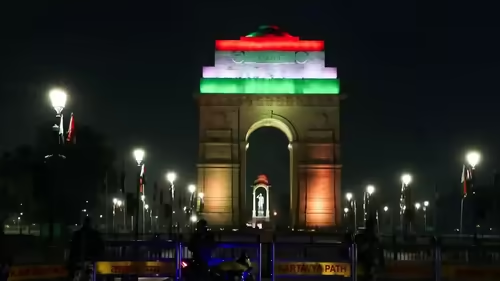
While the nation celebrated its 77th Republic Day with pride and pageantry, Delhi residents were bundled up against an unseasonably sharp bite in the air. The capital city shivered through its coldest Republic Day since 2021, with the mercury dipping to a frigid 4.2°C at the Safdarjung observatory—the city’s official weather station—and an even more biting 3.6°C in some outlying areas [[1]]. This sudden plunge into winter’s grip has not only disrupted morning routines but has also triggered official cold wave conditions across the National Capital Region (NCR). And if that wasn’t enough, the India Meteorological Department (IMD) has now issued a yellow alert, forecasting light to moderate rain and thunderstorms for later today—a dramatic shift from the clear skies that amplified the overnight chill.
Table of Contents
- Why Was Delhi’s Republic Day So Cold?
- Delhi Coldest Republic Day: By the Numbers
- What Is a Cold Wave and Why Does It Matter?
- Today’s Weather Forecast: Yellow Alert for Rain
- How to Stay Safe During Delhi’s Cold Wave and Rain
- Historical Context: Delhi’s Coldest Republic Days
- Conclusion: Prepare for a Wet and Chilly Day
- Sources
Why Was Delhi’s Republic Day So Cold?
The perfect storm of meteorological conditions created this deep freeze. After days of relatively stable weather, a fresh western disturbance moved in, bringing with it strong northwesterly winds from the snow-laden Himalayas [[1]]. These dry, cold winds swept across the plains, rapidly dropping temperatures. Compounding the effect was the clear sky throughout the night. Without any cloud cover to act as a natural insulator, the earth’s heat radiated back into space, causing a significant drop in the minimum temperature—a phenomenon known as radiational cooling [[5]].
Delhi Coldest Republic Day: By the Numbers
The data from the IMD paints a stark picture of just how cold it got:
- Safdarjung Observatory: Recorded a minimum of 4.2°C, which is nearly 5 degrees below the season’s normal for this time of year [[1]].
- Ridge: Dropped to 3.8°C.
- Najafgarh: Experienced the city’s lowest reading at a sharp 3.6°C [[1]].
These figures officially make January 26, 2026, the coldest Republic Day in the last five years, a notable event for a city that often sees its coldest days in early January.
What Is a Cold Wave and Why Does It Matter?
The IMD doesn’t issue a ‘cold wave’ declaration lightly. For plains like Delhi, a cold wave is declared when the minimum temperature is 10°C or below and is at least 4.5°C below normal for two consecutive days [[8]]. The current conditions have met this threshold, triggering health advisories. Prolonged exposure to such cold can be dangerous, especially for the elderly, young children, and those with pre-existing respiratory or cardiovascular conditions. It’s a serious public health concern that goes beyond mere discomfort.
Today’s Weather Forecast: Yellow Alert for Rain
In a classic case of Delhi’s fickle winter weather, the deep freeze is set to be interrupted by precipitation. The IMD has issued a yellow alert for the city, predicting light to moderate rain accompanied by thunderstorms and gusty winds [[1]]. This rain is a direct result of the same western disturbance that brought the cold snap. While the rain will provide some relief from the dry air, it will also make the day feel even colder due to the wind chill factor. Residents are advised to carry umbrellas and wear layers to stay warm and dry.
How to Stay Safe During Delhi’s Cold Wave and Rain
Navigating this extreme weather requires some smart planning. Here are a few practical tips:
- Dress in Layers: Wear multiple thin layers of clothing instead of one thick layer. This traps warm air more effectively.
- Protect Extremities: Don’t forget gloves, a scarf, and a hat. A significant amount of body heat is lost through the head and hands.
- Stay Hydrated and Eat Warm Food: Your body needs fuel to generate heat. Hot soups and beverages can help maintain your core temperature.
- Check on Vulnerable Neighbors: Elderly neighbors or those living alone may need assistance during such weather.
- Be Cautious on Wet Roads: The expected rain will make roads slippery, so drive slowly and allow extra time for your commute.
For more detailed safety guidelines during extreme weather, you can refer to the official resources on the [National Disaster Management Authority (NDMA) website][[10]].
Historical Context: Delhi’s Coldest Republic Days
While this year’s chill is significant, it doesn’t break any all-time records. The coldest Republic Day on record in Delhi was in 1982, when the temperature plunged to a staggering 1.4°C [[12]]. However, the trend of increasingly erratic winter weather—swinging between severe cold spells and unseasonal rain—is a growing concern for climatologists, who link it to broader climate change patterns affecting the Indian subcontinent [[15]].
Conclusion: Prepare for a Wet and Chilly Day
Delhi’s coldest Republic Day in recent memory is a powerful reminder of nature’s unpredictability. From the sharp, dry cold of the morning to the wet, blustery conditions expected later, the day demands vigilance and preparation. Keep an eye on official IMD updates, dress appropriately, and take care of yourself and your community. For more on how climate change is impacting North India’s winters, see our in-depth analysis on [INTERNAL_LINK:climate-change-impact-on-indian-winters].
Sources
- Times of India: Coldest Republic Day in 5 years, rain likely today
- India Meteorological Department (IMD): Official Website
- Hindustan Times: Delhi records coldest Republic Day since 2021, rain likely today
- Wikipedia: Cold wave in India
- National Disaster Management Authority (NDMA): Cold Wave Guidelines
- The Weather Channel India: Historical Weather Data for Delhi