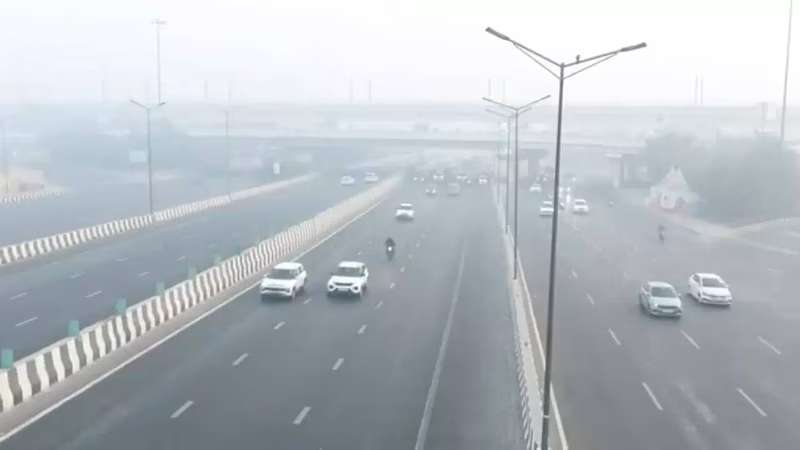
Imagine stepping outside and feeling your breath turn to ice—while simultaneously choking on air thick with pollutants. That’s the grim reality for millions in India’s capital this week. On Tuesday, January 13, 2026, Delhi woke up to a biting Delhi cold wave, with the mercury nosediving to just 3°C. But the chill wasn’t the only concern. Overhead, a blanket of dense fog refused to lift, and beneath it, the city’s Air Quality Index (AQI) remained stubbornly in the ‘very poor’ zone—creating a hazardous cocktail that’s more than just uncomfortable; it’s life-threatening.
Table of Contents
- Delhi Cold Wave Meets Toxic Air
- What Is Causing the Delhi Cold Wave?
- AQI in Delhi: Why Is the Air Still So Bad?
- Health Risks of the Cold-and-Pollution Combo
- Who Is Most at Risk?
- Practical Safety Tips for Residents
- Government Advisories and School Closures
- Conclusion: Staying Safe in Delhi’s Dual Crisis
- Sources
Delhi Cold Wave Meets Toxic Air
The Indian Meteorological Department (IMD) confirmed that minimum temperatures across the capital dropped to 3°C—a level that qualifies as a “cold day” under official criteria . In several outer areas like Narela and Rohini, fog was so dense that visibility fell below 50 meters, disrupting rail, road, and air traffic .
Meanwhile, the Central Pollution Control Board (CPCB) reported that Delhi’s overall AQI stood at 342—firmly in the ‘very poor’ category . Localities such as Anand Vihar and Wazirpur recorded AQI levels exceeding 380, where even healthy individuals are advised to avoid outdoor exertion . This convergence of extreme cold and high pollution is not just rare—it’s exceptionally dangerous.
What Is Causing the Delhi Cold Wave?
This intense Delhi cold wave is primarily driven by a combination of factors:
- Western Disturbances: Moisture-laden systems from the Mediterranean have brought cloud cover and moisture, trapping cold air near the surface.
- Radiational Cooling: Clear skies at night allow heat to escape rapidly, but when coupled with high humidity from fog, the cold lingers longer.
- Stagnant Winds: Wind speeds have dropped to less than 5 km/h, preventing the dispersion of both cold air and pollutants.
According to IMD forecasts, this pattern is expected to persist until at least January 16, with no immediate relief in sight .
AQI in Delhi: Why Is the Air Still So Bad?
While winter always worsens Delhi’s air quality, the persistence of ‘very poor’ AQI in mid-January is alarming. Typically, post-Diwali pollution peaks in November and begins declining by December. Yet here we are in mid-January, still gasping.
Experts point to several ongoing contributors:
- Local Emissions: Vehicular exhaust, industrial activity, and construction dust continue unabated.
- Stubble Burning Residue: Though the main season has passed, residual particulate matter remains trapped in the lower atmosphere.
- Meteorological Trap: The same fog and low wind speeds that cause the cold wave also create a “pollution dome,” preventing vertical dispersion of pollutants.
For real-time air quality data, residents can refer to the official CPCB AQI Portal, a trusted source for accurate pollution readings .
Health Risks of the Cold-and-Pollution Combo
When cold air meets high PM2.5 levels, the body suffers a double assault:
- Respiratory Stress: Cold, dry air irritates airways, while fine particles (PM2.5) penetrate deep into the lungs, triggering asthma, bronchitis, or COPD flare-ups.
- Cardiovascular Strain: The heart works harder in cold weather. Add pollution, and the risk of heart attacks or strokes increases significantly—especially in those over 50.
- Weakened Immunity: Prolonged exposure to polluted, cold air suppresses immune function, making individuals more susceptible to infections like flu or pneumonia.
Who Is Most at Risk?
Certain groups need extra protection during this dual crisis:
- Children under 5
- Adults over 60
- People with pre-existing respiratory or cardiac conditions
- Pregnant women
- Outdoor workers (delivery personnel, traffic police, construction laborers)
If you fall into any of these categories—or care for someone who does—it’s crucial to limit outdoor exposure between 6 AM and 10 AM, when both fog density and pollution levels peak.
Practical Safety Tips for Residents
You don’t have to wait for government orders to protect yourself. Try these evidence-based strategies:
- Use N95 masks if you must go outside—cloth masks won’t filter PM2.5.
- Keep windows closed during early morning hours; use air purifiers indoors.
- Stay hydrated and consume warm fluids like herbal teas or soups to support mucosal immunity.
- Avoid morning walks until after 11 AM when fog lifts and AQI often improves slightly.
- Monitor symptoms: Shortness of breath, chest tightness, or persistent cough warrant immediate medical attention.
[INTERNAL_LINK:winter-health-tips-delhi] offers more seasonal wellness advice tailored to urban Indian climates.
Government Advisories and School Closures
In response to the deteriorating conditions, the Commission for Air Quality Management (CAQM) has urged schools to shift to online classes until further notice. Additionally, the Graded Response Action Plan (GRAP) Stage III measures remain active, including bans on diesel generator sets (except for essential services) and intensified road sweeping .
However, enforcement remains inconsistent—a recurring challenge that undermines public trust in systemic solutions.
Conclusion: Staying Safe in Delhi’s Dual Crisis
The current Delhi cold wave isn’t just about bundling up—it’s about surviving a silent, invisible threat in the air we breathe. While authorities work on long-term fixes like emission controls and green buffers, individual vigilance is your best defense. Stay informed, stay indoors when possible, and prioritize health over routine. Because in a city where winter now means fighting for clean air and warmth at once, awareness isn’t optional—it’s essential.
Sources
- Times of India: Delhi freezes as cold wave intensifies
- Central Pollution Control Board (CPCB): Real-time AQI Dashboard
- India Meteorological Department (IMD): Weather Forecasts and Alerts