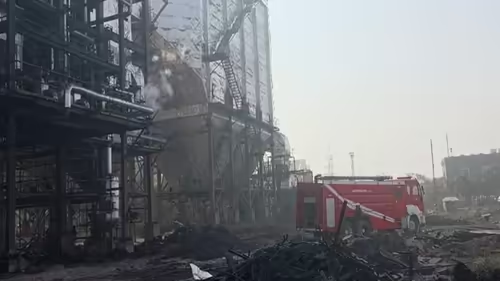
A deafening roar shattered the early morning calm in Balodabazar, Chhattisgarh. In an instant, a routine operation at the Real Ispat & Power Ltd plant turned into a nightmare. A catastrophic **coal kiln explosion** tore through the facility, claiming the lives of six workers and leaving four others with critical injuries . The scene was one of chaos and devastation, with dangerous debris scattered across the site and fears mounting that more lives could be lost .
This isn’t just another industrial accident. It’s a grim echo of a recurring tragedy in a state that has become synonymous with deadly workplace disasters. The **Chhattisgarh steel plant blast** is a stark, urgent reminder of a systemic failure—a culture where production often trumps the most basic human right: the right to return home safely from work.
Table of Contents
- What Happened at the Real Ispat’s Plant?
- The Human Toll and Rescue Operation
- Chhattisgarh Steel Plant Blast: A Pattern of Neglect
- Why Do Coal Kiln Explosions Happen?
- The State of Industrial Safety in India
- Conclusion: Breaking the Cycle of Tragedy
- Sources
What Happened at the Real Ispat’s Plant?
The incident occurred on Thursday, January 22, 2026, at the Real Ispat Sponge Iron Factory in the Balodabazar-Bhatapara district . According to initial reports, the explosion happened during a standard operational procedure, suggesting a potential failure in either equipment maintenance or safety protocols . The blast was so powerful it caused significant structural damage, turning a place of work into a scene of unimaginable horror .
The Human Toll and Rescue Operation
The immediate aftermath was a race against time. Emergency services launched a massive rescue operation, scouring the wreckage for any survivors who might be trapped under the rubble . The confirmed death toll stands at six, with four other workers suffering serious injuries and receiving treatment in nearby hospitals . The families of these workers are now left to grapple with an unbearable loss, all stemming from a preventable disaster.
Chhattisgarh Steel Plant Blast: A Pattern of Neglect
To view this as a one-off event would be a dangerous mistake. Chhattisgarh has a notorious and tragic history of industrial accidents. In 2009, a chimney collapse at a Korba power plant killed over 40 workers . The Bhilai Steel Plant, a state-owned giant, has been a repeated site of fatal incidents, including a gas leak in November 2024 and a blast in 2018 that killed 14 [[19], [27]].
Alarmingly, data from the state government itself reveals a chilling trend: 124 workers were killed in 171 industrial accidents in just 13 months leading up to January 2025 . This isn’t bad luck; it’s a clear indicator of a deeply entrenched problem with enforcement of safety standards and a prioritization of output over human life.
Why Do Coal Kiln Explosions Happen?
Coal kilns, especially in sponge iron plants, are inherently high-risk environments. They operate at extreme temperatures and handle large volumes of coal, which can produce explosive gases like methane and carbon monoxide . An explosion can be triggered by several factors:
- Poor Ventilation: Inadequate airflow can allow flammable gases to accumulate to dangerous levels.
- Equipment Failure: Malfunctioning sensors, outdated machinery, or lack of proper maintenance can create sparks or hot spots.
- Human Error: Deviations from strict safety protocols during operations or maintenance.
- Lack of Training: Workers may not be adequately trained to handle emergencies or recognize early warning signs .
While a formal investigation is underway to determine the exact cause of this specific blast, the known hazards make robust safety management non-negotiable .
The State of Industrial Safety in India
The Indian steel industry operates under a framework of safety guidelines designed to mitigate these very risks . However, the persistent recurrence of fatal accidents points to a massive gap between policy and practice. The issue often lies in weak regulatory oversight, insufficient inspections, and a lack of accountability for companies that cut corners on safety to save costs .
For a deeper understanding of global industrial safety benchmarks, the International Labour Organization (ILO) provides comprehensive resources on occupational safety and health in the metal sector. The contrast between these international standards and the reality on the ground in many Indian plants is stark.
Conclusion: Breaking the Cycle of Tragedy
The **Chhattisgarh steel plant blast** is more than a news story; it’s a national wake-up call. The loss of six lives is a direct consequence of a system that has failed its most vulnerable participants—the workers. Until there is a fundamental shift towards a genuine safety-first culture, backed by stringent enforcement and real consequences for negligence, these tragedies will continue to stain India’s industrial landscape. The families of the victims deserve justice, and every worker deserves to know their job won’t cost them their life.
For more on workplace safety in heavy industries, see our related coverage on [INTERNAL_LINK:industrial-safety-reforms].
Sources
- Times of India: Blast at Chhattisgarh steel plant: 6 killed, 4 injured after coal kiln explodes
- Web Search Results: Details on the incident, location, and casualties [[6], [7], [12], [14]]
- Web Search Results: Historical context of industrial accidents in Chhattisgarh [[18], [19], [20], [22], [27]]
- Web Search Results: Technical causes of coal kiln explosions and safety guidelines [[8], [9], [10], [11], [15]]