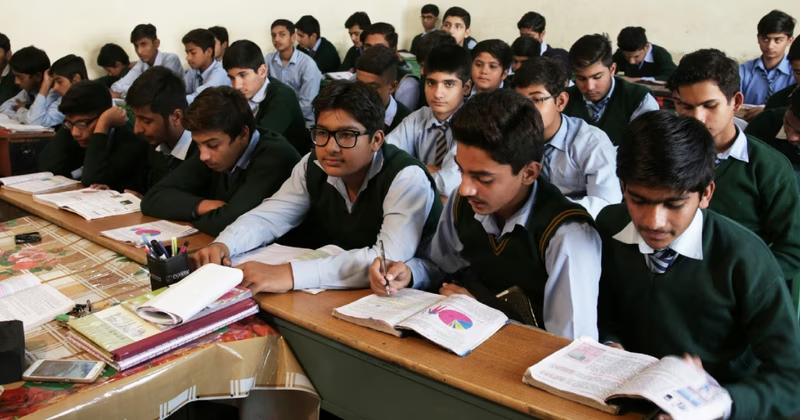
The pressure is real. As millions of Class 10 and 12 students across India gear up for their CBSE board exams, anxiety, sleepless nights, and performance stress have become almost routine. Recognizing this growing mental health crisis, the Central Board of Secondary Education (CBSE) has launched a comprehensive, **free psycho-social counselling initiative**—available until June 1, 2026.
But here’s the question no one’s asking: in a system that still glorifies marks over well-being, will students actually pick up the phone and ask for help? And more importantly—can this service truly change the conversation around academic stress in India?
Table of Contents
- What Is CBSE Counselling? A Full Breakdown
- How to Access CBSE Counselling: Step-by-Step Guide
- Why This Timing Matters: Peak Exam Season
- The Experts Behind the Service—Including Global Voices
- Free Digital Resources for Stress Management
- Challenges: Stigma, Awareness, and Accessibility Gaps
- The Critical Role of Parents and Teachers
- Conclusion: A Step Forward, But Not the Final Answer
- Sources
What Is CBSE Counselling? A Full Breakdown
The CBSE’s new initiative isn’t just a hotline—it’s a multi-layered support system designed to meet students where they are, emotionally and logistically. Central to the program is the CBSE counselling service, which includes:
- A 24/7 toll-free IVRS (Interactive Voice Response System) for anonymous queries on stress, time management, and exam prep.
- Live tele-counselling on weekdays (Monday–Saturday) with 73 trained professionals, including psychologists and counsellors from India and abroad.
- Digital toolkits on the official CBSE website featuring videos, worksheets, and mindfulness exercises.
The service, running until June 1, 2026, specifically targets students appearing for the 2026 board exams—but is open to all CBSE-affiliated learners in distress.
How to Access CBSE Counselling: Step-by-Step Guide
Accessing help is intentionally simple:
- Dial the toll-free number: 1800-11-4001 (available 24/7).
- For live counselling, call between 9:30 AM and 5:30 PM (IST) on weekdays.
- Visit the official CBSE portal for downloadable mental wellness resources.
- Students outside India can access international counselling via designated email support.
All conversations are confidential, and no caller ID is stored—ensuring privacy for students who fear judgment from family or teachers.
Why This Timing Matters: Peak Exam Season
February to April is the most intense period for Indian board exam takers. Sleep deprivation, panic attacks, and even tragic student suicides spike during these months. According to the National Crime Records Bureau (NCRB), over 13,000 students died by suicide in 2024—many linked to academic pressure .
By launching this initiative just as pre-boards conclude and final revisions begin, CBSE is intervening at the **most vulnerable point** in the academic calendar. This isn’t just support—it’s prevention.
The Experts Behind the Service—Including Global Voices
The counselling panel isn’t just large—it’s diverse. The 73 professionals include:
- Clinical psychologists with school mental health experience
- Counsellors certified by the Rehabilitation Council of India (RCI)
- International experts from the UK, Australia, and Singapore specializing in adolescent stress
This global perspective ensures advice isn’t limited to rote learning culture but incorporates evidence-based techniques like CBT (Cognitive Behavioral Therapy) and mindfulness—proven to reduce exam-related anxiety.
Free Digital Resources for Stress Management
Beyond phone calls, CBSE has published a suite of digital tools:
- “Mindful Minutes” video series on breathing and grounding techniques
- PDF guides on “7-Day Exam Prep Without Burnout”
- Interactive self-assessment quizzes to identify stress levels
- Parent handbooks on supporting—not pressuring—their child
These are available under the “Student Support Material” section on [INTERNAL_LINK:cbse-mental-wellness-resources].
Challenges: Stigma, Awareness, and Accessibility Gaps
Despite its strengths, the program faces real-world hurdles:
- Stigma: Many students fear being labeled “weak” for seeking help.
- Awareness: Rural schools often don’t receive timely updates about such initiatives.
- Language barriers: While services are offered in Hindi and English, regional language support is limited.
- Parental resistance: Some families dismiss mental health as “distraction from studies.”
For the CBSE counselling service to succeed, schools must actively promote it—not just post a notice on a bulletin board.
The Critical Role of Parents and Teachers
Students won’t call a hotline if their ecosystem shames vulnerability. Teachers should:
- Dedicate 5 minutes in class to discuss stress management
- Share the CBSE toll-free number during parent-teacher meetings
- Avoid ranking students publicly based on mock test scores
Parents, meanwhile, can practice “supportive silence”—listening without immediately offering solutions or comparisons to other children.
Conclusion: A Step Forward, But Not the Final Answer
CBS’s move to offer free, professional CBSE counselling is a landmark step in India’s education system—one that finally acknowledges that mental wellness is as crucial as academic performance. Yet, real change requires more than a hotline. It demands a cultural shift where asking for help is seen not as failure, but as courage. Until then, this service remains a vital lifeline for those brave enough to reach out.
Sources
[INTERNAL_LINK:student-mental-health-india]
[INTERNAL_LINK:cbse-exam-stress-guides]
Times of India: CBSE rolls out psycho-social counselling support for Board aspirants
National Crime Records Bureau (NCRB) – Accidental Deaths & Suicides in India 2024
Official CBSE Website – Student Support Portal