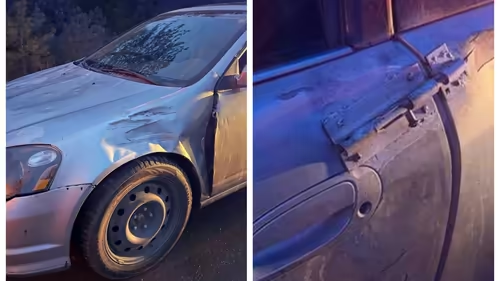
In the world of questionable automotive choices, one Canadian driver has seemingly set a new benchmark for ingenuity—or perhaps sheer desperation. Forget high-end custom builds; this story is about a vehicle that was barely holding itself together, its structural integrity relying on a humble garden gate latch. And to top it all off, the driver was caught speeding in it.
This isn’t a scene from a slapstick comedy; it’s a real-life traffic stop that left British Columbia police officers stunned and has since gone viral for all the wrong reasons. The incident serves as a stark reminder of the critical importance of vehicle safety standards and the potential consequences of ignoring them.
Table of Contents
- The Traffic Stop That Broke the Internet
- Inside the ‘Car Held Together with Garden Gate Latch’
- Legal and Safety Consequences in British Columbia
- Why This Is More Than Just a Funny Story
- Conclusion: A Cautionary Tale for All Drivers
- Sources
The Traffic Stop That Broke the Internet
The bizarre encounter occurred in British Columbia, where law enforcement officers are no strangers to the occasional oddity on their roads. However, this particular vehicle pushed the boundaries of what’s considered roadworthy. According to reports, a 22-year-old man from Kelowna was pulled over for excessive speeding .
While a speeding ticket is a common enough occurrence, the state of the man’s vehicle turned a routine stop into a viral news story. The driver wasn’t just breaking the speed limit; he was operating a mobile safety hazard that had been cobbled together with whatever materials were at hand.
Inside the ‘Car Held Together with Garden Gate Latch’
The description of the vehicle reads like a list of every “don’t” in an auto repair manual. The most infamous feature, which has become the centerpiece of the story, was the driver’s door. Instead of a standard handle and locking mechanism, the door was secured shut with a welded latch from a garden gate .
But the improvisations didn’t stop there. The car’s rear window was completely missing. In its place? A makeshift barrier constructed from rebar and copious amounts of duct tape . This combination of scrap metal and sticky tape was apparently deemed sufficient to keep the elements out and the passengers in—a decision that defies basic logic and safety protocols.
It’s hard to imagine the thought process behind such repairs. Was it a temporary fix that became permanent? Or a deliberate attempt to keep a failing vehicle on the road at any cost? Regardless of the reason, the result was a vehicle that was not just an eyesore but a genuine danger to its occupants and other road users.
What Were the Official Charges?
The driver’s reckless behavior didn’t go unpunished. For his excessive speed—reportedly between 41 and 60 km/h over the limit—he was slapped with a $368 fine . While the immediate charge was for speeding, the deplorable condition of his vehicle likely warranted additional scrutiny under British Columbia’s Motor Vehicle Act, which has strict regulations regarding vehicle safety and roadworthiness.
Legal and Safety Consequences in British Columbia
In British Columbia, and indeed across Canada, vehicles must meet minimum safety standards to be legally operated on public roads. These standards are not mere suggestions; they are enforced to prevent accidents and protect lives. The Insurance Corporation of British Columbia (ICBC) outlines clear requirements for everything from brakes and lights to windows and structural integrity.
A vehicle with a missing window replaced by rebar and a door held shut by a garden gate latch would almost certainly fail a basic safety inspection. Driving such a vehicle not only risks a hefty fine but also puts the driver’s insurance coverage in jeopardy. If an accident were to occur, the driver could be found fully liable for damages due to operating an unsafe vehicle, a situation that could lead to significant financial and legal trouble.
Why This Is More Than Just a Funny Story
On the surface, this story is undeniably absurd and has provided plenty of online amusement. Memes and jokes about “MacGyver-style” car repairs have circulated widely. However, the underlying issue is a serious one that touches on broader themes of economic hardship, access to affordable transportation, and public safety.
For some individuals, maintaining a reliable vehicle can be a significant financial burden. The temptation to make cheap, temporary fixes can be strong, especially when the alternative is being unable to get to work or fulfill essential obligations. This incident might be an extreme example, but it highlights a real-world problem faced by many. It underscores the need for accessible and affordable vehicle maintenance services and perhaps even community support programs to help those who might otherwise be forced to take dangerous risks.
From a public safety perspective, this event is a textbook case of why traffic laws exist. A vehicle in such a state is unpredictable. What if the duct tape failed at high speed? What if the garden gate latch gave way while driving? The potential for a catastrophic accident was very real. Law enforcement’s role in identifying and removing such hazards from the road is a crucial, if often underappreciated, service.
Conclusion: A Cautionary Tale for All Drivers
The story of the Canadian driver in a car held together with garden gate latch is a powerful cautionary tale. It’s a vivid illustration of what happens when practicality and safety are sacrificed for the sake of keeping a car running. While the image of a garden gate latch on a car door is comical, the reality is a serious breach of safety that could have ended in tragedy.
For drivers everywhere, the takeaway is clear: never compromise on your vehicle’s safety. Regular maintenance and professional repairs, while sometimes costly, are a small price to pay for peace of mind and the safety of yourself and others on the road. If you find yourself in a situation where you can’t afford proper repairs, it’s far safer to seek alternative transportation than to risk it in a vehicle that’s held together by hope and hardware store scraps.
Sources
- Times of India: Man caught in Canada for speeding in a car held together with a garden gate latch
- Abbotsford News: Car held together by garden latch, rebar, duct tape caught speeding in B.C.
- Insurance Corporation of British Columbia (ICBC): Vehicle safety and insurance information