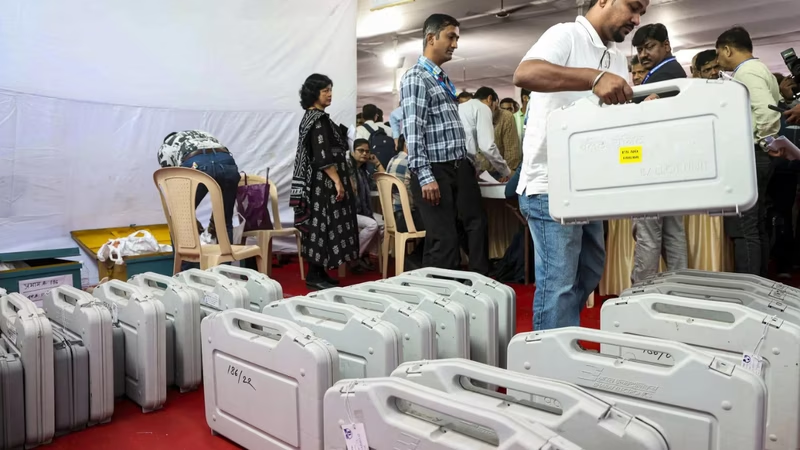
After a nine-year wait and a day of intense voting marked by controversy over indelible ink, Mumbai is now on the edge of a major political shift. The first major BMC exit polls are in—and they paint a stunning picture of a potential clean sweep for the BJP-led Mahayuti alliance in the Brihanmumbai Municipal Corporation (BMC) elections.
According to Axis My India, one of India’s most respected polling agencies, the Mahayuti combine—comprising the BJP, Shiv Sena (Eknath Shinde faction), and NCP (Ajit Pawar group)—is projected to win between **131 and 151 seats** out of the 227-member civic body. If these numbers hold, it would not only be the largest mandate in BMC history but also a crushing blow to the Uddhav Thackeray-led Maha Vikas Aghadi (MVA) alliance, which appears to be struggling to retain its urban stronghold .
Table of Contents
- What the BMC Exit Polls Reveal
- Why the BMC Elections Matter
- The Controversial Vote and Low Turnout
- Mahayuti vs. MVA: A Clash of Visions for Mumbai
- Historical Context and What a Clean Sweep Means
- Conclusion: What Next for Mumbai’s Civic Future?
- Sources
What the BMC Exit Polls Reveal
Axis My India’s projection isn’t just optimistic for the ruling alliance—it’s seismic. With a projected seat range of 131–151, the Mahayuti is well past the 114-seat majority mark needed to form the civic administration unilaterally. This would give the BJP-led bloc unprecedented control over India’s richest municipal corporation, which manages a budget larger than that of several small states .
In contrast, the opposition MVA—comprising Shiv Sena (UBT), NCP (Sharad Pawar), and Congress—is projected to win far fewer seats, with early estimates suggesting it may not even cross the 70-seat threshold. Independent candidates and smaller parties are expected to pick up the remainder, but their influence would be minimal in a Mahayuti-dominated house.
Why the BMC Elections Matter
The BMC isn’t just another local body. It’s the engine room of Mumbai—the financial capital of India. Its responsibilities include:
- Urban infrastructure and road maintenance
- Public health services and hospitals
- Solid waste management for over 20 million residents
- Property tax collection and civic planning
- Disaster response during monsoons and floods
Control over the BMC translates directly into control over the city’s development trajectory, investment climate, and quality of life. For national parties, winning Mumbai is a symbolic and strategic victory that resonates far beyond Maharashtra’s borders.
The Controversial Vote and Low Turnout
The election itself was not without drama. Allegations surfaced across multiple polling stations that the indelible ink used to mark voters’ fingers was washing off within hours—raising concerns about potential duplicate voting. The Election Commission has since launched an inquiry, but the controversy has already cast a shadow over the process .
Adding to the concerns was the relatively low voter turnout, estimated between **46% and 50%**—a significant drop from previous civic elections. Analysts suggest this apathy may stem from voter fatigue, disillusionment with political infighting, or confusion over the splintered Shiv Sena factions. Regardless of the cause, low turnout often benefits well-organized party machines, which the Mahayuti clearly demonstrated.
Mahayuti vs. MVA: A Clash of Visions for Mumbai
The election wasn’t just about personalities—it was a referendum on two competing visions for Mumbai’s future.
The Mahayuti campaigned on a platform of “development, discipline, and national pride,” promising faster infrastructure projects, digital governance, and alignment with central government schemes like AMRUT and Smart Cities. They positioned themselves as the stable, pro-business alternative after years of coalition instability under the MVA.
Meanwhile, the MVA emphasized social justice, Marathi identity, and resistance to “central overreach.” However, internal divisions—especially between the Thackeray and Pawar camps—may have diluted their message and confused voters. For many Mumbaikars, the question wasn’t just who to vote for, but which version of Shiv Sena or NCP truly represented their interests.
Historical Context and What a Clean Sweep Means
This is the first BMC election since 2017, delayed due to political wrangling and the pandemic. Historically, the BJP had been gaining ground in Mumbai, but never achieved outright dominance. A clean sweep would mark a definitive end to the era of fragmented coalitions and usher in a new phase of centralized, single-alliance rule.
For the BJP, it would validate its strategy of forging strong regional alliances under the Mahayuti banner. For Eknath Shinde and Ajit Pawar, it would cement their legitimacy as viable alternatives to their former allies. And for Uddhav Thackeray, it could signal a painful decline in his party’s urban base—a trend that began with the 2022 Maharashtra floor test.
Conclusion: What Next for Mumbai’s Civic Future?
While exit polls are not final results, the BMC exit polls from Axis My India offer a powerful early signal of where Mumbai’s political winds are blowing. If confirmed, a Mahayuti supermajority would grant the alliance the power to fast-track long-pending projects, overhaul civic services, and potentially reshape the city’s administrative culture. But with great power comes great responsibility—and millions of Mumbaikars will be watching closely to see if promises translate into tangible improvements on the ground. For deeper insights into Maharashtra’s evolving political dynamics, explore our coverage on [INTERNAL_LINK:maharashtra-politics-2025].