Political drama doesn’t get faster—or messier—than this.
In a stunning reversal that lasted less than 12 hours, an unexpected BJP-AIMIM alliance in Akola’s Akot town for the upcoming civic elections imploded moments after Maharashtra Chief Minister Devendra Fadnavis issued a stern public warning. The state BJP leadership, caught off guard by the local arrangement, immediately disowned the pact and slapped a show-cause notice on its own Akot MLA, Prakash Bharsakale, for “acting without party authorization.”
Meanwhile, a new coalition—dubbed the ‘Akot Nagar Vikas Manch’—emerged from the chaos, claiming it commands a majority on the municipal council with support from Congress, NCP (Sharadchandra Pawar), and independents. The episode has exposed deep fissures within the BJP’s local leadership and raised urgent questions about party discipline ahead of critical urban polls in 2026.
Table of Contents
- How the BJP-AIMIM Alliance Formed—and Fell Apart
- CM Fadnavis Intervenes: A Clear Political Ultimatum
- MLA Prakash Bharsakale Under Fire: Show-Cause Notice Explained
- The Rise of Akot Nagar Vikas Manch: Who Is Behind It?
- Why This Local Fight Matters for Maharashtra’s Political Future
- Broader Implications for BJP-AIMIM Relations Nationwide
- Conclusion: A Cautionary Tale of Local Ambition vs. Party Control
- Sources
How the BJP-AIMIM Alliance Formed—and Fell Apart
On the morning of January 7, 2026, local media reported that BJP and AIMIM—the Asaduddin Owaisi-led party often viewed as ideologically opposed to the BJP—had struck a seat-sharing deal for the Akot Municipal Council elections. The arrangement, reportedly brokered by Akot MLA Prakash Bharsakale, aimed to prevent vote-splitting and consolidate anti-Congress/NCP forces .
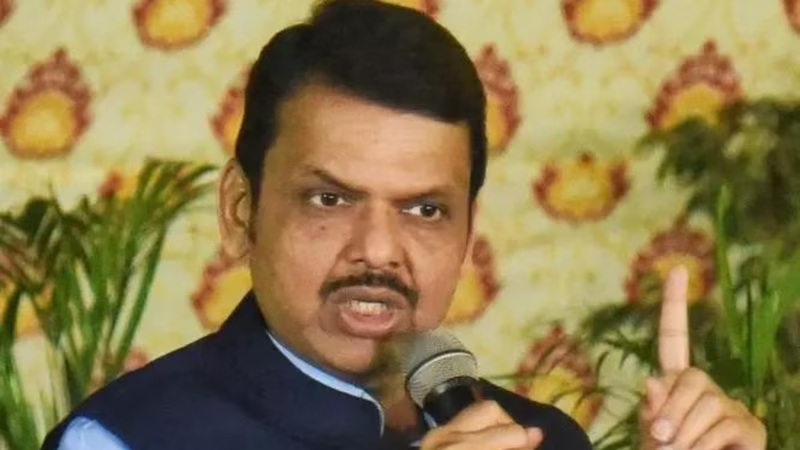
But the news barely had time to circulate before it was shredded. By evening, CM Devendra Fadnavis, speaking at a public event in Mumbai, declared: “No BJP unit can enter into any alliance without explicit state or national leadership approval. Such actions will invite strict disciplinary measures.”
Within hours, the state BJP issued a formal statement calling the Akot pact “unilateral, unauthorized, and against party ethos,” effectively nullifying the deal .
CM Fadnavis Intervenes: A Clear Political Ultimatum
Fadnavis’s swift intervention wasn’t just about Akot—it was a message to every BJP leader in Maharashtra. With Assembly elections looming in 2027 and urban local bodies serving as crucial battlegrounds, the CM is determined to maintain a unified, disciplined front.
Allowing local MLAs to negotiate with AIMIM—a party frequently criticized by BJP leaders for its “communal” politics—would undermine the BJP’s core Hindutva narrative and alienate its base. As political analyst Dr. Sanjay Kumar notes, “Fadnavis couldn’t let this slide. It would set a dangerous precedent of local autonomy over central discipline” .
MLA Prakash Bharsakale Under Fire: Show-Cause Notice Explained
Prakash Bharsakale, the BJP MLA from Akot since 2019, now finds himself in hot water. The state party has issued him a **show-cause notice**, demanding he explain why he shouldn’t face suspension or expulsion for “violating party directives and damaging its image.”
Sources suggest Bharsakale acted out of local pressure. Akot has a significant Muslim population (over 30%), and AIMIM has been gaining ground. Fearing a split in the non-Congress vote, he may have sought a tactical truce. But in doing so, he crossed a red line in the BJP’s centralized command structure.
The Rise of Akot Nagar Vikas Manch: Who Is Behind It?
Amid the BJP-AIMIM chaos, a new player emerged: the **Akot Nagar Vikas Manch** (Akot Urban Development Forum). This coalition includes:
- Congress
- NCP (Sharadchandra Pawar faction)
- Several independent corporators
- Local civic leaders disillusioned with BJP’s internal feuds
The Manch claims it holds 14 out of 26 seats on the council—the majority needed to elect the mayor and control municipal decisions. If true, this alliance could effectively sideline the BJP in Akot’s civic administration, a major setback in a region the party has dominated for years .
Why This Local Fight Matters for Maharashtra’s Political Future
Akot may be a small town, but its civic council is a microcosm of Maharashtra’s larger political tensions:
- Central vs. Local Control: Can MLAs make tactical decisions, or must all alliances be top-down?
- Ideology vs. Pragmatism: Is BJP willing to compromise its stance for electoral gain—even briefly?
- Urban Fragmentation: With Congress-NCP resurgent in cities, BJP’s dominance is no longer guaranteed.
As urban local body elections expand across Maharashtra in 2026, how the BJP manages these internal contradictions will determine whether it can retain its stronghold—or cede ground to a united opposition.
Broader Implications for BJP-AIMIM Relations Nationwide
While outright alliances between BJP and AIMIM remain rare, tactical understandings have occurred in places like Bihar and Telangana. However, the Akot episode shows the BJP’s national leadership remains deeply wary of formalizing any such link, especially in Hindu-heartland states like Maharashtra.
The party fears backlash from its core voters, who view AIMIM as antagonistic to national unity. Until that perception shifts—or until electoral math forces a rethink—such pacts will remain politically toxic at the state level .
Conclusion: A Cautionary Tale of Local Ambition vs. Party Control
The collapse of the BJP-AIMIM alliance in Akot is more than a local embarrassment—it’s a stark lesson in the limits of individual agency within a tightly controlled party machinery. For Prakash Bharsakale, the fallout could end his political career. For Devendra Fadnavis, it’s a necessary assertion of authority.
But for voters in Akot, the real question remains: who will actually deliver clean water, better roads, and functioning schools? As national ideologies clash, civic governance often gets lost in the noise. Let’s hope the next chapter focuses less on power plays—and more on public service.