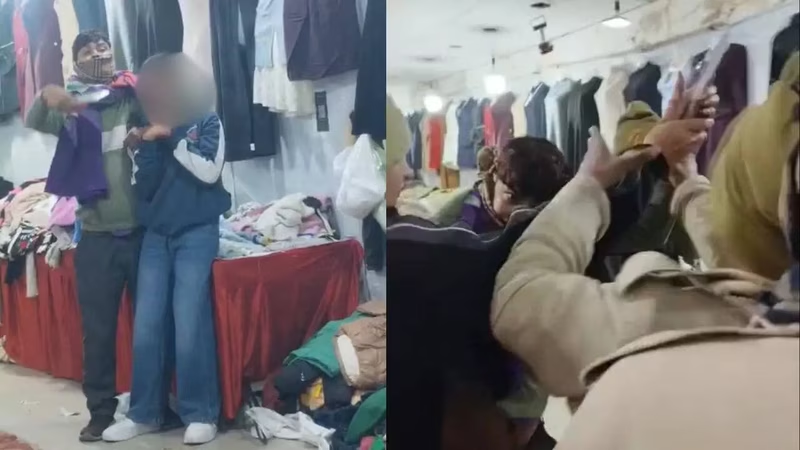
A quiet afternoon in Najibabad, Bijnor, turned into a scene of high drama and fear as a brazen, intoxicated man triggered a full-blown hostage crisis inside a local clothing store. The Bijnor hostage incident sent shockwaves through the community after the 24-year-old assailant held a minor girl at knifepoint, making bizarre demands that included ₹1 lakh in cash and a motorcycle .
Thankfully, the story ended without tragedy, thanks to the rapid and decisive response of the Uttar Pradesh Police. Officers arrived at the scene within minutes and successfully rescued the terrified child, who was thankfully unharmed physically. The suspect was apprehended on the spot, still appearing visibly drunk. In a chilling and perplexing statement to authorities, he claimed his motive was simply “to go to jail” . While the immediate threat has been neutralized, the incident raises serious questions about public safety, mental health, and law enforcement readiness in small-town India.
Table of Contents
- The Bijnor Hostage Incident: A Minute-by-Minute Account
- Police Response: Praised for Swift and Precise Action
- The Suspect’s Bizarre Motive: What Does It Reveal?
- Safety of Minors in Public Spaces: A Growing Concern
- The Role of Mental Health and Substance Abuse in Crime
- What This Means for Community Safety in UP
- Conclusion: A Close Call and a Call to Action
- Sources
The Bijnor Hostage Incident: A Minute-by-Minute Account
The incident began on a seemingly ordinary day at a clothing shop in the bustling town of Najibabad. According to eyewitnesses and initial police reports, the 24-year-old suspect, whose identity has been withheld pending formal charges, entered the store in a highly agitated and inebriated state .
Without provocation, he allegedly pulled out a knife and seized a minor girl who was inside the shop. He then barricaded himself with the child, issuing his demands to the panicked shopkeeper and bystanders: he wanted ₹1 lakh in cash and a motorcycle to be brought to him immediately. The situation quickly escalated, with terrified customers fleeing the area and local authorities being alerted. The entire episode created a tense standoff that was only resolved by the police’s swift intervention.
Police Response: Praised for Swift and Precise Action
In a landscape where police response times are often criticized, the Bijnor police’s handling of this crisis deserves significant credit. Upon receiving the distress call, a team from the local police station arrived at the scene with remarkable speed .
Understanding the extreme volatility of the situation—dealing with an armed, intoxicated, and unpredictable individual holding a child—they executed a quick but careful rescue operation. Their primary objective was the safety of the minor, and they achieved it. The girl was rescued unharmed, a testament to their training and composure under pressure. The suspect was overpowered and taken into custody without any further injury to civilians or police personnel. This successful resolution stands as a model for crisis response in similar situations.
The Suspect’s Bizarre Motive: What Does It Reveal?
Perhaps the most disturbing aspect of the Bijnor hostage incident is the suspect’s stated motive. During his initial interrogation, he reportedly told police that he “wanted to go to jail” . This shocking admission points to a complex web of issues that go beyond a simple criminal act.
His apparent intoxication suggests substance abuse, while his desire for incarceration could indicate severe underlying mental health problems, a cry for help, or a warped perception of the justice system as a source of stability or shelter. While his actions were undeniably criminal and dangerous, his motive underscores a critical societal failure: the lack of accessible mental health and addiction support services, especially in rural and semi-urban areas. As the investigation unfolds, authorities will need to delve deeper into his background to understand the full picture.
Safety of Minors in Public Spaces: A Growing Concern
This incident is a stark and terrifying reminder of the vulnerability of children in public spaces. A minor was simply in a shop, a place that should be safe, and became the target of a random, violent act. It has understandably left the local community in Najibabad and across Bijnor on edge.
Parents are now grappling with renewed anxiety about their children’s safety. This event highlights the need for:
- Enhanced Security in Commercial Areas: Shop owners and local municipal bodies should consider basic security measures, especially in high-footfall areas.
- Community Vigilance: A culture of “see something, say something” can be a powerful deterrent and early warning system.
- Child Safety Education: Teaching children basic safety protocols and who to contact in an emergency is more important than ever.
The Role of Mental Health and Substance Abuse in Crime
While every criminal act is a choice for which the individual is responsible, it’s impossible to ignore the link between untreated mental illness, substance abuse, and impulsive, violent behavior. The National Institute of Mental Health and Neurosciences (NIMHANS) in India has long flagged the massive treatment gap for mental health disorders in the country .
When individuals suffering from these issues do not have access to proper care, their problems can spiral, sometimes manifesting in public crises like this one. Addressing the root causes of such incidents requires a dual approach: strong law enforcement to deal with the immediate crime, and a robust public health infrastructure to prevent these situations from arising in the first place. It’s a challenge that demands attention from both the justice and health sectors.
What This Means for Community Safety in UP
For Uttar Pradesh, one of India’s most populous states, this incident serves as a critical wake-up call. While the police response was exemplary, the fact that such a volatile situation could erupt so easily in a public place is deeply concerning.
It calls for a proactive, not just reactive, approach to public safety. This could involve regular police patrols in market areas, better coordination between local businesses and law enforcement, and increased investment in social services that address the underlying causes of erratic and dangerous behavior. The safety of citizens, especially children, must be the top priority for any administration.
Conclusion: A Close Call and a Call to Action
The Bijnor hostage incident ended in a best-case scenario: a rescued child and a captured suspect. But it was a terrifyingly close call that should never have happened. It’s a stark reminder that public safety is fragile and requires constant vigilance, not just from the police but from the entire community and the government. The suspect’s disturbing motive points to deeper societal issues around mental health and addiction that can no longer be ignored. While we breathe a sigh of relief for the safe return of the minor, we must also commit to building a safer, more supportive environment to prevent such nightmares from recurring. For more on community safety initiatives, explore our guide on [INTERNAL_LINK:keeping-your-community-safe].
Sources
- Times of India: Hostage scare in UP: Drunk masked man holds minor girl at knifepoint
- Uttar Pradesh Police Official Website: Crime Prevention and Public Safety
- National Institute of Mental Health and Neurosciences (NIMHANS): Reports on Mental Health in India