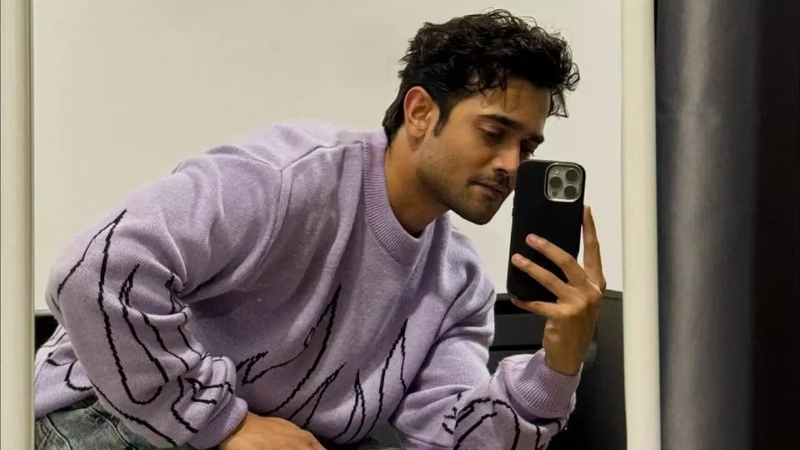
In an era where a single screenshot can go viral and be monetized without consent, digital identity has become as valuable—and as vulnerable—as physical property. This reality hit home again this week when the Delhi High Court issued a significant order in favor of popular YouTuber and actor Bhuvan Bam, directing the immediate removal of his unauthorized images from various online platforms.
But while the ruling offers temporary relief, it also highlights a glaring gap in India’s legal framework: the lack of clear, enforceable protections for personality rights—the right of individuals, especially public figures, to control the commercial use of their name, image, and likeness.
Bhuvan Bam isn’t alone. He joins a growing list of Indian celebrities—including Salman Khan, Aishwarya Rai Bachchan, Kumar Sanu, and Nagarjuna—who have gone to court to stop the misuse of their identities. Yet, despite these repeated cases, Indian law still treats personality rights as an evolving concept rather than a codified right. So what does this latest ruling mean for creators, influencers, and public figures in India?
Table of Contents
- What Happened in Court?
- Bhuvan Bam Unauthorized Images: The Core Issue
- Why Personality Rights Matter in India
- Precedents Set by Other Celebrities
- The Legal Gray Area in Indian Law
- What Creators Can Do to Protect Themselves
- Conclusion: A Step Forward, But Not Enough
- Sources
What Happened in Court?
On Tuesday, January 13, 2026, the Delhi High Court responded to Bhuvan Bam’s urgent plea against the widespread circulation of his photos and videos on social media and e-commerce sites—used without his knowledge or permission to promote products, fake endorsements, and even misleading news stories.
The court swiftly ordered all concerned platforms to remove the unauthorized content within 24–48 hours. This is a clear win for Bam, affirming that individuals have a right to privacy and dignity, even if they’re in the public eye.
However, the judges notably deferred a decision on granting interim relief for his broader claim: the recognition and protection of his personality and publicity rights. That larger legal battle will continue, with arguments scheduled for a future date .
Bhuvan Bam Unauthorized Images: The Core Issue
The misuse wasn’t just random fan art. According to court documents, Bam’s image was being exploited in several harmful ways:
- Fake endorsements: His photo appeared on ads for weight-loss supplements, skincare products, and investment schemes he never promoted.
- Deepfakes and AI-generated content: Altered videos showed him “speaking” in support of dubious brands.
- Clickbait thumbnails: News sites used his face to drive traffic to unrelated or sensationalized stories.
For a digital-native creator like Bhuvan Bam—whose brand is built on authenticity—this kind of misuse doesn’t just damage his reputation; it erodes trust with his audience and dilutes his commercial value.
Why Personality Rights Matter in India
Personality rights are not explicitly defined in Indian statutes. Instead, they’ve been interpreted by courts through a combination of:
- Article 21 of the Constitution (Right to Privacy and Dignity)
- Copyright Act, 1957 (for original photos/videos)
- Trademark and passing-off laws (to prevent false association)
While this patchwork approach has worked in individual cases, it lacks consistency. Unlike the U.S., where states like California have robust “right of publicity” laws, India has no unified legislation—leaving creators in legal limbo.
As influencer marketing explodes in India—with the market projected to exceed ₹1,500 crore by 2026 —the need for clear legal safeguards has never been more urgent.
Precedents Set by Other Celebrities
Bhuvan Bam’s case follows a clear pattern:
- Salman Khan successfully sued a mobile game developer for using his likeness without permission.
- Aishwarya Rai Bachchan obtained injunctions against fake beauty product ads bearing her image.
- Kumar Sanu fought against AI-generated songs mimicking his voice.
These victories show that courts are sympathetic—but each case must be argued from scratch, making legal recourse expensive and time-consuming, especially for mid-tier creators who lack Bollywood-level resources.
The Legal Gray Area in Indian Law
The Delhi High Court’s hesitation to grant interim protection on personality rights reflects a deeper judicial caution. Judges are wary of creating new legal doctrines without legislative backing. As one legal expert noted, “Courts can interpret rights, but Parliament must define them” .
Until then, creators remain dependent on reactive litigation rather than proactive protection—a system that favors the deep-pocketed and leaves smaller influencers exposed.
What Creators Can Do to Protect Themselves
While waiting for legal reform, digital creators can take practical steps:
- Register trademarks for your name or logo (e.g., “BB Ki Vines”).
- Watermark all original content to establish ownership.
- Use platform reporting tools (Instagram, YouTube, Facebook) to flag impersonation.
- Send cease-and-desist notices via a lawyer for serious violations.
For more guidance, [INTERNAL_LINK:how-indian-influencers-can-protect-their-digital-brand] offers a detailed playbook.
Additionally, the Indian Patent Office provides official resources on trademark registration and intellectual property rights.
Conclusion: A Step Forward, But Not Enough
The Delhi High Court’s order to remove Bhuvan Bam unauthorized images is a welcome victory for digital creators. It sends a strong message that consent matters—even online. But by deferring the bigger question of personality rights, the court has left the door open for future exploitation.
India needs a modern legal framework that recognizes the economic and personal value of one’s identity in the digital age. Until then, every creator—from mega-stars to micro-influencers—remains just one viral fake ad away from a crisis.
Sources
- Times of India: “After Salman Khan, Aishwarya Rai… Delhi HC orders removal of unauthorized images of Bhuvan Bam” (January 13, 2026)
- Constitution of India, Article 21
- Indian Trademarks Act, 1999
- KPMG India Report: “Influencer Marketing Landscape 2025”
- Legal commentary from Bar & Bench on personality rights jurisprudence