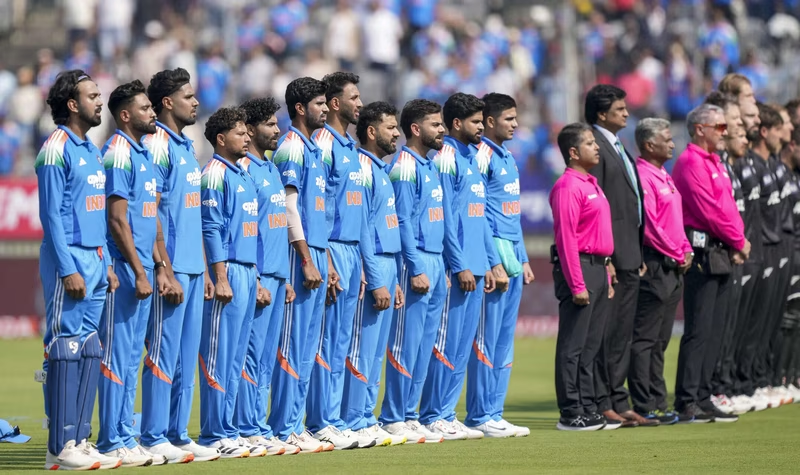
The world of cricket is often a mirror to geopolitics, and right now, that reflection is showing a deeply confusing and contradictory image. On one hand, the Bangladesh Cricket Board (BCB) has taken a firm, public stance: they will not send their national team to India for the upcoming T20 World Cup 2026, citing serious concerns for player safety and well-being . On the other, a highly respected Bangladeshi umpire is standing on the very same Indian soil, officiating a major international series between India and New Zealand .
This bizarre standoff isn’t just a cricketing oddity; it’s a fascinating case study in how global sports governance tries to operate independently of bilateral political friction. So, what’s really going on? Let’s break it down.
Table of Contents
- The BCB Standoff: Security Fears and the T20 World Cup
- The Umpire in the Room: Sharfuddoula Saikat on Duties
- How the ICC Neutral Umpire System Works
- Why This Contradiction Matters for Cricket
- Conclusion: A Game Caught Between Politics and Protocol
- Sources
The BCB Standoff: Security Fears and the T20 World Cup
The BCB’s position has been clear and unwavering. The board has officially stated that its “position remains unchanged” regarding its decision not to travel to India for the T20 World Cup, directly citing security concerns as the primary reason . This stance comes amidst a backdrop of heightened political tensions between the two neighboring nations .
The International Cricket Council (ICC) has reportedly assessed the situation and deemed the risk as “low to moderate,” rejecting the BCB’s request to move their matches to a neutral venue . This puts Bangladesh in a precarious position: if they refuse to play, they face potential forfeiture of their matches and a significant financial penalty, not to mention damage to their standing in the global cricket community.
BCB boycotts T20 WC 2026, But the Umpire Stays On
In a twist that has left many fans scratching their heads, Bangladeshi umpire Sharfuddoula Ibne Shahid Saikat was appointed as the third umpire for the first ODI of the India vs. New Zealand series in Vadodara . He has also been involved in officiating other matches in this ongoing series .
This has naturally sparked criticism and questions back in Bangladesh. How can the BCB claim it’s unsafe for its players, yet one of its most prominent cricket officials is working there without issue? In response, the BCB has tried to clarify its position, stating that match officials like Saikat are appointed directly by the ICC and are not under the board’s direct purview for such assignments . Essentially, they are drawing a line between a national team’s travel and an individual official’s professional duties.
How the ICC Neutral Umpire System Works
This is where the ICC’s governance structure comes into play. The council maintains a panel of elite international umpires from various member nations. For major bilateral series and all ICC events, the ICC itself appoints the match officials, ensuring they are neutral—that is, not from either of the two competing countries .
The process is designed to uphold the integrity and fairness of the game, removing any potential for home bias. As per ICC regulations, these appointments are made by the ICC from its Elite or International panels, and the home board has no say in who is selected . This system is why a Bangladeshi umpire can be sent to officiate an India-New Zealand game, even when his own national board is in a diplomatic tiff with the host nation.
Key points of the ICC’s policy include:
- The ICC, not the host or visiting boards, controls all official appointments.
- Umpires are chosen based on their ranking, experience, and availability on the ICC panel.
- The system is built to be apolitical and focused solely on the quality and neutrality of officiating .
Why This Contradiction Matters for Cricket
This situation highlights a critical tension at the heart of international sport. While the ICC strives to create a level playing field governed by its own rules, it cannot entirely insulate itself from the real-world politics that affect its member boards.
For fans, this contradiction can be jarring and may erode trust in the sport’s governing bodies. If a country deems a location unsafe for its athletes, should its officials be there? It creates a perception problem that the ICC must manage carefully. Furthermore, it raises questions about the long-term viability of hosting major tournaments in regions experiencing political instability, even if the ICC’s own risk assessment is positive.
This standoff could also set a precedent. If Bangladesh is allowed to skip its World Cup matches without severe consequences, it might encourage other nations to use similar tactics in the future for political leverage, which would be a dangerous path for the sport.
Conclusion: A Game Caught Between Politics and Protocol
The image of a Bangladeshi umpire diligently performing his duties in India while his national team prepares to boycott a World Cup on the same grounds is a powerful symbol of cricket’s current crossroads. The BCB boycotts T20 WC 2026 decision is a political one, rooted in complex bilateral issues. Meanwhile, the presence of Sharfuddoula Saikat is a testament to the ICC’s attempt to keep the game’s core operations—its officiating—free from that political noise.
Whether this separation can hold, and what the final outcome of the T20 World Cup standoff will be, remains to be seen. One thing is certain: the world will be watching, both on and off the pitch. For more on how global events impact sports, check out our coverage on [INTERNAL_LINK:international-sports-politics].