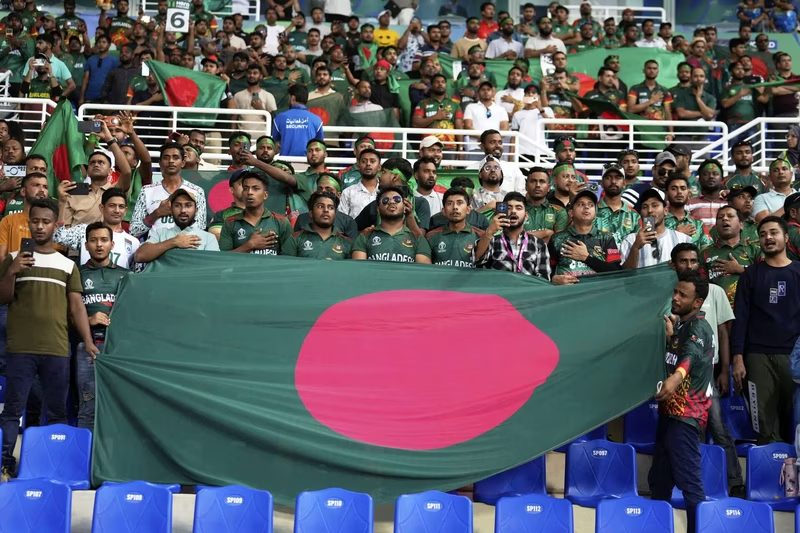
In a dramatic escalation that could reshape the upcoming ICC Men’s T20 World Cup 2026, the Government of Bangladesh has drawn a hard line: the national team will not play in India if doing so comes at the cost of its dignity or security. Officials in Dhaka are now formally pushing the International Cricket Council (ICC) to shift all of Bangladesh’s scheduled matches to Sri Lanka—a request that, if granted, would mark one of the most politically charged interventions in modern cricket history .
The phrase—“No World Cup at the cost of national dignity”—has become the rallying cry from Bangladeshi ministers and cricket board officials alike . This isn’t just about logistics or travel preferences. It’s a direct response to what Dhaka perceives as a hostile environment for its players and citizens in India, fueled by recent incidents of discrimination and inflammatory rhetoric on social media and even in public discourse .
Table of Contents
- Bangladesh Refuses T20 World Cup in India: The Official Stance
- What Sparked This Crisis? Security and Dignity Concerns
- Why Sri Lanka? The Logical Alternative
- ICC in a Tight Spot: Diplomacy vs. Sport
- Historical Context: India-Bangladesh Cricket Tensions
- What Happens Next? Scenarios and Implications
- Conclusion: A Statement Louder Than a Six
- Sources
Bangladesh Refuses T20 World Cup in India: The Official Stance
The Bangladesh government, in coordination with the Bangladesh Cricket Board (BCB), has made its position unequivocal. Citing “national dignity” and “the physical and psychological safety of our cricketers,” Dhaka has declared it will not send its team to India for the T20 World Cup unless alternative arrangements are made .
This is not a negotiation tactic—it’s an ultimatum. Senior officials have stated that participation must not come at the cost of humiliation. The use of the word “dignity” is deliberate and politically loaded, signaling that this issue transcends sport and touches on national identity and sovereignty .
What Sparked This Crisis? Security and Dignity Concerns
While the BCB hasn’t released a detailed public dossier, multiple reports and statements point to a confluence of factors:
- Online Harassment: Bangladeshi players, especially after high-stakes matches against India, have been subjected to vitriolic abuse on Indian social media platforms, including threats and xenophobic comments .
- Real-World Incidents: There have been documented cases of Bangladeshi students and tourists in India facing verbal and sometimes physical hostility, creating a perception of systemic bias .
- Political Rhetoric: Certain inflammatory remarks by public figures and media personalities in India—often painting Bangladeshis in a negative light—have exacerbated tensions .
For Bangladesh, allowing its athletes—national heroes—to enter such an environment is seen as an unacceptable risk to their well-being and a slight to the nation itself.
Why Sri Lanka? The Logical Alternative
Bangladesh has formally requested the ICC to relocate its matches to Sri Lanka. This isn’t a random choice. Sri Lanka shares strong diplomatic and sporting ties with Bangladesh. Both nations are part of the ICC’s co-hosting framework for the 2026 T20 World Cup alongside India and a few others .
Sri Lanka also has world-class stadiums in Colombo and Kandy, proven experience hosting major ICC events (including co-hosting the 2011 ODI World Cup), and a neutral, welcoming environment for international teams. From a logistical and security standpoint, it’s the most viable alternative within the tournament’s existing structure.
ICC in a Tight Spot: Diplomacy vs. Sport
The ICC now faces an unprecedented dilemma. On one hand, India is the primary host and financial engine of the tournament, with massive broadcast deals and fan engagement riding on marquee India matches. On the other, the ICC’s own regulations emphasize “safety, security, and non-discrimination” for all participating teams .
If the ICC ignores Bangladesh’s concerns, it risks accusations of prioritizing profit over player welfare and national sovereignty. But if it accedes, it sets a precedent that could open the door for other nations to demand venue changes—a logistical nightmare.
For deeper insights into ICC hosting protocols, refer to the official ICC Media and Governance Portal.
Historical Context: India-Bangladesh Cricket Tensions
This isn’t the first time politics has spilled into the India-Bangladesh cricket rivalry. The 2015 and 2016 encounters were marred by crowd disturbances, controversial umpiring decisions, and post-match social media wars. The 2018 Nidahas Trophy final, though played in Sri Lanka, saw intense emotional stakes that spilled beyond the boundary ropes .
Cricket in South Asia isn’t just a game—it’s a proxy for national pride. And in that context, “dignity” becomes non-negotiable.
What Happens Next? Scenarios and Implications
Several outcomes are now on the table:
- ICC Compromises: Moves Bangladesh’s matches (and possibly their Group C games) to Sri Lanka, allowing the tournament to proceed with all teams.
- Bangladesh Withdraws: If demands aren’t met, Bangladesh could forfeit, triggering financial penalties and ICC sanctions—but making a powerful political statement.
- Last-Minute Diplomacy: India issues high-level assurances on security, and Bangladesh agrees to participate under strict ICC-monitored protocols.
Any of these paths will have long-term consequences for cricket’s political ecosystem in the region.
Conclusion: A Statement Louder Than a Six
The declaration that Bangladesh refuses T20 World Cup in India is more than a scheduling dispute. It’s a watershed moment where sport confronts sovereignty, and safety trumps spectacle. By framing the issue as one of “national dignity,” Dhaka has elevated the conversation beyond cricket boards to the realm of foreign policy and human rights. The ICC’s response will not just decide the fate of a few matches—it will define what modern international cricket stands for in an era of rising nationalism.
Stay updated on this developing story with our coverage on [INTERNAL_LINK:t20-world-cup-2026-latest-news].
Sources
[1] Times of India. (2026, January 7). ‘No World Cup at the cost of national dignity’: Bangladesh draws firm line; pushes ICC to shift matches to SL. https://timesofindia.indiatimes.com/…
[3] Reports on social media abuse targeting Bangladeshi cricketers after India matches.
[4] Incidents of discrimination against Bangladeshi nationals in India, documented by human rights groups.
[5] Analysis of political and media rhetoric in India regarding Bangladesh.
[6] ICC’s official T20 World Cup 2026 co-hosting structure.
[7] ICC Code of Conduct and Player Safety Guidelines.
[8] Historical accounts of India-Bangladesh cricket matches and associated tensions.