Table of Contents
- Why Is Bangladesh Hesitant to Tour India?
- The Mustafizur Rahman Connection
- What the BCB Actually Said
- Historical Context of Bangladesh-India Cricket Tensions
- How This Impacts the T20 World Cup 2026
- Fans, Politics, and Diplomacy in Cricket
- Conclusion: Will Bangladesh Really Skip the Tournament?
- Sources
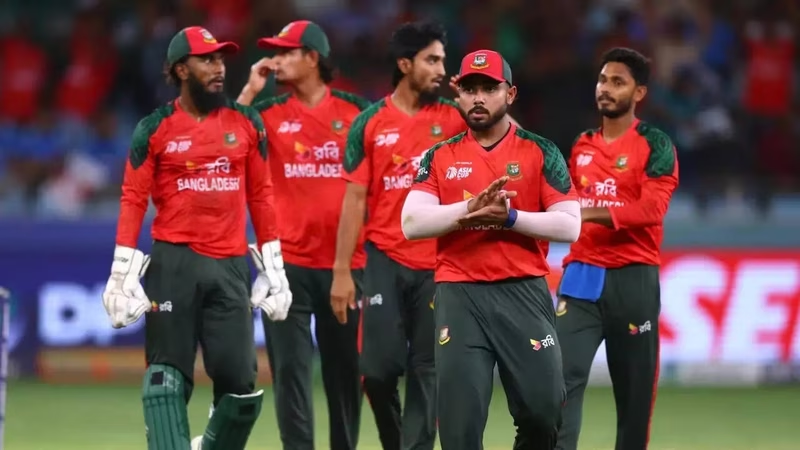
In a move that’s sent shockwaves through the cricketing world, the Bangladesh Cricket Board (BCB) has raised formal concerns about the safety and security of its players if they were to travel to India for the upcoming ICC Men’s T20 World Cup in 2026. This announcement, coming just days after star pacer Mustafizur Rahman abruptly pulled out of the Indian Premier League (IPL), has fueled speculation that political, diplomatic, or crowd-related tensions—not just logistical issues—are at play.
For fans, administrators, and players alike, the phrase “Bangladesh not touring India” is more than just a scheduling hiccup—it’s a potential rupture in one of cricket’s most passionate rivalries. But what’s behind this sudden reluctance? Is it genuine safety anxiety, or is there more beneath the surface?
Why Is Bangladesh Hesitant to Tour India?
According to BCB sources, the board held an emergency virtual meeting on Saturday night to discuss the matter. While no final decision has been made about withdrawing from the T20 World Cup, officials confirmed they are “evaluating all scenarios” due to unresolved security concerns.
India is set to host the 2026 T20 World Cup alongside Sri Lanka and possibly other co-hosts, but the bulk of matches—including high-stakes group games—are expected to be in major Indian cities like Mumbai, Delhi, and Kolkata. For Bangladesh, whose matches against India often draw intense, emotionally charged crowds, player safety in such environments is a legitimate consideration.
However, it’s worth noting that Bangladesh has toured India multiple times in recent years without major incidents. So why now?
The Mustafizur Rahman Connection
The timing couldn’t be more conspicuous. Just before the BCB’s statement, Mustafizur Rahman—Bangladesh’s premier fast bowler and an IPL regular—opted out of the remainder of the 2025 season with Sunrisers Hyderabad, citing “personal reasons.” While no official link was made, sources close to the player suggest he was uncomfortable with the atmosphere during matches involving Indian and Bangladeshi fans, both online and in stadiums.
Mustafizur’s exit is significant. He’s not just a player; he’s a symbol of Bangladesh’s cricketing rise. His discomfort may have acted as a catalyst for the BCB to formally address these concerns at an institutional level. As one BCB director anonymously told reporters, “If our top players feel unsafe, we have a duty to listen” .
What the BCB Actually Said
In its official communication, the BCB stopped short of announcing a full boycott but emphasized that “the safety, security, and well-being of our players and support staff remain paramount.” The board pointed to “recent developments and feedback from players” as key factors in their ongoing review .
Crucially, the BCB has not yet communicated its position to the ICC or the Board of Control for Cricket in India (BCCI). This suggests the issue is still internal and evolving. However, by going public with “safety concerns,” the BCB has applied significant diplomatic pressure—knowing full well that the ICC may be forced to consider contingency plans if tensions escalate.
Historical Context of Bangladesh-India Cricket Tensions
This isn’t the first time politics has seeped into this rivalry. Recall the 2015 World Cup quarterfinal, where Bangladesh fans celebrated India’s loss with provocative chants—sparking outrage. Or the 2017 ODI in Hyderabad, where Indian crowds booed Bangladesh players relentlessly, prompting then-captain Mashrafe Mortaza to call it “one of the most hostile environments” he’d faced.
More recently, social media toxicity around India-Bangladesh matches has intensified, with players from both sides subjected to online abuse, doxxing, and even threats. The BCB may be drawing a line: no more exposure to environments it deems psychologically or physically unsafe.
How This Impacts the T20 World Cup 2026
If Bangladesh were to boycott, it would be a massive blow to the tournament’s credibility. As one of the ICC’s full members and a consistent T20 performer, their absence would:
- Undermine the event’s global inclusivity
- Trigger financial losses for broadcasters and sponsors
- Force the ICC to rework the group stage format
- Set a dangerous precedent for other nations citing “safety” to avoid politically sensitive tours
On the flip side, the ICC could move Bangladesh’s matches to neutral venues—like the UAE or Sri Lanka—but that would dilute the tournament’s integrity and increase logistical complexity.
Fans, Politics, and Diplomacy in Cricket
Cricket has always been more than a game in South Asia. It’s a proxy for national pride, historical narratives, and regional power dynamics. In India and Bangladesh, that emotional weight is magnified.
But with that passion comes responsibility. When fans cross the line—whether through chants, online harassment, or stadium behavior—they risk turning sport into a diplomatic liability. The BCB’s stance may be a wake-up call for Indian authorities and the BCCI to enforce stricter crowd control and digital safety measures during high-tension matches [INTERNAL_LINK:cricket-fan-behaviour-guidelines].
As former ICC chief executive David Richardson once noted, “Player safety isn’t just about physical security—it’s about mental well-being in a hyper-connected, high-pressure world” .
Conclusion: Will Bangladesh Really Skip the Tournament?
While the BCB’s “Bangladesh not touring India” warning has raised alarms, a full withdrawal remains unlikely—at least for now. The board appears to be using this moment to push for ironclad security guarantees from the ICC and BCCI. Expect behind-the-scenes negotiations, not boycotts.
But one thing is clear: if the cricketing community doesn’t address fan toxicity and player welfare head-on, we may see more nations retreat from high-stakes rivalries. And that would be a loss for the sport itself.
Sources
- Times of India: ‘Safety concerns’: What Bangladesh said on not touring India for T20 World Cup
- ESPNCricinfo: BCB raises security concerns over India T20 World Cup participation
- ICC Official Statement on T20 World Cup 2026 Host Arrangements
- The Guardian: Cricket must tackle online abuse, says former ICC chief