Introduction: A Nation on Edge After a Brutal Murder
The brutal mob lynching of Dipu Chandra Das, a 27-year-old Hindu garment worker in Bangladesh, has sent shockwaves through the country and the international community. His horrific death on December 18, 2025, is not just an isolated crime but a stark symbol of a disturbing and escalating trend of religious violence against minorities in Bangladesh . Now, a significant breakthrough in the investigation: the arrest of the alleged mastermind, Yasin Arafat, a former madrasa teacher . This case forces a critical examination of the forces driving such mob violence and the state’s ability to protect its most vulnerable citizens.
Table of Contents
- The Dipu Das Incident: A Harrowing Chronology
- Who is Yasin Arafat, the Alleged Ringleader?
- Bangladesh Lynching: A Symptom of a Deeper Crisis
- The Political and Social Aftermath
- Conclusion: A Test for Bangladesh’s Future
- Sources
The Dipu Das Incident: A Harrowing Chronology
The events of December 18, 2025, in Bhaluka, Mymensingh, are a grim chapter in Bangladesh’s recent history. Dipu Chandra Das, a young Hindu man, was falsely accused of blasphemy—a charge that has become a deadly trigger for mob violence across the region. What followed was a nightmarish sequence of events: Das was beaten by a frenzied mob, hanged from a tree, and his lifeless body was set on fire . The sheer brutality of the attack, fueled by baseless rumors, highlights the terrifying speed at which online misinformation can translate into real-world violence.
Police have since arrested 21 individuals in connection with the crime, with nine of them providing confessional statements that reportedly point to a coordinated effort . The investigation revealed that the mob was not a spontaneous gathering but was incited and led by a central figure who has now been identified and apprehended.
Who is Yasin Arafat, the Alleged Ringleader?
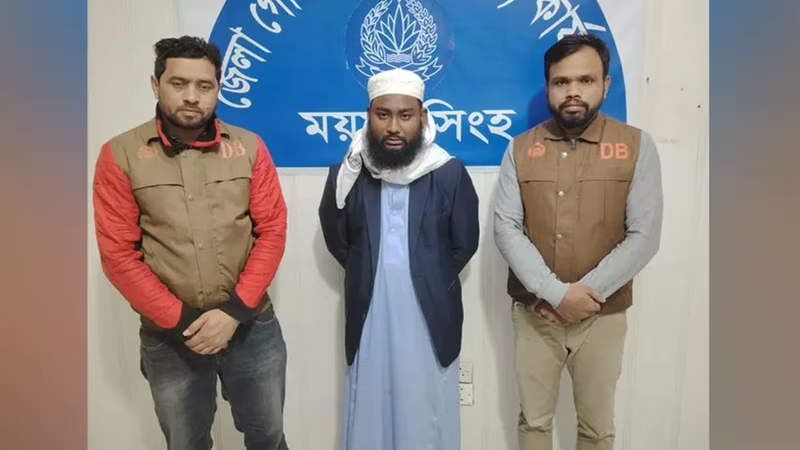
Md. Yasin Arafat, the man now in custody as the prime accused, is far from an unknown entity. According to police reports, Arafat had been serving as an imam at the Shekhabari mosque and had taught at a madrasa for the past 18 months . His background as a religious teacher makes his alleged role in inciting such a heinous act all the more chilling.
After the lynching, Arafat went into hiding for 12 days, reportedly sheltering in various madrassas in Dhaka. In a brazen attempt to evade capture, he even secured a teaching position at the ‘Suffa Madrasa’ under a concealed identity . His arrest in Dhaka marks a crucial step towards justice for Dipu Das and his grieving family.
Bangladesh Lynching: A Symptom of a Deeper Crisis
The killing of Dipu Das cannot be viewed in isolation. It is part of a deeply concerning and escalating pattern of violence against religious minorities in Bangladesh. The year 2025 has been particularly brutal, with human rights groups documenting a staggering surge in attacks.
According to the Bangladesh Hindu Bouddho Christian Oikya Parishad, there were a reported 258 incidents of violence against minority communities in just the first half of 2025 alone . Other sources indicate that mob violence across the country claimed at least 197 lives in 2025, painting a picture of a nation struggling to contain a tide of vigilantism and hatred . The false blasphemy accusation that led to Das’s death is a recurring and lethal trope in this ongoing crisis .
The Political and Social Aftermath
This incident has ignited a fierce national debate. Minority communities, already living in fear, are now demanding concrete and immediate protection from the state. The interim government in Bangladesh has publicly condemned the attack , but for many, condemnations are not enough. The public is demanding swift justice and systemic changes to prevent such tragedies from recurring.
The case also has significant international implications. Global human rights organizations are watching closely, as the government’s response will be seen as a key indicator of its commitment to secularism and the rule of law. Failure to deliver justice in this high-profile case could further erode Bangladesh’s international standing and embolden extremist elements within the country.
Conclusion: A Test for Bangladesh’s Future
The arrest of Yasin Arafat is a necessary first step, but it is only the beginning. The Bangladesh lynching of Dipu Chandra Das is a profound test for the nation’s justice system, its social fabric, and its political will. The authorities must ensure a swift, fair, and transparent trial that not only punishes the perpetrators but also dismantles the networks that enable such hatred to flourish. The world is watching to see if Bangladesh can rise to this challenge and protect the rights of all its citizens, regardless of their faith. For now, the shadow of this horrific event hangs heavy over the nation, a stark reminder of the urgent work that lies ahead.