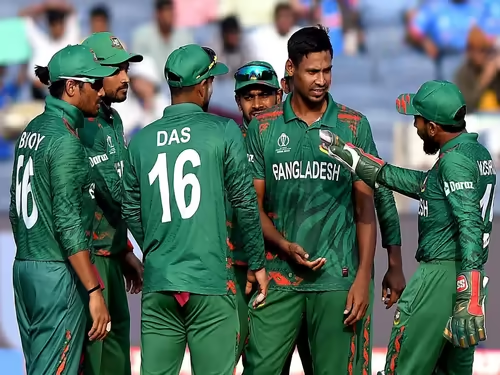
In a dramatic 24-hour turnaround that gripped the cricketing world, the Bangladesh Premier League (BPL) 2025-26 is back on track. The sudden player boycott that brought the tournament to a screeching halt has been resolved, all thanks to a swift and decisive intervention by the Bangladesh Cricket Board (BCB). At the heart of this Bangladesh cricket crisis was a now-sacked official whose inflammatory comments ignited a firestorm of protest from the nation’s top cricketers .
Table of Contents
- The Spark: Controversial Remarks and the Boycott
- The Resolution: Najmul Islam’s Apology and Removal
- Key Players in the Standoff: Tamim Iqbal and the Team
- The Role of BCB and CWAB in De-escalation
- Broader Implications for Bangladeshi Cricket
- Conclusion: A Fragile Peace and a Path Forward
The Spark: Controversial Remarks and the Boycott
The crisis erupted when Najmul Islam, then a director on the BCB’s powerful Finance Committee, made public remarks that were perceived as deeply disrespectful to former national captain and current player Tamim Iqbal. The comments, which reportedly questioned the legitimacy of player compensation demands and singled out Tamim, were the final straw for a player group already frustrated with administrative issues . In a powerful show of unity, the players collectively decided to boycott the BPL, refusing to take the field for their scheduled matches. This unprecedented action immediately postponed games and cast a dark shadow over the entire tournament, threatening its very existence.
The Resolution: Najmul Islam’s Apology and Removal
Facing immense pressure and a potential long-term damage to the sport’s reputation in the country, the BCB acted swiftly. The central pillar of their resolution was the immediate removal of Najmul Islam from his position on the Finance Committee. Following his dismissal, Islam issued a formal, public apology, acknowledging that his words were inappropriate and expressing regret for the turmoil they caused . This two-pronged approach—removing the source of the conflict and securing a public mea culpa—was exactly what the players needed to feel their concerns were being taken seriously. It was a clear message that such conduct would not be tolerated at the highest levels of the board.
Key Players in the Standoff: Tamim Iqbal and the Team
While the dispute was framed around comments directed at Tamim Iqbal, it quickly became a collective issue for the entire playing fraternity. Tamim, a veteran and one of Bangladesh’s most respected cricketers, has often been a vocal advocate for players’ rights. His stature meant that an attack on him was seen as an attack on the entire professional player community. The unified front presented by the players demonstrated a new level of solidarity and awareness of their collective power. Their primary demand wasn’t just about one man’s apology; it was about establishing a culture of respect and professionalism within the BCB’s administration. They wanted to ensure that their voices would be heard and their contributions valued.
The Role of BCB and CWAB in De-escalation
The resolution didn’t happen in a vacuum. A critical meeting was held between the aggrieved players, the BCB leadership, and the Cricketers’ Welfare Association of Bangladesh (CWAB) . The CWAB, as the official representative body for players, played a crucial mediating role, helping to channel the players’ grievances into a structured dialogue with the board. The BCB’s willingness to engage in this tripartite discussion, rather than simply issuing ultimatums, was key to finding a peaceful solution. This collaborative approach stands in stark contrast to past instances of conflict and suggests a potential shift towards more mature industrial relations in Bangladeshi cricket.
Broader Implications for Bangladeshi Cricket
This Bangladesh cricket crisis is more than just a blip on the radar; it’s a symptom of deeper structural issues. It highlights the ongoing tension between the administrative and playing wings of the sport. For the BPL to thrive as a premier T20 league, it needs stability, transparency, and a strong partnership between its stakeholders. This incident serves as a stark warning to the BCB that player welfare and respect are non-negotiable. Moving forward, the board must focus on building robust communication channels and grievance redressal mechanisms to prevent such crises from recurring. The health of the domestic game is directly tied to the trust between its players and its administrators.
Conclusion: A Fragile Peace and a Path Forward
While the BPL has resumed, the peace remains fragile. The immediate Bangladesh cricket crisis has been averted, but the underlying issues of governance, communication, and mutual respect have only just begun to be addressed. The players’ successful boycott has set a powerful precedent, showing that collective action can yield results. Now, the onus is on the BCB to honor the spirit of this resolution by fostering a more collaborative and respectful environment. The future of Bangladeshi cricket depends on it. For fans and stakeholders alike, the hope is that this episode will be remembered not as a moment of division, but as a catalyst for positive and lasting change.
Sources
- Bangladesh cricketers end BPL boycott after Najmul Islam’s apology. Times of India.
- The standoff was triggered by Najmul’s remarks about Tamim Iqbal and player compensation.
- Sacked BCB director Najmul Islam issues public apology.
- Players agreed to return to action following a meeting with the BCB and CWAB.