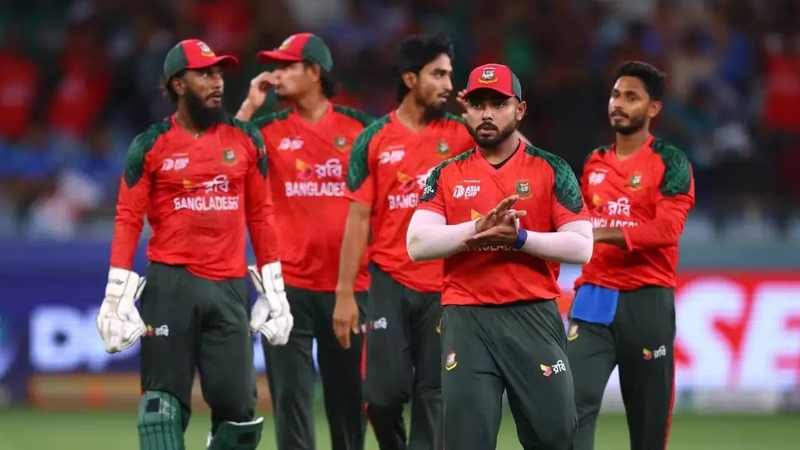
Bangladeshi cricket is no stranger to drama, but the events of the past week have plunged the sport into its most volatile crisis in years. In a stunning turn, the Bangladesh Cricket Board (BCB) has removed director M Nazmul Islam from all his duties—bowing to intense pressure from the country’s star players who threatened to boycott matches unless he stepped down.
The trigger? A series of explosive comments by Islam regarding player remuneration and, most alarmingly, the potential withdrawal of Bangladesh from the upcoming ICC Men’s T20 World Cup 2026. What followed was a rare display of collective defiance: senior players, led by global star Mustafizur Rahman, refused to take the field for a crucial Bangladesh Premier League (BPL) fixture—a move that sent shockwaves through the cricketing world and left the BCB with no choice but to act.
Table of Contents
- The Spark: What Did M Nazmul Islam Say?
- Bangladesh Cricket Crisis: Players Unite in Revolt
- The BPL Boycott: A Line in the Sand
- Mustafizur Rahman and the World Cup Threat
- BCB’s Response: Damage Control or Genuine Reform?
- Broader Implications for Bangladeshi Cricket
- Conclusion: A Watershed Moment
- Sources
The Spark: What Did M Nazmul Islam Say?
M Nazmul Islam, a powerful figure within the BCB’s administrative hierarchy, reportedly made several controversial statements during internal meetings and media interactions. According to multiple sources, he criticized the current pay structure for national players, suggesting their demands were “excessive” given Bangladesh’s financial constraints .
But the real bombshell came when he allegedly floated the idea of withdrawing Bangladesh from the 2026 T20 World Cup—citing financial strain and “lack of competitive viability.” For players who’ve dedicated their lives to representing their nation on the global stage, this wasn’t just policy—it was betrayal.
Bangladesh Cricket Crisis: Players Unite in Revolt
Rather than air grievances privately, Bangladesh’s cricketers took an extraordinary public stand. Led by pace spearhead Mustafizur Rahman—a veteran with over 300 international wickets—the players issued a collective ultimatum: remove M Nazmul Islam from his position, or face a full-scale boycott.
This level of player solidarity is almost unheard of in South Asian cricket, where boards often hold absolute authority. The fact that stars across formats—from Test captain Najmul Hossain Shanto to T20 specialists like Litton Das—stood together signaled a new era of player empowerment in Bangladesh.
The BPL Boycott: A Line in the Sand
The protest materialized dramatically during a scheduled Bangladesh Premier League (BPL) match. Key national players simply refused to play, leaving their franchises in disarray and fans furious. The league, already struggling with credibility issues, faced its biggest legitimacy crisis yet.
The boycott wasn’t just symbolic—it was strategic. By targeting the BPL, players hit the BCB where it hurts most: revenue and visibility. Franchise owners, broadcasters, and sponsors began demanding answers, amplifying the pressure on the board to resolve the standoff swiftly.
Mustafizur Rahman and the World Cup Threat
Mustafizur, currently one of Bangladesh’s most marketable and consistent performers, emerged as the de facto leader of the movement. In a brief statement (later deleted), he emphasized that “representing Bangladesh in World Cups is non-negotiable” and that any official suggesting otherwise “does not understand the soul of our cricket.”
His stance resonated deeply with fans. The T20 World Cup isn’t just a tournament—it’s a platform where Bangladesh has historically punched above its weight, including a famous 2016 semi-final run. Threatening to skip it was seen as an insult to the nation’s cricketing identity.
BCB’s Response: Damage Control or Genuine Reform?
Faced with mounting backlash, the BCB acted quickly. On [date], it announced that M Nazmul Islam had been “relieved of all responsibilities with immediate effect.” The statement cited “maintaining harmony within the cricket ecosystem” as the reason—but notably avoided addressing the substance of his remarks .
Critics argue this is mere scapegoating—a way to calm players without tackling systemic issues like opaque decision-making, poor financial management, and lack of player consultation. True reform, they say, requires structural changes, not just personnel swaps.
Broader Implications for Bangladeshi Cricket
This crisis reveals deeper rot:
- Governance Gaps: Over-centralized power with minimal player representation.
- Financial Mismanagement: Despite BPL revenues, the board claims fiscal stress—raising transparency concerns.
- Player-Board Trust Deficit: Years of unilateral decisions have eroded goodwill.
- Global Reputation Risk: Instability could affect ICC funding and hosting rights.
If unaddressed, these issues could derail Bangladesh’s progress just as it aims to become a consistent top-five T20 side.
Conclusion: A Watershed Moment
The Bangladesh cricket crisis is more than a personnel dispute—it’s a reckoning. For the first time, players have successfully challenged administrative overreach, setting a precedent for accountability. Whether this leads to lasting change or merely a temporary truce depends on the BCB’s next moves. One thing is clear: the era of unquestioned board authority in Bangladesh may be coming to an end.
Sources
- Times of India: Bangladesh cricket in crisis: BCB sacks director after players boycott BPL
- ESPNcricinfo: Bangladesh Cricket Team News
- ICC Official Site: T20 World Cup 2026 Regulations
- Transparency International Bangladesh: Reports on Sports Governance (for context on institutional accountability)