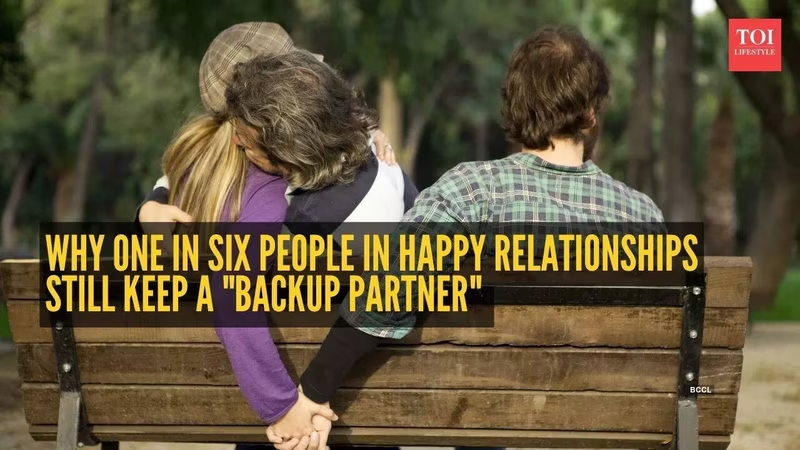
Think your relationship is solid? Think again. A recent survey has dropped a truth bomb that’s rattling couples everywhere: 1 in 6 adults in happy, committed relationships admit to keeping a ‘backup partner’ in their back pocket . That’s right—16% of people who report being satisfied with their current partner still maintain a mental (or sometimes emotional) ‘what if?’ option just in case things go south. And while it might sound like a betrayal, experts say this phenomenon is less about disloyalty and more about a deep, unspoken hunger for playfulness, novelty, and passion that’s gone missing in modern long-term relationships. So, what does it mean if you—or your partner—have a backup partner in relationship? Let’s unpack the psychology behind this startling trend.
Table of Contents
- The Survey Breakdown: Who Keeps a Backup Partner?
- Why Happy People Still Look Elsewhere: The Psychology of the ‘Backup’
- Is It Cheating? The Fine Line Between Fantasy and Infidelity
- What It Reveals About Modern Love and Dating Culture
- How to Use This Insight to Strengthen Your Relationship
- When to Worry: Red Flags vs. Normal Fantasies
- Conclusion: Turning Fantasy Into Connection
- Sources
The Survey Breakdown: Who Keeps a Backup Partner?
The data paints a revealing picture. According to the study, 16% of respondents in self-described “happy” relationships acknowledged having a backup partner—a specific person they mentally or emotionally hold onto as a potential alternative . Interestingly, the trend is more pronounced among men: nearly 1 in 5 men admitted to this behavior, compared to about 1 in 8 women .
These “backup” individuals aren’t always exes. Often, they’re friends, coworkers, or even acquaintances with whom there’s unresolved chemistry or unexplored potential. The key isn’t active pursuit—it’s the quiet assurance that “someone else is out there,” which can create a subtle emotional safety net.
Why Happy People Still Look Elsewhere: The Psychology of the ‘Backup’
So, if someone claims to be happy, why keep a backup? Experts in relationship psychology point to a crucial distinction: relationship satisfaction doesn’t always equal fulfillment of all emotional and romantic needs. Over time, even the healthiest partnerships can fall into routines that prioritize stability over spark.
The backup partner fantasy often fulfills specific unmet needs:
- Playfulness: The current relationship may feel serious or duty-bound, while the “backup” represents fun and spontaneity.
- Validation: Flirting or attention from another person can temporarily boost self-esteem.
- Passion: Long-term couples often experience a natural decline in romantic intensity; the fantasy rekindles that feeling.
- Autonomy: In codependent dynamics, the backup serves as a psychological escape hatch, preserving a sense of independence.
As clinical psychologist Dr. Lena Chen explains, “It’s not about leaving your partner. It’s about missing a version of yourself you feel you’ve lost—the flirty, desired, adventurous you” .
Is It Cheating? The Fine Line Between Fantasy and Infidelity
This is where boundaries matter. Merely thinking about a “what if” scenario is a normal part of the human imagination and doesn’t constitute infidelity. However, the line blurs when those thoughts translate into actions—like secret texting, emotional intimacy, or hiding interactions from your partner.
According to the American Psychological Association, emotional infidelity involves confiding in, seeking emotional support from, or sharing intimate details with someone outside the relationship in a way that undermines the primary bond . Keeping a backup is only harmless if it remains internal.
What It Reveals About Modern Love and Dating Culture
The rise of the backup partner in relationship phenomenon is deeply intertwined with today’s dating landscape. Apps like Tinder and Bumble have normalized the idea that there’s always “someone better” just a swipe away. This abundance mindset can seep into committed relationships, fostering a low-grade dissatisfaction even when things are objectively good.
Moreover, modern couples often juggle careers, parenting, and financial stress, leaving little energy for romance. The backup becomes a low-effort emotional outlet—a way to feel desired without the work of rekindling passion at home.
How to Use This Insight to Strengthen Your Relationship
Here’s the empowering twist: recognizing the backup fantasy can be a catalyst for positive change. Instead of feeling guilty or secretive, use it as a mirror.
Ask yourself:
- What quality does my “backup” represent that I’m missing here?
- Can I communicate this need to my partner in a loving, non-accusatory way?
- What small, fun rituals can we introduce to bring back playfulness?
Experts suggest “relationship hacking”—planning surprise dates, trying new activities together, or even role-playing—to reintroduce novelty. As one therapist puts it, “Don’t look for a new person. Look for a new way to be with the person you have” . For more practical tips, check out our guide on [INTERNAL_LINK:how-to-keep-romance-alive-in-long-term-relationships].
When to Worry: Red Flags vs. Normal Fantasies
Not all backup thoughts are benign. Be cautious if you notice:
- You’re comparing your partner to the “backup” constantly.
- You hide your communications or feel guilty after interacting with them.
- Your primary relationship feels like a chore, not a choice.
These could signal deeper incompatibility or emotional withdrawal that may require couples counseling.
Conclusion: Turning Fantasy Into Connection
The fact that 1 in 6 happy couples keep a backup partner in relationship isn’t a death knell for love—it’s a wake-up call. It reveals that even in strong partnerships, the human need for excitement, validation, and play never fully disappears. The solution isn’t to suppress these feelings but to channel them back into the relationship. By fostering honest communication and intentional romance, couples can transform the “what if” into a “what’s next”—together.