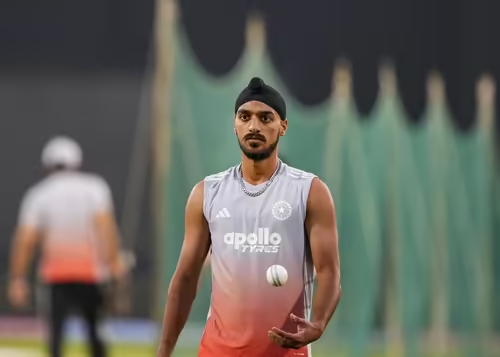
The calm before the storm of the India vs New Zealand ODI series was shattered by a single, pointed question from one of India’s most respected cricketing voices. Veteran off-spinner Ravichandran Ashwin, known for his sharp mind both on and off the field, has publicly questioned the logic behind the Arshdeep Singh exclusion from the playing XI for the first two matches. His blunt query—“Why does this happen?”—has ignited a fierce debate about selection policies, player confidence, and the new direction under head coach Gautam Gambhir .
Table of Contents
- Ashwin’s Public Rebuke: A Rare and Pointed Critique
- The Arshdeep Conundrum: Consistency Meets the Bench
- Gambhir’s New Regime: A Shift in Selection Philosophy?
- The Psychological Toll on Players Like Arshdeep
- Historical Context: Is This a Pattern or an Anomaly?
- Conclusion: A Future Defined by Clarity and Trust
- Sources
Ashwin’s Public Rebuke: A Rare and Pointed Critique
Ashwin’s comments are significant not just for their content, but for their source. As a senior statesman of the game with over 400 international wickets across formats, his words carry immense weight. He didn’t merely express disappointment; he challenged the very rationale of the decision-making process. In his view, Arshdeep’s consistent performances across formats should have earned him an automatic spot in the team, making his late inclusion as a standby feel like an afterthought rather than a strategic choice .
This public airing of grievances is unusual in the often-reserved world of Indian cricket, where former players typically offer measured support to the current setup. Ashwin’s frustration suggests a deeper concern about a potential disconnect between a player’s on-field contributions and the selectors’ recognition of them.
The Arshdeep Conundrum: Consistency Meets the Bench
The core of Ashwin’s argument rests on Arshdeep Singh’s undeniable track record. The left-arm seamer has been a mainstay in India’s white-ball squads for good reason:
- Death Overs Specialist: Arshdeep has developed a reputation as one of the best bowlers in the world during the high-pressure final overs of a T20 or ODI innings.
- Wicket-Taking Ability: His knack for picking up crucial wickets, especially with the new ball or at the death, has been a constant for India in recent series.
- Versatility Across Conditions: He has performed admirably not just in home conditions but also on overseas tours, showing an ability to adapt his line and length.
Given this profile, his omission from the initial playing XI for a high-stakes series against a top team like New Zealand seems counterintuitive to many experts and fans alike. It raises the question: if not Arshdeep, then who? And what specific criteria are being prioritized over proven match-winning ability?
Gambhir’s New Regime: A Shift in Selection Philosophy?
The shadow over this entire controversy is the new leadership team, with Gautam Gambhir at the helm as head coach. Gambhir, a former captain known for his aggressive and uncompromising style, is widely believed to be pushing for a cultural reset within the team. This could involve looking beyond just statistics and focusing on intangibles like aggression, fitness benchmarks, or a specific tactical vision for how the team should play .
While a fresh perspective can be healthy, the risk lies in discarding proven performers without a clear and communicated plan. The Arshdeep Singh exclusion appears to be the first major test of this new philosophy. If the team succeeds without him, it will be seen as a masterstroke. If they struggle, particularly in the bowling department, it will validate Ashwin’s concerns and put immense pressure on the new management.
The Psychological Toll on Players Like Arshdeep
Ashwin’s most poignant point was about the impact on the player himself. Being a regular in the squad only to be left out of the final XI, especially when you’ve been delivering consistently, can be a massive blow to a player’s confidence. Cricket is as much a mental game as it is physical, and such decisions can create self-doubt that lingers long after the match is over.
For a young player like Arshdeep, who is still building his legacy, this kind of treatment can be particularly damaging. It sends a message that no matter how well you perform, your place is never secure. This can stifle the very aggression and fearlessness that makes players like him so effective on the field.
Historical Context: Is This a Pattern or an Anomaly?
Indian cricket has a history of selection controversies, from the Kapil Dev era to more recent debates over players like Suresh Raina or even MS Dhoni’s final years. However, the current situation feels different because it involves a player who is at the peak of his powers and is a key component of the team’s white-ball strategy.
Comparing this to other nations, teams like Australia and England have often shown more consistency in backing their key performers through lean patches, understanding that trust is a crucial part of elite sport. The Indian team’s apparent willingness to tinker with a winning formula so abruptly marks a stark departure from that approach.
Conclusion: A Future Defined by Clarity and Trust
The debate over the Arshdeep Singh exclusion is about more than just one player or one series. It’s a referendum on the principles that will guide Team India’s future. Will they be a team that rewards and trusts its consistent performers, or one that is constantly in flux based on opaque selection criteria? Ashwin’s public challenge has forced this question into the open. The team management’s actions in the coming months—not just their words—will provide the definitive answer.
Sources
- Times of India: ‘Why does this happen?’: Ashwin questions Arshdeep exclusion under Gambhir
- ESPNcricinfo: Authoritative source for player stats, news, and expert analysis
- Board of Control for Cricket in India (BCCI): Official announcements and team selections