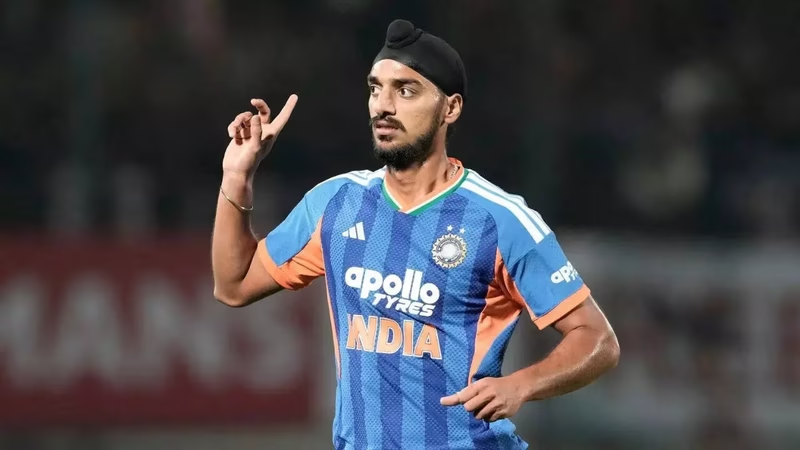
Where Is Arshdeep Singh? The Internet’s Burning Question After IND vs NZ ODI
When the playing XI for the first India vs New Zealand ODI in Vadodara was announced on January 11, 2026, one name was conspicuously missing: Arshdeep Singh. The left-arm pacer, a mainstay in India’s white-ball setup since 2022, was nowhere to be seen. In his place? Mohammed Siraj, making a return to the ODI side. The decision didn’t just surprise fans—it ignited a viral wave of memes with the simple, haunting question: “Where is Arshdeep?” . But beyond the internet humor lies a strategic puzzle worth unpacking. Why was Arshdeep Singh dropped—and what does it signal about India’s evolving ODI plans?
Table of Contents
- The Shock Omission: Arshdeep Singh Dropped from Playing XI
- Meme Explosion: Fans Mourn His Absence
- Possible Reasons Behind the Decision
- Siraj’s Return and Iyer’s Comeback: Key Team Shifts
- What This Means for India’s Bowling Future
- Conclusion: A Tactical Experiment or a Red Flag?
- Sources
Arshdeep Singh dropped: Breaking Down the Surprise
Arshdeep Singh has been one of India’s most dependable bowlers in limited-overs cricket. Known for his pinpoint yorkers, clever slower balls, and ice-cool demeanor in death overs, he played a pivotal role in India’s T20 World Cup 2024 triumph . His economy rate in ODIs over the past 18 months has hovered around 5.2—an elite mark for a frontline seamer.
Yet, in Vadodara, with cloudy skies and a pitch offering early seam movement, selectors opted for a different combination: Jasprit Bumrah, Mohammed Siraj, and Hardik Pandya as the pace trio. No specialist left-arm seamer. No Arshdeep. This marked the first time since early 2023 that he was left out of an ODI XI without a reported injury—making the omission all the more puzzling.
Meme Explosion: Fans Mourn His Absence
Social media erupted within minutes of the team announcement. Twitter (X), Instagram, and Reddit were flooded with creative, humorous, and sometimes concerned posts:
- “Missing since January 11, 2026. Last seen celebrating T20 World Cup win.”
- “Arshdeep Singh: presumed lost in transit between Mohali and Vadodara.”
- Mock “Wanted” posters featuring his photo and the caption: “Have you seen this pacer?”
While lighthearted, these memes reflect genuine fan investment. Arshdeep’s humble persona and consistent performances have made him a fan favorite. His sudden disappearance felt like a plot twist no one saw coming.
Possible Reasons Behind the Decision
Though the BCCI hasn’t issued an official statement, several credible theories explain why Arshdeep Singh dropped might be a calculated move:
- Pitch & Conditions: The Vadodara track offered bounce and seam. Siraj’s aggressive new-ball approach may have been preferred over Arshdeep’s powerplay containment style .
- Balancing the Attack: With Bumrah and Siraj both right-arm quicks who hit the deck hard, the combo provides varied angles and pace—potentially more disruptive to NZ’s top order.
- Workload Management: Arshdeep featured heavily in 2024–25 across all formats. This could be precautionary rest ahead of the 2026 ICC Champions Trophy [INTERNAL_LINK:india-pacer-workload-strategy].
- No Injury Confirmed: Crucially, there’s zero indication of fitness issues—suggesting this is purely tactical.
Siraj’s Return and Iyer’s Comeback: Key Team Shifts
Arshdeep’s absence wasn’t the only talking point. Two other major changes defined India’s XI:
- Mohammed Siraj’s Recall: After being rested during parts of the 2025 home season, Siraj’s return signals a push for experienced wicket-takers with the new ball.
- Shreyas Iyer’s Comeback: Returning from a chronic back injury that sidelined him for nearly a year, Iyer slotted in at No. 4, adding much-needed stability to the middle order .
Captain Shubman Gill, opting to bowl first under overcast conditions, clearly wanted to test specific combinations—a move aligned with India’s broader goal of building depth before major tournaments.
What This Means for India’s Bowling Future
The Arshdeep Singh dropped narrative highlights a growing reality: India’s pace attack is deeper than ever. With Bumrah as the undisputed leader, the race for supporting roles includes Siraj, Arshdeep, Mukesh Kumar, and emerging talents like Yash Dayal.
Arshdeep remains indispensable in T20s and high-pressure death scenarios. But in ODIs, where conditions vary wildly, selectors may be exploring flexible combinations. This ODI could be a one-off experiment—or the start of a new pecking order based on venue-specific strategies.
Conclusion: A Tactical Experiment or a Red Flag?
Dropping Arshdeep Singh wasn’t a random oversight—it was a deliberate, high-stakes call. Whether it pays off depends on match results and performance data. But one thing is certain: in today’s hyper-competitive Indian squad, no spot is guaranteed. For now, fans will keep asking, “Where is Arshdeep?”—not just as a meme, but as a testament to how vital he’s become. His return is likely imminent, but this moment underscores the ruthless evolution of Team India’s white-ball blueprint.
Sources
- Times of India: ‘Where is Arshdeep?’ — Memes flood internet after pacer dropped
- ESPNcricinfo Match Report: IND vs NZ, 1st ODI, Vadodara – Full Scorecard
- ICC Player Stats: ICC ODI Bowling Rankings