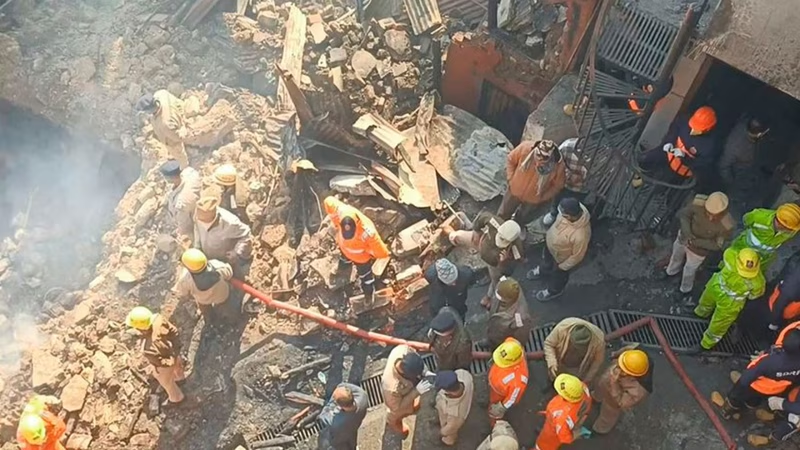
In the early hours of January 12, 2026, a massive fire engulfed the historic market of Arki—a quaint town in Himachal Pradesh’s Solan district—turning a vibrant commercial center into a scene of chaos and heartbreak. By dawn, three lives had been confirmed lost, including that of a teenage boy, while seven others remained missing amid smoldering ruins .
The blaze, which broke out around 3:45 AM, spread rapidly through tightly packed wooden shops stacked with textiles, electronics, and cooking gas cylinders. With narrow lanes and no functional fire hydrants nearby, local responders were overwhelmed. It took over five hours for reinforcements from Shimla and Solan to fully contain the inferno. Now, as recovery efforts continue, residents and officials alike are demanding answers: How could such a disaster strike in broad winter stillness—and could it have been prevented?
Table of Contents
- What Happened During the Arki Market Fire?
- Casualties and the Missing Persons List
- Why the Fire Spread So Quickly: A Technical Breakdown
- Rescue and Relief Efforts on the Ground
- Fire Safety Violations in Historic Markets
- Statewide Response and Policy Reforms Demanded
- Conclusion: A Wake-Up Call for Small-Town India
- Sources
What Happened During the Arki Market Fire?
According to eyewitnesses, the fire began in a ground-floor electronics store that also illegally stored LPG cylinders. “There was a loud explosion, then flames shot up to the second floor in seconds,” said Rajinder Sharma, a neighboring shop owner who escaped with minor burns .
Many residents were asleep above their shops—a common practice in small-town India. The boy, identified as 14-year-old Arjun Verma, was reportedly trying to help his family evacuate when he became trapped. His body was recovered near the staircase of his family’s garment shop.
By sunrise, over 40 shops were reduced to ash. The market, dating back to the British era, had no fire exits, smoke alarms, or sprinkler systems.
Casualties and the Missing Persons List
As of January 13, 2026, official reports confirm:
- 3 dead: Including Arjun Verma (14), shopkeeper Om Prakash (52), and laborer Suresh Kumar (38)
- 7 missing: All believed to have been sleeping in upper rooms; names withheld pending identification
- 12 injured: Treated at Arki Civil Hospital and Solan District Hospital
Search teams using sniffer dogs and thermal drones continue sifting through debris, though hopes of finding survivors are fading.
Why the Fire Spread So Quickly: A Technical Breakdown
Fire safety experts point to a deadly combination of factors:
- Combustible construction: Wooden beams, thatched roofs, and decades-old wiring created perfect fuel.
- Illegal storage: Multiple shops stored LPG cylinders and flammable chemicals without permits.
- No water access: The nearest functional hydrant was 800 meters away; fire tenders struggled to navigate narrow alleys.
- Late detection: No smoke detectors meant the fire grew unchecked for nearly 30 minutes.
“This wasn’t just an accident—it was a preventable catastrophe,” said retired Chief Fire Officer R.K. Mehta .
Rescue and Relief Efforts on the Ground
Over 120 personnel from the National Disaster Response Force (NDRF), State Disaster Response Force (SDRF), and local police have been deployed. Temporary shelters have been set up at Arki Government School, with food, blankets, and medical aid provided by the district administration.
Himachal Pradesh Chief Minister Sukhvinder Singh Sukhu visited the site on January 12, announcing ex-gratia payments of ₹5 lakh to families of the deceased and ₹1 lakh to the injured. He also ordered a magisterial inquiry into the incident .
Fire Safety Violations in Historic Markets
Arki’s market, like hundreds across rural India, operates in a regulatory gray zone. Though classified as a “heritage commercial zone,” it has never undergone a mandatory fire safety audit under the Himachal Pradesh Fire Prevention Act.
A 2024 state audit revealed that over 70% of small-town markets lack basic firefighting infrastructure. Yet enforcement remains lax due to political pressure and limited municipal budgets. As [INTERNAL_LINK:fire-safety-laws-india] advocates argue, tragedies like Arki expose the deadly cost of bureaucratic inertia.
Statewide Response and Policy Reforms Demanded
In the fire’s aftermath, civil society groups are calling for urgent reforms:
- Mandatory retrofitting of heritage markets with fire exits and alarms
- Bans on LPG storage in mixed-use commercial-residential buildings
- Creation of rapid-response fire units in every district headquarters
- Community fire drills and awareness campaigns in vulnerable towns
The Himachal Pradesh Urban Development Department has promised a statewide inspection drive within 30 days.
Conclusion: A Wake-Up Call for Small-Town India
The Arki market fire is more than a local tragedy—it’s a national warning. Across India, thousands of historic bazaars operate without basic safety nets, putting millions at risk. As rescue workers dig through ash in Arki, their mission isn’t just recovery—it’s revelation. Because until every market, big or small, meets minimum fire safety standards, the next inferno is only a spark away.
Sources
- Times of India: Boy among 3 dead, 7 missing in Arki market fire
- Himachal Pradesh Government Press Release: Chief Minister’s Statement on Arki Fire (Jan 12, 2026)
- National Disaster Management Authority (NDMA): Guidelines for Fire Safety in Commercial Establishments