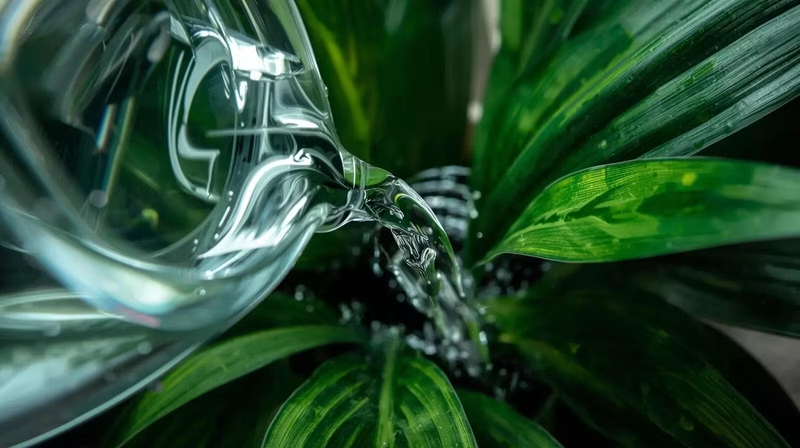
Stop Wasting Aquarium Water—It’s Liquid Gold for Your Garden!
That murky water you’re about to dump from your fish tank? Don’t flush it! What looks like waste is actually a powerhouse of natural nutrients that can supercharge your garden. Yes, aquarium water for plants isn’t just a quirky hack—it’s a time-tested, eco-friendly gardening secret endorsed by horticulturists and sustainable growers worldwide .
Fish waste, uneaten food, and decaying plant matter in your aquarium break down into ammonia, which beneficial bacteria convert into nitrates—a form of nitrogen plants absolutely love. Add in phosphorus, potassium, and trace minerals, and you’ve got a gentle, slow-release fertilizer that’s free, organic, and incredibly effective.
Table of Contents
- Why Aquarium Water for Plants Works
- What Nutrients Are in Aquarium Water?
- How to Safely Use Aquarium Water on Plants
- Which Plants Love Aquarium Water?
- Plants to Avoid Treating with Aquarium Water
- Advanced Tips for Eco-Gardeners
- Conclusion
- Sources
Why Aquarium Water for Plants Works
An aquarium is essentially a miniature ecosystem. Fish produce waste rich in ammonia. In a healthy tank, nitrifying bacteria (like Nitrosomonas and Nitrobacter) convert that ammonia first into nitrites, then into nitrates. While high nitrate levels can stress fish, they’re a dream for plants—nitrogen being a core component of chlorophyll, which drives photosynthesis and leafy growth.
Unlike synthetic fertilizers that can burn roots or leach into groundwater, aquarium water delivers nutrients in low, balanced concentrations that plants absorb gradually. Plus, it contains beneficial microbes that enhance soil structure and moisture retention—making your garden more resilient.
What Nutrients Are in Aquarium Water?
A typical freshwater aquarium water sample contains:
- Nitrogen (as nitrates): Promotes lush, green foliage and strong stems.
- Phosphorus: Supports root development, flowering, and fruiting.
- Potassium: Improves disease resistance and water regulation in plants.
- Trace minerals: Iron, calcium, magnesium—essential for enzyme function and overall plant health.
- Beneficial bacteria: Enhance soil microbiome and nutrient cycling.
According to a study referenced by the University of Minnesota Extension, using nutrient-rich water from closed-loop systems like aquariums can reduce the need for commercial fertilizers by up to 30% in home gardens .
How to Safely Use Aquarium Water on Plants
Not all aquarium water is garden-ready. Follow these steps to use it safely:
- Only use water from freshwater tanks. Saltwater or marine aquarium water will damage soil and plants due to salinity.
- Avoid medicated water. If you’ve recently treated your fish for disease, skip using that batch—chemicals can harm plants and soil microbes.
- Use during regular water changes. The water you remove during partial changes (typically 10–25% weekly) is ideal—nutrient-rich but not toxic.
- Apply like regular watering. Pour it directly at the base of plants; don’t spray on leaves to avoid potential bacterial residue.
- Rotate with plain water. Use aquarium water once every 2–4 weeks to prevent mineral buildup.
Which Plants Love Aquarium Water?
Most garden and houseplants respond beautifully to this natural tonic:
- Leafy greens: Lettuce, spinach, kale (they thrive on nitrogen)
- Flowering plants: Tomatoes, peppers, roses (phosphorus boosts blooms)
- Houseplants: Pothos, spider plants, peace lilies
- Herbs: Basil, mint, cilantro
- <Lawns: A light watering can green up patches naturally
Plants to Avoid Treating with Aquarium Water
Some plants are sensitive to the microbes or pH shifts in aquarium water:
- Succulents and cacti: Prefer dry, low-nutrient conditions; excess moisture and nitrogen can cause rot.
- Seedlings: Their delicate roots can be overwhelmed; stick to plain water until established.
- Plants in sterile setups: Like orchids grown in bark—introducing bacteria may disrupt their specialized environment.
Advanced Tips for Eco-Gardeners
Take your sustainable gardening further:
- Combine with compost tea: For an even richer microbial boost.
- Use on new transplants: The mild nutrients help reduce transplant shock.
- Store short-term: If you can’t use it immediately, keep it in a sealed container for up to 24 hours (stir before use).
- Track results: Keep a garden journal to compare growth with and without aquarium water.
For more on closing the loop in your backyard, check out our guide on [INTERNAL_LINK:zero-waste-gardening-tips-for-urban-homes].
Conclusion
Reusing aquarium water for plants is a win-win: your fish get a cleaner tank, and your garden gets a free, organic fertilizer packed with everything it needs to thrive. It’s sustainable, cost-effective, and surprisingly powerful. So next time you’re doing a water change, grab a watering can instead of the drain—and watch your plants thank you with vibrant, healthy growth.
Sources
- Times of India: Don’t throw away aquarium water! Here’s what to do
- University of Minnesota Extension: Using Recycled Water in the Garden
- Royal Horticultural Society (RHS): Natural Fertilizers and Soil Health
- Aquarium Science Journal: Nutrient Cycling in Freshwater Ecosystems