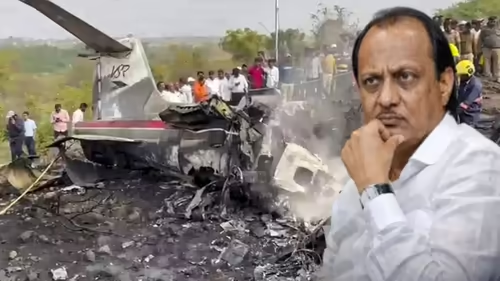
The sky over Baramati turned from a canvas of dawn to a scene of national tragedy on January 28, 2026. Maharashtra’s Deputy Chief Minister, Ajit Pawar, was among the five souls lost when their chartered Learjet 45XR met a catastrophic end during its landing approach [[1]]. This isn’t just another aviation incident; it’s a grim reminder that has violently reopened a file long buried in bureaucratic drawers: the complex, often opaque world of VVIP flights in India.
Table of Contents
- The Baramati Tragedy: What We Know
- VVIP Flights Under the Microscope
- A History Written in Tragedy
- Why Do These Crashes Keep Happening?
- Conclusion: A Call for Transparent Reform
- Sources
The Baramati Tragedy: What We Know
The ill-fated flight, operated by VSR Aviation, departed from Mumbai’s Chhatrapati Shivaji Maharaj International Airport en route to Baramati, a town with a small airstrip that serves as a private airport for the influential Pawar family [[3]]. Early reports from aviation experts point to a critical factor: the absence of an Instrument Landing System (ILS) at Baramati. An ILS is a ground-based system that provides precision guidance to aircraft during poor visibility, a standard feature at most major airports but not at smaller, private ones [[6]]. In the foggy morning conditions, this lack of infrastructure may have been a decisive factor in the crash.
VVIP Flights Under the Microscope
The term “VVIP flights” often conjures images of luxury and exclusivity, but behind the curtain lies a system fraught with questions about safety versus convenience. While the Ministry of Civil Aviation has Standard Operating Procedures (SOPs) for handling such flights, these primarily focus on ground logistics, security, and protocol—not necessarily on the airworthiness of the aircraft or the specific risks of the destination airport [[7]].
Chartered private jets for high-ranking officials operate in a grey zone. They are subject to the same basic aviation regulations as commercial carriers, but the pressure to accommodate tight schedules and land at convenient, often less-equipped, private airstrips can create a dangerous cocktail. The question that now haunts the public is whether the desire for a direct, private landing at Baramati overrode a more cautious approach of landing at a major airport like Pune and then traveling by road.
The Allure and Risk of Private Air Travel
For political leaders and business tycoons, private jets offer unmatched efficiency and privacy. However, this convenience comes with inherent risks:
- Airport Infrastructure: Many private airstrips lack advanced navigation aids like ILS, making them vulnerable in adverse weather [[6]].
- Operational Pressure: Pilots may feel implicit pressure to complete a mission for a high-profile client, potentially compromising safety judgments.
- Oversight Challenges: Ensuring consistent maintenance and operational standards across numerous private charter operators is a significant regulatory challenge [[13]].
A History Written in Tragedy
Ajit Pawar’s death is a devastating addition to a long and sorrowful list of Indian leaders and dignitaries who have perished in aviation accidents. This history is a stark testament to the persistent dangers of air travel for the nation’s elite.
- General Bipin Rawat (2021): India’s first Chief of Defence Staff died in a helicopter crash in Tamil Nadu.
- YS Rajasekhara Reddy (2009): The then Chief Minister of Andhra Pradesh died when his helicopter crashed in a forest.
- Madhavrao Scindia (2001): A senior Congress leader and former Union Minister died in a plane crash in Mainpuri, Uttar Pradesh [[17]].
Each of these tragedies prompted a wave of grief and promises of review, yet the fundamental issues surrounding the use of private and chartered aircraft for VVIPs seem to resurface with every new incident [[16]].
Why Do These Crashes Keep Happening?
The recurring nature of these accidents points to systemic issues beyond mere bad luck. Experts often cite the “VIP syndrome,” where normal safety protocols are bypassed or relaxed to accommodate the status of the passenger [[13]]. The focus shifts from risk mitigation to fulfilling the request, creating a culture where safety can become secondary.
Furthermore, the regulatory framework, while existing on paper, may not be robust enough to enforce stringent safety checks on every private charter flight, especially those destined for remote or private airfields. The Baramati crash, with its apparent link to inadequate landing infrastructure, highlights this critical gap [[6]].
Conclusion: A Call for Transparent Reform
The death of Ajit Pawar is a profound personal and political loss. But to honor his memory and prevent future tragedies, the nation must move beyond condolences and into concrete action. It’s time for a transparent, independent, and thorough review of the policies governing VVIP flights. This review must prioritize safety above all else, establishing clear, non-negotiable protocols regarding aircraft selection, pilot briefing, and, crucially, the suitability of destination airports based on their infrastructure and prevailing weather conditions. The skies should be a safe passage for everyone, regardless of their status on the ground.
Sources
- Xinhua News Agency: Aircraft crash kills India’s Maharashtra deputy chief minister
- Wikipedia: 2026 Baramati Learjet 45 crash
- NDTV Profit: Baramati Plane Crash: Lack Of Instrument Landing System May Have Contributed, Say Aviation Experts
- Scribd: Revised SOP For Handling of VVIP Flights
- Times of India: A timeline of major air accidents in India
- ETV Bharat: List of VVIPs who died in aviation tragedies over the years
- SPS Aviation: VIP Syndrome