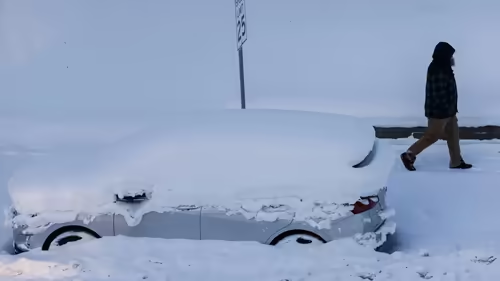
If you’re planning to fly with Air India out of or into the New York metropolitan area this weekend, you’ll need to adjust your plans—fast. The national carrier has announced the complete cancellation of all its flights to and from New York (JFK) and Newark (EWR) on January 25 and 26, 2026, in response to an impending and potentially historic winter storm bearing down on the US East Coast .
This isn’t just a minor schedule tweak. It’s a full operational shutdown for two critical days at two of the busiest airports in the United States. For thousands of travelers—especially Indian nationals, students, and business professionals relying on these key transatlantic routes—the ripple effects could be significant. But the airline’s decision is rooted in one non-negotiable priority: safety.
Table of Contents
- Why Air India Cancelled New York Flights
- Which Flights Are Affected?
- What Passengers Should Do Next
- Rebooking and Refund Policy
- How Bad Is the Winter Storm Really?
- Tips for Travelers During Extreme Weather
- Conclusion: Stay Informed and Stay Safe
- Sources
Why Air India Cancelled New York Flights
The decision to cancel all Air India New York flights cancelled wasn’t made lightly. According to the airline’s official statement, the move is a direct response to forecasts from the National Weather Service predicting “life-threatening conditions” across the Northeast corridor .
Expected impacts include:
- Heavy snowfall exceeding 12–18 inches in some areas
- Dangerous wind chills dropping below -20°F (-29°C)
- Icy runways and taxiways posing serious de-icing challenges
- Potential for widespread power outages and ground transportation shutdowns
Air India emphasized that the safety of its passengers and crew is paramount. Operating flights under such extreme conditions would not only risk aircraft performance but also jeopardize ground operations, including fueling, baggage handling, and emergency response capabilities.
Which Flights Are Affected?
All Air India services connecting India to the New York region are suspended for both January 25 and 26. This includes daily flights on key routes such as:
- AI 101 / AI 102: Delhi (DEL) ↔ New York (JFK)
- AI 127 / AI 128: Mumbai (BOM) ↔ Newark (EWR)
- AI 115 / AI 116: Delhi (DEL) ↔ Newark (EWR)
Passengers holding tickets on these routes for the specified dates are automatically impacted. The airline has not yet confirmed whether cancellations will extend beyond January 26, but it advises travelers to monitor official channels closely as the storm evolves.
What Passengers Should Do Next
If your travel plans involve Air India flights to or from New York or Newark this weekend, here’s your immediate action plan:
- Do not go to the airport. Flights are officially cancelled, and airport access may be restricted due to weather.
- Check your booking status via the Air India website or mobile app using your PNR number.
- Wait for an email or SMS from Air India with rebooking instructions—they are proactively contacting affected passengers.
- Consider alternative routes through other US gateways like Chicago (ORD) or San Francisco (SFO), if your itinerary allows flexibility.
For urgent assistance, contact Air India’s 24/7 customer service center or visit their dedicated Manage Your Trip portal.
Rebooking and Refund Policy
In line with global aviation best practices during force majeure events like extreme weather, Air India is offering flexible options:
- Free rebooking on the next available Air India flight within 14 days of the original travel date.
- Full refund without penalty for cancelled flights, even on non-refundable tickets.
- No change fees for rescheduling to a different destination within the same region (e.g., switching from JFK to EWR once operations resume).
These policies are consistent with guidelines from the U.S. Department of Transportation, which mandates that airlines provide refunds when they cancel a flight and cannot re-accommodate passengers in a reasonable timeframe .
How Bad Is the Winter Storm Really?
This isn’t just another snow day. The National Weather Service has issued a Blizzard Warning for much of coastal New York and New Jersey, with forecast models suggesting this could be one of the most intense January storms in over a decade .
Key risks include whiteout conditions, near-zero visibility, and snow drifts up to 3 feet high. Major highways like I-95 and the Garden State Parkway are expected to close, and public transit systems—including the NYC subway and NJ Transit—are likely to suspend service. The storm’s timing over a weekend may reduce commuter impact but severely complicates recovery efforts.
For real-time updates, travelers should consult the National Weather Service or local emergency management websites.
Tips for Travelers During Extreme Weather
Winter storms can disrupt even the best-laid plans. If you’re traveling during this season, keep these expert tips in mind:
- Build buffer days into your itinerary when flying during peak winter months.
- Sign up for flight alerts via airline apps and third-party services like FlightAware.
- Know your rights—U.S. and EU regulations often require compensation or care during long delays caused by controllable factors (though weather is typically exempt).
- Pack essentials in your carry-on, including medications, chargers, and a change of clothes, in case of unexpected overnight stays.
For more on navigating international travel disruptions, see our guide on [INTERNAL_LINK:travel-insurance-tips].
Conclusion: Stay Informed and Stay Safe
The cancellation of all Air India New York flights cancelled on January 25–26 is a stark reminder of nature’s power—and the aviation industry’s responsibility to prioritize human safety above all else. While the inconvenience is undeniable, the proactive move may prevent far worse outcomes.
If you’re affected, act quickly but calmly: use Air India’s self-service tools, explore rebooking options, and don’t hesitate to request a refund if your plans are no longer viable. Most importantly, heed local weather advisories and avoid unnecessary travel during the storm’s peak. Safe skies will return—but for now, staying grounded is the wisest choice.