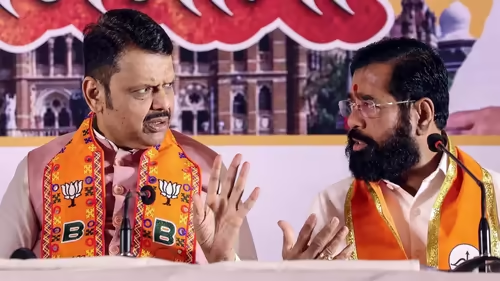
It’s a scene straight out of a political thriller: nearly three dozen elected representatives sequestered in a five-star Mumbai hotel, cut off from the public, media, and even their own families. But this isn’t fiction—it’s the latest chapter in Maharashtra’s never-ending saga of realpolitik.
Chief Minister Eknath Shinde, leader of the Shiv Sena (Shinde faction), has brought together all 29 of his party’s newly elected corporators under one roof as negotiations with ally BJP over the distribution of key posts in the Brihanmumbai Municipal Corporation (BMC) reach a boiling point . The stakes? Control of India’s richest civic body—including the prestigious mayor’s chair for the first 2.5 years—and influence over multi-crore infrastructure and welfare decisions.
While Deputy CM Devendra Fadnavis swiftly dismissed rumors of “poaching” or internal sabotage, calling it “out of the question,” the optics tell a different story. Why lock up your own team unless you fear they might be swayed—or worse, defect?
Table of Contents
- Why Eknath Shinde Corporators Are in a Hotel
- The Battle for the Mayor’s Post
- BJP-Shiv Sena Alliance Under Stress?
- Historical Context: Mumbai’s Political Chessboard
- What the Corporators Want
- Legal and Ethical Questions
- Conclusion: A Delicate Dance of Power
- Sources
Why Eknath Shinde Corporators Are in a Hotel
The official line from Team Shinde is simple: this is a “strategy meeting” to unify their stance before finalizing the power-sharing formula with the BJP. With 29 corporators, the Shinde faction is the single largest group within the ruling alliance in the BMC, giving them significant leverage .
However, political analysts see deeper motives. “This is about control and containment,” says Dr. Anjali Deshpande, a professor of political science at Mumbai University. “After the 2022 split, trust within the Sena is fragile. By keeping them together, Shinde prevents individual BJP leaders from making side deals or dangling committee chairmanships as incentives.”
In essence, the hotel has become a political bunker—a place to fortify loyalty before entering high-stakes negotiations.
The Battle for the Mayor’s Post
At the heart of the dispute is the rotational mayoral post. Traditionally, the BJP and Shiv Sena have split the 5-year term, with each party holding the office for 2.5 years. Now, the Shinde faction insists it’s their turn first, arguing that their performance in the recent civic polls—where they outperformed both the Uddhav Thackeray-led Sena and the BJP in several key wards—earns them the opening slot .
The BJP, however, is reportedly reluctant. Allowing a Shinde loyalist to occupy the mayor’s seat could further legitimize his breakaway faction and weaken the BJP’s own bargaining position in future state-level talks. It’s not just about ceremony; the mayor controls agenda-setting, emergency funds, and symbolic authority over Mumbai’s 12.5 million residents.
BJP-Shiv Sena Alliance Under Stress?
Despite public displays of unity, cracks are showing. The BJP won 94 seats to Shinde Sena’s 29—a numerical dominance that should give the saffron party the upper hand. Yet, the Shinde camp is leveraging its role as kingmaker in a fractured mandate, demanding parity beyond raw numbers.
Deputy CM Fadnavis’s quick denial of “poaching” is telling. In Maharashtra politics, such denials often precede actual defections. The fact that he felt compelled to address it suggests internal anxiety. For more on coalition dynamics, see our explainer on [INTERNAL_LINK:maharashtra-political-alliances].
Historical Context: Mumbai’s Political Chessboard
Mumbai’s civic body has long been a proxy battleground for state and national ambitions. From Bal Thackeray’s era of street power to the BJP’s institutional rise, control of the BMC has signaled political dominance in Maharashtra.
The 2022 split in Shiv Sena—when Shinde rebelled against Uddhav Thackeray with BJP’s backing—upended decades of Marathi manoos politics. Now, the BMC elections are the first major test of whether the Shinde faction can sustain itself as an independent force or remains a junior partner dependent on BJP patronage .
What the Corporators Want
Beyond the mayor’s gavel, the real prize lies in the standing committees:
- Improvement Committee: Controls building permissions and real estate approvals—worth thousands of crores.
- Finance Committee: Oversees the BMC’s ₹50,000+ crore annual budget.
- Health & Education Committees: Manage hospitals, schools, and public welfare schemes.
For newly elected corporators—many of whom are first-timers—these positions mean direct access to resources, visibility, and re-election prospects. No wonder Shinde wants them locked in a room until everyone sings from the same hymn sheet.
Legal and Ethical Questions
While not illegal, confining elected representatives raises ethical concerns. Are they free to communicate? Can they meet constituents? The Supreme Court has previously frowned upon “resort politics” during no-confidence motions, calling it a threat to democratic deliberation . Though this is a pre-allotment gathering, the precedent is uncomfortable.
Critics argue that true democracy requires transparency—not backroom deals behind guarded hotel doors.
Conclusion: A Delicate Dance of Power
The gathering of Eknath Shinde corporators in a Mumbai hotel is more than just a tactical huddle—it’s a symbol of Maharashtra’s volatile, transactional politics. As the BJP and Shinde Sena negotiate over who gets to wear the mayor’s chain, millions of Mumbaikars wait to see if this power play translates into better roads, cleaner water, and efficient services—or just more political theater. One thing is certain: in the game of thrones that is Mumbai politics, every corporator counts, and no room is safe from ambition.
Sources
[1] Times of India: Eknath Shinde corrals 29 corporators in hotel; no question of poaching, says Fadnavis
[2] Hindustan Times: BMC Election Results 2025 – Seat Breakdown
[3] The Indian Express: The Rise and Fracture of Shiv Sena
[4] Supreme Court of India: Judgment in S.R. Bommai v. Union of India (1994)
[5] Election Commission of India: Mumbai Municipal Corporation Election Data