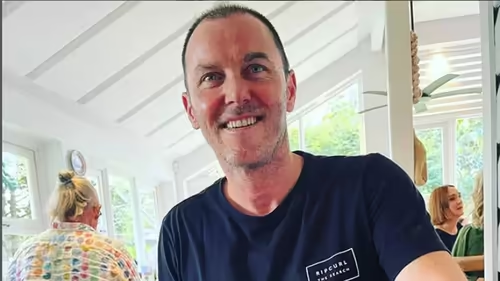
On December 27, 2025, the world of cricket held its breath. Former Australian batting great Damien Martyn was rushed to Gold Coast University Hospital, his body ravaged by a sudden and aggressive case of bacterial meningitis. The diagnosis was grim: doctors were forced to place him in an induced coma, giving him what reports described as a mere “50/50 chance of survival” .
Fast forward to January 2026, and Martyn has not only woken up but is back home, sharing an emotional and powerful message with the world: “I’m back.” His journey from the brink of death to recovery is nothing short of miraculous, serving as a stark, real-world reminder of just how fragile life can be.
Table of Contents
- The Nightmare Begins: Damien Martyn’s Meningitis Diagnosis
- What is Bacterial Meningitis? A Silent Killer
- The Road to Recovery: From Coma to ‘I’m Back’
- Other Athletes Who Fought and Beat Meningitis
- Key Takeaways and The Importance of Awareness
- Sources
The Nightmare Begins: Damien Martyn’s Meningitis Diagnosis
Martyn’s ordeal began just after Christmas. What might have initially felt like a severe flu rapidly escalated into a life-threatening neurological emergency. Meningitis, an inflammation of the protective membranes covering the brain and spinal cord, had taken hold. The severity was such that medical staff had no choice but to induce a coma to protect his brain and give his body a fighting chance to heal .
For eight long days, Martyn lay unconscious in the intensive care unit. During this time, his family, friends, and a global community of cricket fans rallied together, sending waves of support and positive energy. His eventual awakening and subsequent return home have been described as “miraculous,” a word that barely captures the gravity of his situation .
What is Bacterial Meningitis? A Silent Killer
The Damien Martyn meningitis case has shone a crucial spotlight on a disease that can strike with terrifying speed. Bacterial meningitis is a medical emergency that requires immediate hospitalization and treatment.
Common symptoms in adults include [[9], [13]]:
- A sudden, severe headache (present in almost 90% of cases)
- High fever
- Stiff neck that makes it hard to touch your chin to your chest
- Nausea and vomiting
- Confusion, drowsiness, or difficulty waking
- Sensitivity to light
Early recognition of these signs is critical. As the CDC and other health authorities stress, if you suspect meningitis, you must seek emergency medical care immediately . Treatment typically involves intravenous antibiotics and often corticosteroids to reduce inflammation and prevent complications .
The Road to Recovery: From Coma to ‘I’m Back’
Martyn’s recovery is a testament to both modern medical science and the power of a strong support system. In his own words, the experience was a profound reminder of life’s fragility. His public statement was filled with immense gratitude for the medical staff who saved his life and the unwavering love of his family and friends .
This phase of recovery is just the beginning. Survivors of severe meningitis often face a long rehabilitation process to regain full strength, cognitive function, and mobility. For an elite athlete like Martyn, whose career was built on precision and physical prowess, this journey will be particularly challenging, yet his determination is already evident.
Other Athletes Who Fought and Beat Meningitis
Martyn is not alone in this battle. History is filled with stories of athletes who have faced down this formidable foe and returned stronger. Their stories offer a powerful narrative of hope and resilience.
Notable examples include:
- Aitana Bonmatí: The Spanish football superstar overcame meningitis early in her career to become a Euro champion and one of the world’s best players .
- Jamie Schanbaum: A meningitis survivor who went on to win a Paralympic gold medal in para-cycling, becoming a leading advocate for vaccination .
- Ian Rush: The legendary Welsh footballer has spoken openly about how surviving meningitis gave him a new perspective and drive in his sporting career .
These stories, including Martyn’s, underscore a vital point: while meningitis is a devastating illness, survival and a return to a fulfilling life are possible.
Key Takeaways and The Importance of Awareness
The Damien Martyn meningitis story is far more than a piece of sports news; it’s a public health wake-up call. Here’s what we can all learn from his experience:
- Know the Symptoms: Don’t dismiss a severe headache with a stiff neck and fever as just a bad flu. Time is brain.
- Act Immediately: Bacterial meningitis is a race against time. Seek emergency care without delay.
- Vaccination is Key: Several types of bacterial meningitis are vaccine-preventable. Talk to your doctor about your options.
- Support is Crucial: The emotional and physical support network around a patient, as seen with Martyn, plays an invaluable role in recovery.
Martyn’s journey from a paralytic coma to declaring “I’m back” is a powerful narrative of human spirit. It’s a story that resonates not just with cricket fans, but with anyone who has ever faced a personal health crisis. His experience serves as a poignant reminder to cherish our health and to never underestimate the body’s capacity to heal.
For more on athlete health and wellness, see our guide on [INTERNAL_LINK:athlete-recovery-and-nutrition].
Sources
- Times of India: Damien Martyn’s emotional ‘I’m back’ post after beating Meningitis
- Cleveland Clinic: Bacterial Meningitis: Symptoms, Causes & Treatment
- World Health Organization (WHO): Meningitis Fact Sheet