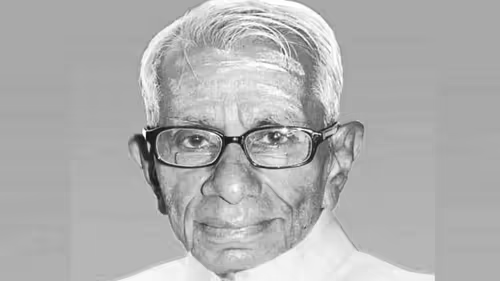
The state of Karnataka is in mourning. On Saturday, January 17, 2026, it lost one of its most revered sons: Bheemanna Khandre, a man whose life spanned over a century of Indian history. From the fiery streets of the independence movement to the corridors of power in Vidhana Soudha, Khandre’s journey was nothing short of extraordinary. His passing at the age of 102 marks not just the end of a long life, but the closing of a foundational chapter in Karnataka’s political and social development .
Khandre wasn’t just a politician; he was a builder of institutions, a champion of the farmer, and a fierce guardian of his region’s identity. His legacy is woven into the very fabric of North Karnataka, and his influence continues through his son, the current Forest Minister, Eshwar Khandre.
Table of Contents
- From Freedom Struggle to Political Arena
- The Bidar Battle: Securing North Karnataka’s Future
- Champion of the Cooperative Movement
- Ministerial Tenure and Contributions to Agriculture & Education
- A Dynasty of Public Service: The Khandre Legacy
- Conclusion: A Life Well Lived for Karnataka
- Sources
From Freedom Struggle to Political Arena
Born in 1923, Bheemanna Khandre’s formative years were shaped by the tumultuous fight for India’s independence. He was not a bystander in this historic struggle; he was an active participant, joining the ranks of young Indians who defied British rule. This early brush with sacrifice and service laid the bedrock for his lifelong commitment to public life.
After independence, he channeled that same passion into building a new India at the state level. He became a prominent leader of the Indian National Congress, a party that dominated Karnataka’s politics for decades. His deep roots in the Bhalki constituency of Bidar district made him a powerful voice for the people of North Karnataka, a region that often felt overlooked by the state’s southern power centers.
The Bidar Battle: Securing North Karnataka’s Future
Perhaps his most enduring contribution to the state was his pivotal role in the linguistic reorganization of states in the 1950s. At the time, there was a strong movement to merge the Marathi-speaking regions of the erstwhile Hyderabad State, including Bidar, with Maharashtra.
Khandre, along with other leaders like G.B. Pattanayak, led a fierce and determined campaign to keep Bidar within the newly formed Mysore State (which would later become Karnataka). His arguments centered on the historical, cultural, and economic ties of the region with the Kannada heartland. His success in this endeavor was monumental, ensuring that North Karnataka retained its place in the Kannada state—a decision that continues to shape the region’s identity today .
Champion of the Cooperative Movement
Beyond electoral politics, Bheemanna Khandre was a true stalwart of the cooperative movement in Karnataka. He understood that for a largely agrarian society, financial and marketing cooperatives were the key to empowering farmers and breaking the cycle of debt and dependence on moneylenders.
He played a crucial role in establishing and strengthening cooperative sugar factories, milk unions, and credit societies across his district. These institutions became the backbone of the rural economy in North Karnataka, providing farmers with fair prices for their produce and access to affordable credit. His work in this field earned him immense respect not just as a politician, but as a social reformer dedicated to grassroots economic development.
Ministerial Tenure and Contributions to Agriculture & Education
His dedication was rewarded with a cabinet position in the Karnataka government, where he served as the Transport Minister. While in office, he used his platform to advocate for policies that benefited his core constituencies: farmers and the rural poor.
He was a strong proponent of investments in agricultural infrastructure, such as irrigation projects and cold storage facilities, which are critical for reducing post-harvest losses. Furthermore, he believed that education was the ultimate tool for social upliftment and worked tirelessly to improve access to quality schools and colleges in his region, laying the groundwork for future generations.
A Dynasty of Public Service: The Khandre Legacy
Bheemanna Khandre’s commitment to public service has been inherited by his family. His son, Eshwar Khandre, is a prominent Congress leader in his own right and currently serves as the Forest Minister in the Karnataka government. This father-son duo represents a rare continuity of political and social commitment in a rapidly changing landscape.
[INTERNAL_LINK:karnataka-political-dynasties] Eshwar Khandre has often spoken about his father’s guidance and the values of integrity and service he instilled in him. The Khandre name remains synonymous with development and advocacy for North Karnataka.
Conclusion: A Life Well Lived for Karnataka
The Bheemanna Khandre death is a moment for the entire state to pause and reflect. He was a living bridge between India’s freedom struggle and its modern democratic journey. His life was a masterclass in how to translate the ideals of independence into tangible progress for one’s people. As Karnataka mourns its loss, it also celebrates a legacy that will inspire generations of public servants to come.
Sources
- Times of India: Former Karnataka minister Bheemanna Khandre passes away at 102
- Karnataka Legislative Assembly: Official Website
- Government of Karnataka: History of State Reorganisation