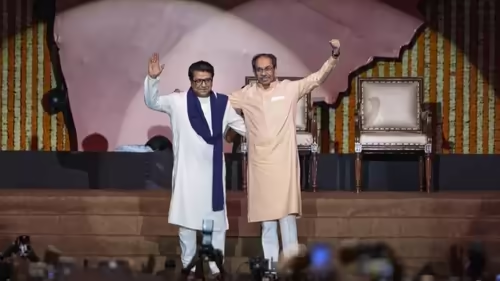
The streets of Mumbai were supposed to echo with a unified Marathi roar. After years of bitter rivalry, the Uddhav Thackeray-led Shiv Sena (UBT) and Raj Thackeray’s Maharashtra Navnirman Sena (MNS) buried the hatchet for the Brihanmumbai Municipal Corporation (BMC) elections, launching a joint “Save Marathis” campaign. The goal was audacious: to consolidate the Marathi manoos vote and halt the BJP’s relentless march in the city. Yet, as the votes were counted, a stark reality emerged. The Shiv Sena MNS alliance BMC polls strategy was a tale of two Mumbais—one clinging to its past, the other firmly embracing a new political future .
Table of Contents
- The Grand Alliance and Its Bold Promise
- Where It Held: Traditional Bastions in the South and Central
- Where It Collapsed: The Western Suburbs Revolt
- Why the ‘Save Marathis’ Plank Fell Flat
- The BJP Machine: A Formidable and Unified Force
- What This Means for the Thackeray Legacy
- Conclusion: A City Divided by a Changing Political Landscape
- Sources
The Grand Alliance and Its Bold Promise
The alliance between the UBT and MNS was more than just a political pact; it was an emotional homecoming for many Marathi loyalists. For over a decade, the two parties, led by cousins Uddhav and Raj Thackeray, had been locked in a fierce battle for the same voter base, often resorting to sharp personal attacks. Their reunion was sold as a necessary step to protect the interests of the Marathi community in their own city, which they argued was being eroded by outside influences and a dominant BJP.
Their central message was simple and nostalgic: “Save Marathis.” They hoped this powerful, identity-based appeal would cut through the noise of development promises and economic agendas, reawakening a sense of regional pride that had once been the bedrock of Shiv Sena’s power.
Where It Held: Traditional Bastions in the South and Central
The strategy did find some success, but it was geographically limited. In their long-standing strongholds of South Mumbai and parts of Central Mumbai—areas like Dadar, Parel, and Byculla—the Shiv Sena MNS alliance BMC polls effort managed to hold its ground . These are neighborhoods steeped in the history of the original Shiv Sena movement, where the Thackeray family name still carries immense emotional weight.
Here, the nostalgic appeal resonated. Voters in these pockets, many of whom have been loyal to the party for generations, were willing to give the reunited front a chance. They represent the core, the heartland from which the party’s ideology was born. However, this success was defensive rather than expansionist; they held what they had but failed to make significant gains elsewhere.
Where It Collapsed: The Western Suburbs Revolt
The true test of any Mumbai political force lies in the sprawling, affluent, and aspirational western suburbs—from Bandra to Borivali. This is where the middle class, the professionals, and the new economy reside. And here, the UBT-MNS alliance suffered a decisive defeat.
The BJP, riding on a wave of strong leadership under Chief Minister Eknath Shinde and a narrative of efficient governance and development, swept through these crucial wards. The “Save Marathis” plank, which leaned heavily on identity politics, failed to connect with a demographic that is more concerned with civic amenities, infrastructure, and a forward-looking vision for the city. For them, the alliance felt like a step backward, a return to a parochial politics they had moved beyond.
Why the ‘Save Marathis’ Plank Fell Flat
Several factors contributed to the limited reach of the alliance’s core message:
- Changing Demographics: Mumbai is no longer the city it was in the 1970s. It’s a global metropolis with a diverse population from all over India. An appeal solely to Marathi identity excludes a vast majority of its residents.
- Lack of a Positive Agenda: The campaign was largely negative, focused on what they were against (outsiders, BJP) rather than a clear, positive vision for Mumbai’s future.
- Credibility Gap: After years of public feuding, the sudden alliance felt opportunistic to many voters, lacking the authenticity needed to inspire trust.
The BJP Machine: A Formidable and Unified Force
In stark contrast, the BJP presented a picture of unity and purpose. With its alliance with Eknath Shinde’s faction of the Shiv Sena, it had successfully co-opted the Marathi leadership mantle while pairing it with a nationalistic, development-oriented agenda. Their campaign was well-funded, highly organized, and laser-focused on the issues that matter most to the average Mumbaikar: water, roads, and waste management.
This potent combination proved too strong for the emotionally-driven but strategically limited UBT-MNS alliance. The BJP didn’t just win votes; it won the narrative about what Mumbai needs to thrive in the 21st century.
What This Means for the Thackeray Legacy
The BMC results are a harsh verdict on the Uddhav Thackeray-led faction’s political strategy. It confirms a trend that has been building since the 2022 Maharashtra political crisis: the Thackeray family’s grip on Mumbai is loosening. While they retain a loyal base in their historical territories, their ability to project power across the entire city is severely diminished.
For Raj Thackeray’s MNS, the results are equally sobering. The alliance was his best chance in years to regain relevance, but its failure suggests that his brand of aggressive regionalism may have passed its peak of influence in a rapidly modernizing Mumbai.
Conclusion: A City Divided by a Changing Political Landscape
The outcome of the Shiv Sena MNS alliance BMC polls is more than just a local election result; it’s a mirror reflecting Mumbai’s soul. The city is now clearly divided between its nostalgic past and its pragmatic future. The old politics of identity, while still potent in certain pockets, is no longer enough to win the city. The electorate has spoken, demanding a politics of performance and progress over one of sentiment and symbolism. For the Thackerays, the path back to dominance will require far more than just a reunion; it will require a complete reinvention.
Sources
- Times of India: Only traditional bastions back UBT-MNS’s ‘save Marathis’ plank
- Election Commission of India: Official source for election results and data
- Mumbai Mirror (Archives): Historical context on Mumbai’s political landscape