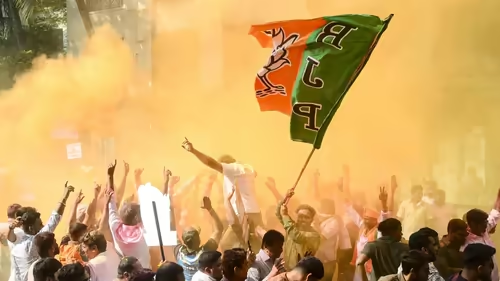
The political map of Maharashtra has been redrawn—at the grassroots level. The 2026 Maharashtra civic polls have delivered a thunderous verdict that leaves little room for ambiguity: the Mahayuti alliance is now the undisputed master of urban Maharashtra, while the once-formidable opposition coalition led by Uddhav Thackeray’s Shiv Sena (UBT), NCP, and Congress lies in tatters.
With decisive leads in powerhouse municipal corporations like Mumbai, Pune, and Nagpur, the BJP-Shiv Sena (Shinde faction) combine has not just won seats—it has captured the narrative. This victory is being hailed by its leaders as a direct mandate for Prime Minister Narendra Modi’s vision of nationalism, development, and strong central governance . For the opposition, it’s a moment of reckoning that raises existential questions about their future relevance in the state’s political landscape.
Table of Contents
- The Mahayuti Wave: A Comprehensive Victory
- Mumbai Falls: The Crown Jewel in Mahayuti’s Hands
- Thackeray Camp in Disarray: UBT Suffers Stinging Defeat
- Congress Falters: Beyond Repair in Maharashtra’s Urban Heartland?
- What This Means for the 2029 State Assembly Elections
- Sources
The Mahayuti Wave: A Comprehensive Victory
The scale of the Mahayuti alliance’s success is staggering. The coalition, which brought together the BJP and the Eknath Shinde-led faction of the Shiv Sena after the dramatic 2022 state government collapse, has translated its state-level power into overwhelming dominance at the local body level .
Beyond the headline cities, the alliance has secured commanding leads in key urban centers like Thane, Nashik, and Aurangabad. This isn’t just a collection of wins; it’s a systemic takeover of the administrative machinery that governs the daily lives of millions of Maharashtrians. Control over these civic bodies means control over crucial resources, contracts, and public services—a powerful platform to build a lasting political legacy and consolidate voter loyalty ahead of the next major electoral battle.
Mumbai Falls: The Crown Jewel in Mahayuti’s Hands
Perhaps the most symbolic and significant victory is in Mumbai, India’s financial capital and the traditional stronghold of the Thackeray family. For decades, the Brihanmumbai Municipal Corporation (BMC) was considered the Shiv Sena’s personal fiefdom. The 2026 results mark a historic turning point, with the Mahayuti alliance poised to take control of the BMC for the first time in its history .
This loss is a devastating blow to Uddhav Thackeray’s political standing. Mumbai wasn’t just a source of revenue and power; it was the emotional and ideological heart of his party’s identity. Losing it signals to the electorate that the old order has been decisively overturned, and a new political era, firmly aligned with the BJP’s national project, has dawned in the city.
Thackeray Camp in Disarray: UBT Suffers Stinging Defeat
Uddhav Thackeray’s decision to break ties with the BJP in 2022 was a high-stakes gamble that promised moral high ground but carried immense political risk. The 2026 Maharashtra civic polls have delivered a harsh verdict on that gamble. His faction, the Shiv Sena (UBT), has been routed across the board, failing to make significant inroads even in its traditional bastions .
The party’s campaign, which focused on Marathi pride and regional identity, appears to have been drowned out by the Mahayuti’s potent mix of national security, Hindutva, and promises of efficient civic governance. The results suggest that a large section of the urban electorate is prioritizing stability, development, and a connection to the central government’s momentum over purely regionalist appeals.
Congress Falters: Beyond Repair in Maharashtra’s Urban Heartland?
If the Thackeray camp’s defeat is a crisis, the Congress’s performance is a catastrophe. Once a dominant force in Maharashtra politics, the party has been reduced to a marginal player in the state’s most important urban centers. Its failure to capitalize on the anti-incumbency sentiment or to present a credible alternative has left it politically adrift .
The party’s inability to form a cohesive and effective alliance with the UBT and NCP (Sharad Pawar faction) has been its undoing. Voters perceived the opposition coalition as fragmented and opportunistic, lacking a clear vision or a strong leader to challenge the Mahayuti juggernaut. This election may mark the final chapter of the Congress’s long decline in Maharashtra, pushing it to the fringes of the state’s political discourse.
What This Means for the 2029 State Assembly Elections
While these are local body elections, their implications for the 2029 Maharashtra Assembly elections are profound. The Mahayuti alliance has used this victory to:
- Consolidate its base: Demonstrating its ability to deliver a united front and win decisively.
- Build a robust grassroots network: Controlling civic bodies provides a massive organizational advantage for future campaigns.
- Demoralize the opposition: Creating a narrative of inevitable decline for the UBT and Congress, making it harder for them to attract talent and funding.
For Prime Minister Modi and the BJP, this result is a powerful validation of their strategy to anchor their national dominance in key states like Maharashtra. It sends a clear message that their brand of politics continues to resonate strongly with the urban electorate. As the dust settles on this civic poll landslide, one thing is certain: the road to power in Maharashtra for the next decade runs firmly through the Mahayuti alliance. For more on national political trends, see our deep dive on [INTERNAL_LINK:bjp-national-strategy-2026] and [INTERNAL_LINK:maharashtra-political-history].