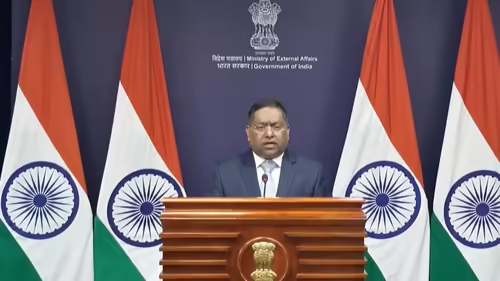
Ten Indian citizens are currently being held in custody in Iran—and the Indian government is scrambling to secure their release. The Ministry of External Affairs (MEA) confirmed on Friday, January 16, 2026, that it has formally requested consular access to the detained nationals, while high-level diplomatic channels remain open between New Delhi and Tehran .
Details remain scarce, but the situation has triggered alarm among families, diplomatic observers, and India’s large expatriate community in West Asia. With no official reason yet provided for the arrests, speculation is mounting—ranging from visa violations to potential involvement in regional geopolitical tensions.
Table of Contents
- What We Know So Far About the Incident
- Inside the ’10 Indians in Iran Custody’ Crisis
- MEA’s Official Response and Diplomatic Moves
- How This Affects India-Iran Relations
- Safety Advice for Indian Travelers in Iran
- What Happens Next?
What We Know So Far About the Incident
According to initial reports from the Times of India, the ten Indian nationals were taken into custody by Iranian authorities earlier this week. Their identities, professions, and locations of arrest have not been officially disclosed—likely due to privacy and ongoing investigations .
However, sources familiar with the matter suggest the group may include professionals working in sectors like construction, shipping, or energy—industries where Indian workers are commonly employed in Iran despite complex bilateral dynamics. There is no indication they were involved in any criminal activity, but Iranian law enforcement has historically acted swiftly in cases involving foreign nationals, especially amid heightened regional security concerns.
Inside the ’10 Indians in Iran Custody’ Crisis
The phrase “10 Indians in Iran custody” has quickly become a trending topic across Indian media and social platforms. Families of the detained individuals, many from states like Kerala, Gujarat, and Punjab, are pleading for transparency and swift intervention.
One relative, speaking anonymously to a local news outlet, said, “We haven’t heard from him in five days. Then came a call from someone saying he’s in jail—but no one tells us why.” Such uncertainty underscores the emotional toll on families and the urgent need for consular support.
Historically, India has faced similar challenges in Iran. In 2023, two Indian sailors were detained for months over alleged oil smuggling—a case eventually resolved through quiet diplomacy. But each incident strains an already delicate relationship shaped by U.S. sanctions, Chabahar Port cooperation, and energy imports.
MEA’s Official Response and Diplomatic Moves
In a brief but firm statement, MEA spokesperson Arindam Bagchi said, “We are aware of the reports regarding the detention of ten Indian nationals in Iran. We have sought consular access and are in touch with the Iranian authorities through diplomatic channels.”
This measured response reflects India’s cautious approach to Iran—a country it cannot afford to alienate due to strategic interests like the International North-South Transport Corridor (INSTC) and the Chabahar Port project, which bypasses Pakistan to reach Central Asia .
Meanwhile, the Indian Embassy in Tehran has activated its 24/7 helpline for distressed families and is coordinating with local legal aid networks. Still, without formal charges or access, progress remains slow.
How This Affects India-Iran Relations
While both nations publicly emphasize friendship, the reality is more nuanced. India relies on Iran for regional connectivity but must also balance its ties with the U.S. and Gulf allies. Any misstep in handling citizen detentions can trigger diplomatic friction.
Experts at the Observer Research Foundation note that “Iran often uses foreign nationals as leverage in broader geopolitical negotiations.” Whether that applies here remains unclear—but New Delhi is walking a tightrope.
Safety Advice for Indian Travelers in Iran
For Indians currently in or planning to visit Iran, the MEA advises:
- Always carry valid visas and residence permits
- Register with the Indian Embassy via the MEA’s MADAD portal
- Avoid discussing politics or sensitive regional issues publicly
- Keep emergency contacts—including the embassy’s 24/7 number—readily available
These steps won’t prevent arbitrary detention, but they can expedite assistance if trouble arises.
What Happens Next?
The coming days will be critical. If consular access is granted, India can assess the detainees’ well-being and legal standing. If not, the situation could escalate into a full-blown diplomatic row—especially if domestic political pressure mounts in India.
For now, the government is betting on quiet diplomacy over public outcry. But with ten lives in limbo, patience may wear thin. As one diplomat put it: “In Iran, silence isn’t always golden—it’s often a waiting game with human costs.”
Sources
- Times of India: ’10 Indians in Iran custody’: MEA seeks consular access; talks on
- Ministry of External Affairs (MEA): Official Statements & Consular Services
- Observer Research Foundation: India-Iran Strategic Analysis
- [INTERNAL_LINK:indian-citizens-detained-abroad-guide]
- [INTERNAL_LINK:chabahar-port-india-iran-project-update]