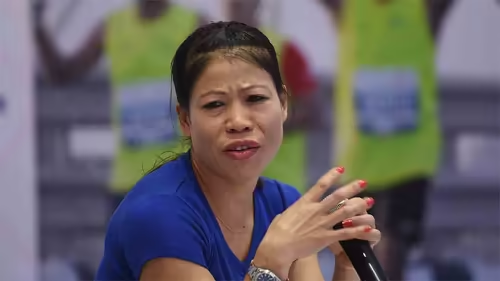
In a rare and emotionally charged intervention, former Indian cricketer Manoj Tiwary has ignited a national conversation about loyalty, public shaming, and the invisible labor behind sporting greatness. The controversy erupted after Tiwary posted—and later deleted—a video responding to recent statements made by boxing legend Mary Kom about her estranged husband, Karung Onkholer Kom.
“I expected a better human being in you,” Tiwary said in the now-removed clip, his voice heavy with disappointment. His core argument? That Onkholer, who stepped back from his own career to manage Mary Kom’s during her rise to Olympic glory, deserved respect—not public condemnation—especially amid allegations of financial misconduct.
The incident has reopened a sensitive debate: What do we owe the silent supporters who enable our heroes to shine?
Table of Contents
- What Did Mary Kom Say About Her Ex-Husband?
- Manoj Tiwary Mary Kom Controversy: The Viral Response
- Why the Support System Matters in Sports
- The Backlash and the Deletion
- Mental Health of Athletes’ Partners: Often Overlooked
- Broader Implications for Public Discourse
- Conclusion: Empathy in the Age of Virality
- Sources
What Did Mary Kom Say About Her Ex-Husband?
While details remain private due to ongoing legal proceedings, Mary Kom recently made public comments alleging financial impropriety by Karung Onkholer Kom during their marriage. She claimed he mishandled funds meant for her training and family expenses—a serious accusation that quickly went viral.
Onkholer, who served as Mary Kom’s manager for over a decade, has denied the allegations. Friends and associates describe him as a devoted partner who sacrificed his own professional ambitions to ensure Mary Kom could focus entirely on boxing—a path that led her to become a six-time world champion and Olympic bronze medalist.
Manoj Tiwary Mary Kom Controversy: The Viral Response
Tiwary, himself a veteran of domestic and international cricket, recorded a raw, unscripted video addressing Mary Kom directly. “You became what you are because someone stood behind you,” he said. “That man gave up everything—his identity, his career—for your dream. And now, in public, you’re tearing him down?”
He emphasized that relationships in elite sports are rarely one-sided: “Success is co-authored. When you win, it’s ‘we.’ When things go wrong, it shouldn’t suddenly become ‘he.’” The video, shared widely on Instagram and X (formerly Twitter), resonated with many who felt Onkholer’s contributions were being erased.
Why the Support System Matters in Sports
Behind every elite athlete is a network of unsung heroes:
- Spouses/Partners: Often manage logistics, finances, and emotional stability.
- Parents & Siblings: Provide early encouragement and financial sacrifice.
- Coaches & Managers: Navigate contracts, media, and career strategy.
As noted by the International Olympic Committee, “Athlete well-being is deeply tied to the quality of their personal support ecosystem” . When that ecosystem is publicly vilified, it doesn’t just hurt individuals—it discourages future support figures from stepping up.
The Backlash and the Deletion
While many praised Tiwary’s courage, others accused him of overstepping—especially since he isn’t privy to the full facts of the marital dispute. Critics argued that victims of financial abuse should not be silenced by narratives of “sacrifice.”
Facing mounting pressure, Tiwary deleted the video within hours, posting only: “Out of respect for privacy, I’ve removed my statement. My intention was never to take sides, but to advocate for dignity.” Despite the deletion, screenshots and re-uploads ensured the message lived on.
Mental Health of Athletes’ Partners: Often Overlooked
Karung Onkholer Kom’s situation highlights a critical gap in sports psychology: the mental toll on partners. A 2024 study by the British Journal of Sports Medicine found that 68% of elite athletes’ spouses report anxiety or identity loss due to living in their partner’s shadow .
Public accusations—especially from a globally revered figure like Mary Kom—can exacerbate this trauma, leading to social isolation and depression. Tiwary’s plea, however imperfect, drew attention to this vulnerable group.
Broader Implications for Public Discourse
This episode reflects a larger cultural tension: the right to speak out versus the ethics of public exposure. In the #MeToo era, accountability is vital—but so is due process and compassion.
As journalist Barkha Dutt observed, “We must create space for truth without turning personal pain into public spectacle.” The challenge lies in balancing justice with humanity—a balance both Mary Kom and Manoj Tiwary are now navigating under intense scrutiny.
Conclusion: Empathy in the Age of Virality
The Manoj Tiwary Mary Kom controversy isn’t just about one deleted video—it’s a mirror held up to how we treat the people behind our icons. Whether or not Onkholer Kom is guilty of wrongdoing is for courts to decide. But his humanity—and the dignity of all support figures—should never be collateral damage in a public feud.
Tiwary’s brief, impassioned message may have been retracted, but its core question remains: In celebrating champions, do we forget those who helped them wear the crown? For more on athlete wellness, explore our [INTERNAL_LINK:sports-mental-health-crisis] special report.
Sources
- Times of India: ‘Expected better human’: Cricketer lashes out at Mary Kom; later deletes video
- Olympic.org – Athlete Support Systems: IOC Athlete365 Well-being Resources
- British Journal of Sports Medicine: Mental Health of Athletes’ Partners (2024 Study)
- PTI Archives: Mary Kom Family Dispute Coverage