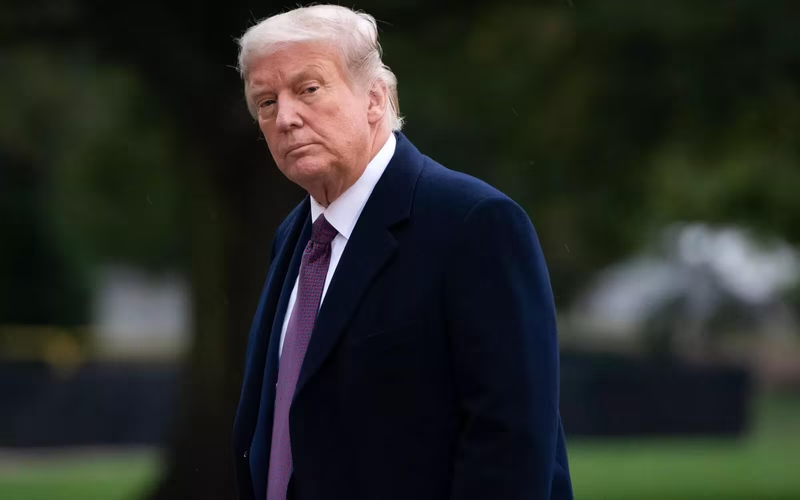
In the high-stakes game of Middle Eastern geopolitics, good intentions can have explosive unintended consequences. As former President Donald Trump and his allies ramp up calls for tougher sanctions—or even military strikes—against Iran, a growing chorus of analysts is sounding the alarm over what they call “The Boomerang risk.”
Far from weakening Ayatollah Ali Khamenei’s regime, history shows that overt U.S. or Israeli aggression often does the opposite: it unites a fractured Iranian public under the banner of national survival, fractures fragile protest coalitions, and hands hardliners the perfect excuse to crush dissent with impunity. At a time when Iran’s leadership is struggling to contain widespread domestic unrest over economic collapse and political repression, foreign force may be the very lifeline the regime needs.
Table of Contents
- What Is ‘The Boomerang Risk’?
- Historical Precedents: When Foreign Pressure Saved Tehran
- How Nationalism Becomes the Regime’s Ultimate Weapon
- Trump’s Rhetoric and the Danger of Military Posturing
- What Should the West Do Instead?
- Conclusion: A Cautionary Tale for Foreign Policymakers
- Sources
The Boomerang Risk: A Strategic Paradox
Coined by scholars of authoritarian resilience, “The Boomerang risk” describes the counterintuitive phenomenon where external pressure—especially military threats or sanctions—backfires by strengthening the very regime it aims to undermine. In Iran’s case, this dynamic is particularly potent due to the country’s deep-seated historical memory of foreign interference, from the 1953 CIA-backed coup to the devastating Iran-Iraq War.
When faced with an existential external threat, ordinary Iranians—even those who despise the clerical regime—often rally around the flag. The enemy shifts from “Khamenei” to “America” or “Israel,” allowing the state to reframe internal dissent as treasonous collaboration with foreign powers. This narrative isn’t just propaganda—it taps into genuine patriotic sentiment that transcends political divides.
Historical Precedents: When Foreign Pressure Saved Tehran
Iran’s modern history is littered with examples of this boomerang effect:
- 2009 Green Movement: After massive post-election protests, then-President Mahmoud Ahmadinejad’s government used fears of Western-backed regime change to justify mass arrests and executions. Public sympathy for protesters waned as state media framed them as tools of foreign intelligence.
- 2018–2019 Sanctions Surge: Trump’s “maximum pressure” campaign initially sparked anger at the regime—but within months, economic hardship was blamed on U.S. “economic warfare,” not domestic mismanagement.
- 2020 Soleimani Assassination: The U.S. drone strike that killed Qasem Soleimani triggered nationwide mourning and temporarily unified even reformists behind the Revolutionary Guard.
In each case, the regime emerged more entrenched, not less.
How Nationalism Becomes the Regime’s Ultimate Weapon
The Islamic Republic has mastered the art of weaponizing nationalism. By positioning itself as the sole defender of Iranian sovereignty against imperialist plots, it co-opts a powerful cultural identity that predates the 1979 revolution. This strategy works because:
- It appeals across class lines: National pride resonates with both urban elites and rural poor.
- It delegitimizes dissent: Protesters are labeled “agents of Zionism” or “CIA puppets.”
- It justifies repression: Crackdowns are sold as necessary for national security, not political control.
During the 2022–2023 “Woman, Life, Freedom” protests, the regime struggled to deploy this tactic—because the movement was deeply rooted in indigenous grievances. But introduce a credible foreign threat, and that narrative collapses.
Trump’s Rhetoric and the Danger of Military Posturing
Donald Trump’s recent statements—calling for “all options on the table” and vowing to “obliterate” Iran if it develops nuclear weapons—play directly into Tehran’s hands. While intended to project strength, such rhetoric provides Iranian hardliners with two critical advantages:
- Mobilization Tool: They can point to Trump as proof that the U.S. seeks Iran’s destruction, not reform.
- Distraction Mechanism: Public attention shifts from bread prices and corruption to missile defenses and border security.
Worse, it risks alienating the very Iranian civil society groups the West claims to support. As one Tehran-based activist told Human Rights Watch, “When Trump talks about bombing us, he makes our job impossible.”
What Should the West Do Instead?
Experts argue for a more nuanced approach that avoids triggering the boomerang effect:
- Targeted Sanctions: Focus on human rights abusers and IRGC entities, not broad economic measures that hurt civilians.
- Digital Solidarity: Support internet freedom and amplify Iranian voices—not foreign politicians speaking for them.
- Diplomatic Patience: Engage quietly with reformist factions while maintaining pressure on hardliners.
- Avoid Militaristic Rhetoric: Frame policy in terms of human rights and regional stability, not regime change.
Conclusion: A Cautionary Tale for Foreign Policymakers
The Boomerang risk isn’t theoretical—it’s a recurring trap in Iran policy. While the desire to support Iranian protesters is morally justified, clumsy interventions can do more harm than good. True solidarity means listening to Iranians themselves, not imposing solutions that inadvertently empower the regime they’re fighting to overthrow. As the world watches Iran’s next chapter unfold, the lesson is clear: sometimes, the best way to help is to resist the urge to “rescue”—and let internal change take root on its own terms. For deeper analysis on Middle East dynamics, explore our coverage on [INTERNAL_LINK:iran-protest-movements].