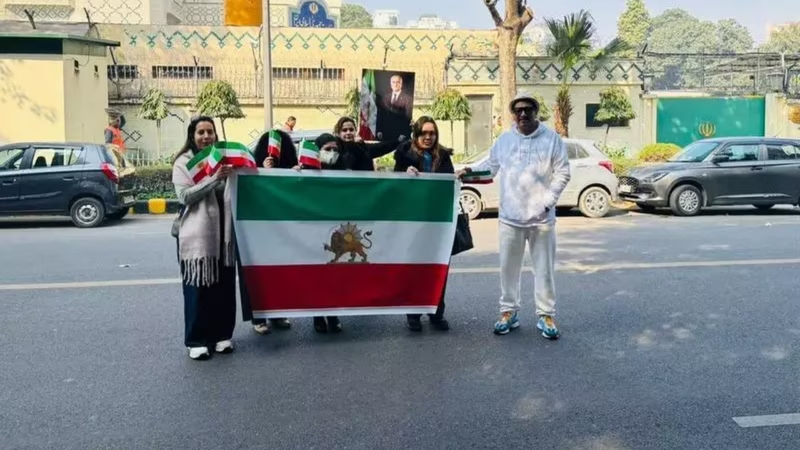
The world is witnessing a chilling escalation in Iran. What began as protests against economic despair has spiraled into a brutal struggle for survival, with reports so harrowing they defy belief. From the heart-wrenching testimonies of Iranian expatriates in India to verified footage of mass casualties, the situation demands urgent global attention. This isn’t just another protest; it’s a nation crying out from under the boot of a ruthless regime.
Table of Contents
- The Horror From the Ground: A Child’s Call Home
- Iran Protests: A Nation in Crisis
- The Business of Death: Families Charged for Bullets
- Global Response and India’s Stance
- Conclusion: A Call for Awareness
- Sources
The Horror From the Ground: A Child’s Call Home
The most gut-wrenching accounts aren’t coming from newsrooms, but from private phone calls between terrified children in Tehran and their parents abroad. One such call, reported by an Iranian family in Dehradun, India, has sent shockwaves through the diaspora community. A young man, his voice trembling, told his father, “Dad, hospitals are full of dead bodies.” He went on to describe a scene from a dystopian nightmare: authorities using earthmovers—bulldozers—to clear corpses from the streets .
This isn’t an isolated rumor. These desperate pleas from inside Iran are corroborating a pattern of extreme state violence that human rights organizations have been documenting since the protests reignited on December 28, 2025 . The message is clear: the Iranian government is not just suppressing dissent; it is attempting to erase all evidence of its own brutality.
Iran Protests: A Nation in Crisis
The current wave of Iran protests was sparked by a perfect storm of economic collapse and political repression. With the Iranian rial plunging to record lows, ordinary citizens found themselves unable to afford basic necessities, igniting widespread anger . What started as economic grievances quickly morphed into a full-blown challenge to the authority of the Islamic Republic itself, spreading to all 31 provinces .
The government’s response has been swift and savage. Security forces have been accused of using unlawful force, live ammunition, and conducting mass arrests on a scale not seen in recent years . Verified videos circulating online show mortuaries overflowing, with one analysis pointing to around 180 bodies in a single facility, a grim testament to the death toll . As of mid-January 2026, rights groups estimate the number of killed protesters is already in the thousands .
The Business of Death: Families Charged for Bullets
Perhaps the most grotesque element of this crackdown is the financial cruelty inflicted on grieving families. There are now multiple, credible reports that the Iranian authorities are forcing relatives of slain protesters to pay a fee before they can reclaim the bodies of their loved ones. This fee is cynically referred to as a charge for the “bullet” that killed them .
A recent post from the Iran Human Rights Documentation Centre on January 14, 2026, confirms this practice is ongoing, stating that families are facing a horrific choice: pay these so-called ‘bullet fees’ or register with the Basij, the regime’s paramilitary volunteer militia, to get their family member’s body back . This policy serves a dual purpose for the regime: it generates revenue from its own atrocities and coerces families into complicity with the very system that murdered their child.
Global Response and India’s Stance
The international community is watching with growing alarm. Western governments have issued travel warnings, and human rights groups are calling for an immediate end to the violence . For India, the situation presents a complex diplomatic and humanitarian challenge. The Indian Ministry of External Affairs has taken the serious step of advising all its citizens in Iran—including students and pilgrims—to leave the country immediately due to the deteriorating security situation [[9], [12]].
This advisory underscores the severity of the unrest, which also poses strategic risks to India’s interests in the region, particularly concerning the Chabahar Port project . While the Iranian ambassador to India has dismissed rumors of arrested Indian nationals as “fake news” , the official stance from New Delhi remains one of extreme caution, prioritizing the safety of its citizens above all else.
Conclusion: A Call for Awareness
The Iran protests of 2026 represent a critical juncture for the country and a test for the global conscience. The stories from Iranians in India are not just personal tragedies; they are crucial eyewitness accounts that pierce through the regime’s information blackout. The images of bulldozers on the streets and the invoices for bullets are stark symbols of a government that has lost all legitimacy and is clinging to power through sheer terror. It is imperative that we amplify these voices and hold those in power accountable. For more on global human rights issues, see our coverage on [INTERNAL_LINK:human_rights_violations].
Sources
- “‘Forced to pay for bullets that killed their kids’: Iranians in…”, Web Search Result.
- “2025–2026 Iranian protests”, Web Search Result.
- “Mortuary videos show aftermath of Iran government…”, Web Search Result.
- “🇮🇷 Since 28 Dec 2025, Iranian authorities have unleashed…”, Web Search Result.
- “As Protests Rage, Centre “Strongly Advises” Indians…”, Web Search Result.
- “Leave Iran: India’s advisory to citizens amid deadly unrest…”, Web Search Result.
- “Iran denies arresting Indian nationals amid protest unrest…”, Web Search Result.
- “India’s foreign ministry has urged its citizens to leave Iran…”, Web Search Result.
- “Iran’s unrest, India’s caution”, Web Search Result.
- “Iran charges families for bullets used to kill protesters”, Web Search Result.
- “Families Face ‘Bullet Fees’ or Basij Registration to Reclaim…”, Web Search Result.