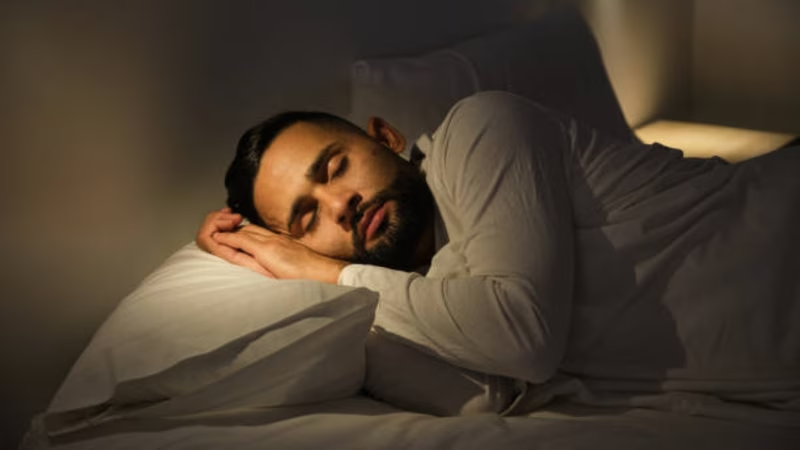
For years, the fitness world glorified the grind: the earlier the alarm, the heavier the lift, the more sweat on the floor—the better. But a quiet revolution is underway. Leading sports scientists, coaches, and health experts are flipping the script: sleep optimization isn’t just a luxury—it’s the cornerstone of real progress.
Gone are the days when collapsing into bed after an exhausting workout was considered “enough.” Today, elite performers and everyday gym-goers alike are treating sleep with the same rigor as their training plans. Why? Because your body doesn’t get stronger in the gym—it gets stronger while you sleep. And if you’re skimping on rest, you’re sabotaging every rep, every mile, and every drop of effort you’ve poured into your fitness journey.
Table of Contents
- What Is Sleep Optimization?
- Why Sleep Optimization Is the New Fitness Frontier
- The Science Behind Sleep and Muscle Recovery
- Common Sleep Mistakes That Derail Fitness Progress
- How to Start Your Sleep Optimization Routine
- Real-World Results from Prioritizing Sleep
- Conclusion: Sleep Your Way to Fitness Success
- Sources
What Is Sleep Optimization?
Sleep optimization goes beyond just getting 7–8 hours. It’s a holistic strategy to improve not only the quantity but also the quality, timing, and consistency of your sleep. It involves aligning your circadian rhythm, minimizing disruptions, and creating an environment that supports deep, restorative rest—especially critical for anyone pushing their physical limits.
Think of it like this: if your workout is the input, sleep is the processor. Without efficient processing, the input is wasted.
Why Sleep Optimization Is the New Fitness Frontier
Top-tier athletes have known this for years. LeBron James reportedly sleeps 12 hours a day during the season. Novak Djokovic calls sleep his “secret weapon.” Now, this wisdom is trickling down to mainstream fitness culture—and for good reason.
Modern fitness is shifting from a “more is better” mentality to a “smarter is better” approach. Recovery is no longer an afterthought; it’s part of the program. And at the heart of recovery lies sleep. As one sports physiologist puts it: “You can’t out-train poor sleep.”
The Science Behind Sleep and Muscle Recovery
During deep sleep (specifically stages 3 and REM), your body goes into high-gear repair mode:
- Muscle Repair: Growth hormone—a key driver of tissue repair and muscle synthesis—is primarily released during deep sleep .
- Hormone Regulation: Sleep helps balance cortisol (the stress hormone) and boosts testosterone, both crucial for muscle growth and fat loss .
- Cardiovascular Health: Consistent, quality sleep lowers blood pressure and reduces inflammation, supporting heart health during intense training .
- Cognitive Function: Better sleep sharpens focus, coordination, and reaction time—critical for form, safety, and performance .
Miss out on sleep, and you blunt these processes. One study found that just four nights of restricted sleep (5 hours/night) reduced muscle protein synthesis by over 18%—essentially stalling gains .
Common Sleep Mistakes That Derail Fitness Progress
Even dedicated fitness enthusiasts unknowingly sabotage their sleep. Here are the top culprits:
- Inconsistent Sleep Schedule: Going to bed at 10 p.m. on weekdays and 2 a.m. on weekends confuses your internal clock.
- Late-Night Screen Time: Blue light from phones and TVs suppresses melatonin, delaying sleep onset .
- Post-Workout Caffeine: That post-gym energy drink might keep you wired for hours.
- Overtraining Without Rest Days: Constant physical stress elevates cortisol, making it harder to fall and stay asleep.
- Poor Sleep Environment: Noise, light, or an uncomfortable mattress can fragment sleep, reducing its restorative power.
How to Start Your Sleep Optimization Routine
You don’t need a $10,000 smart bed to optimize your sleep. Start with these evidence-based habits:
- Set a Fixed Wake-Up Time: Even on weekends, wake up within 30–60 minutes of your weekday time.
- Create a Wind-Down Ritual: Dim lights, read a book, or practice 10 minutes of deep breathing 30–60 minutes before bed.
- Limit Evening Screens: Use night mode or avoid screens entirely after 9 p.m.
- Optimize Your Bedroom: Keep it cool (60–67°F / 15–19°C), dark, and quiet. Consider blackout curtains or white noise.
- Time Your Workouts: Finish intense sessions at least 2–3 hours before bedtime to allow your nervous system to calm down.
For more guidance, the Sleep Foundation offers free, science-backed resources on sleep hygiene and performance.
Real-World Results from Prioritizing Sleep
People who implement sleep optimization often report:
- Faster recovery between workouts
- Increased strength and endurance
- Better mood and motivation
- Reduced cravings and improved body composition
- Fewer injuries due to sharper focus and coordination
One amateur runner who added a consistent 8-hour sleep window saw her 5K time drop by 90 seconds in six weeks—without changing her training plan .
Conclusion: Sleep Your Way to Fitness Success
The future of fitness isn’t about suffering more—it’s about recovering smarter. By embracing sleep optimization as a non-negotiable pillar of your routine, you unlock your body’s full potential. So tonight, instead of scrolling through your phone, try something radical: turn off the lights, close your eyes, and let your body do the work. Your gains will thank you.
Sources
- Times of India: Sleep optimization is the new fitness frontier, say experts
- National Sleep Foundation: How Sleep Affects Athletic Performance
- Journal of Clinical Sleep Medicine: Impact of sleep on athletic performance
- Harvard Medical School: Benefits of Sleep