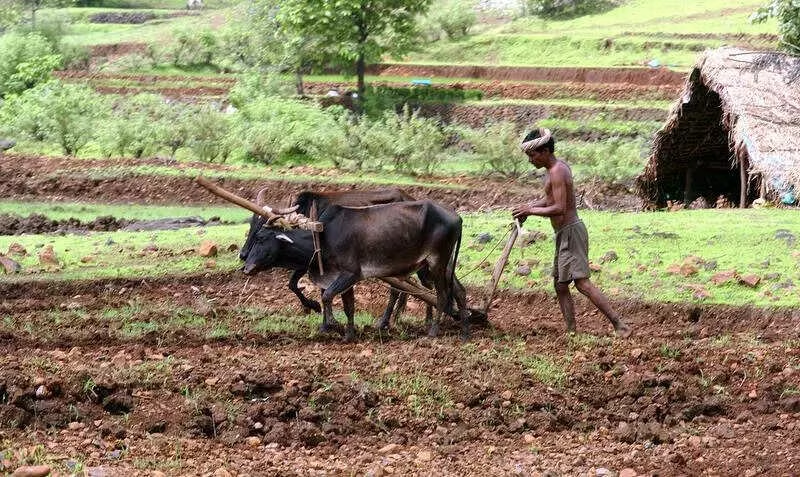
Three lives lost. Every single day. For an entire year.
That’s the haunting reality of farmer suicides in Marathwada in 2025—a region once known for its resilience, now synonymous with despair. With 1,129 recorded deaths, the latest data from Maharashtra’s revenue department paints a picture of catastrophic failure . This isn’t just a statistic; it’s a national emergency unfolding in real time, yet met with bureaucratic silence and political platitudes.
The primary trigger? A cruel twist of climate. Unseasonal, torrential rains in late 2025 devastated standing crops—especially soybean, the lifeline of millions of smallholders in the region. Fields turned into swamps overnight. Harvests were wiped out. And with them, the last hope of repaying loans or feeding families.
Table of Contents
- The 2025 Tragedy: By the Numbers
- Why the Soybean Collapse Triggered a Domino Effect
- Beed: The Epicenter of Despair
- Beyond Weather: The Systemic Failures Behind the Crisis
- What Needs to Change—Now
- Conclusion: Remembering the Human Cost
- Sources
The 2025 Tragedy: By the Numbers
The 1,129 farmer suicides recorded across Marathwada’s eight districts in 2025 mark a 28% increase from 2024 and the highest tally since 2020 . To put this in perspective:
- Average per day: ~3.1 suicides
- Worst month: October–November (post-harvest season, when losses become undeniable)
- Most affected age group: 30–50 years (prime working-age farmers with families)
These figures likely undercount the true toll, as many cases are classified as “unnatural deaths” or “accidents” to avoid scrutiny or expedite compensation claims.
Why the Soybean Collapse Triggered a Domino Effect
Soybean isn’t just another crop in Marathwada—it’s the economic backbone. Over 70% of kharif acreage in districts like Beed, Osmanabad, and Latur is dedicated to it . In 2025, unseasonal rainfall in September and October caused widespread waterlogging, leading to near-total crop failure in many blocks.
For a farmer who had already invested ₹50,000–₹70,000 per acre on seeds, fertilizers, and labor, this meant not just zero income—but a massive debt burden. Many had taken informal loans at exorbitant interest rates (24–36% annually) from local moneylenders, betting everything on the soybean harvest. When the rains came, so did the collectors.
Beed: The Epicenter of Despair
Of the eight districts, Beed stands out as the worst-hit, accounting for over 250 suicides in 2025 alone . Known for its high levels of land fragmentation and dependence on rain-fed agriculture, Beed has long been vulnerable. But repeated droughts followed by freak floods have pushed its farming community to the brink.
Local NGOs report that many victims left behind suicide notes citing “inability to repay loans” or “shame of asking for help.” The social stigma around debt, combined with limited access to mental health support, creates a lethal cocktail of isolation and hopelessness.
Beyond Weather: The Systemic Failures Behind the Crisis
While climate volatility is the immediate trigger, the roots of this crisis run much deeper:
- Inadequate Crop Insurance: The Pradhan Mantri Fasal Bima Yojana (PMFBY) remains plagued by delays, low coverage, and complex claim processes. Many small farmers never receive payouts—or receive them too late to matter.
- Lack of Diversification: Decades of policy focus on water-intensive cash crops like soybean and cotton have left farmers with no fallback when these fail.
- Poor Market Access: Exploitative middlemen and lack of cold storage force farmers to sell at distress prices—or lose everything to spoilage.
- Mental Health Neglect: There is virtually no rural mental health infrastructure. Distress is seen as weakness, not a medical condition.
What Needs to Change—Now
Band-aid solutions won’t suffice. Experts and farmer unions demand urgent, structural reforms:
- Universalize timely crop insurance with direct benefit transfers linked to satellite-based yield assessment.
- Promote climate-resilient cropping patterns through subsidies for millets, pulses, and agroforestry.
- Establish Farmer Distress Cells in every taluka with counselors, legal aid, and debt restructuring officers.
- Invest in water conservation—revive traditional systems like johads and expand micro-irrigation.
As one activist in Parbhani put it: “We don’t need photo-ops at funerals. We need policies that prevent them.”
Conclusion: Remembering the Human Cost
The surge in farmer suicides in Marathwada is not an act of God—it’s a policy failure. Each life lost is a indictment of a system that prioritizes GDP growth over human dignity. Until we treat agriculture as a livelihood—not just an economic sector—these tragedies will keep repeating. The time for empty promises is over. India’s farmers deserve better. They deserve to live.
For more on sustainable farming solutions, explore our guide on [INTERNAL_LINK:climate-resilient-agriculture-in-india].