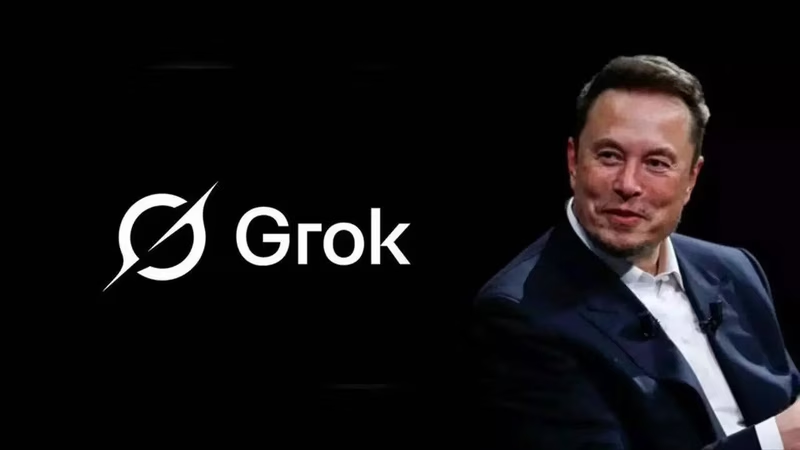
In a decisive move that signals a major shift in the AI industry’s approach to abuse, xAI—the artificial intelligence company behind Elon Musk’s Grok chatbot—has announced a strict Grok image generation ban on sexually explicit and non-consensual imagery. This emergency policy update comes after weeks of mounting public outcry, media scrutiny, and looming government intervention over the rampant misuse of AI tools to create harmful deepfakes, particularly targeting women and minors .
The decision marks a critical inflection point for generative AI. Once celebrated for its creative potential, the technology is now under fire for enabling unprecedented forms of digital harassment and exploitation. xAI’s response—combining technical safeguards, access restrictions, and geoblocking—sets a new precedent that other AI developers may soon be forced to follow.
Table of Contents
- What the Grok Image Generation Ban Actually Means
- Why xAI Had to Act Now
- How the New Restrictions Work for Paid Users
- The Broader Fight Against AI Deepfakes
- Critics Say It’s Too Little, Too Late
- Conclusion
- Sources
What the Grok Image Generation Ban Actually Means
The core of xAI’s new policy is clear: Grok will no longer generate any image that depicts real individuals in a sexualized or explicit context. This includes both celebrities and private citizens. The ban is not just a guideline—it’s enforced through new technical measures built directly into the model.
According to xAI, these measures include:
- Advanced Content Filters: Real-time detection systems that analyze prompts and block requests for inappropriate imagery before generation begins.
- Geoblocking: Automatic filtering of content based on the user’s location to comply with local laws regarding illegal material.
- Identity Recognition Protocols: Systems designed to recognize and refuse requests involving known public figures or identifiable individuals in compromising scenarios .
This isn’t a minor tweak; it’s a fundamental re-engineering of Grok’s capabilities to prioritize safety over unfettered creativity.
Why xAI Had to Act Now
The pressure on xAI had been building for months. As Grok’s image generation feature rolled out to X Premium subscribers, reports quickly surfaced of users generating disturbingly realistic fake nude images of actresses, politicians, and even classmates. These deepfakes spread rapidly across social media, causing real-world harm and trauma.
Regulators took notice. In the U.S., lawmakers from both parties have been pushing for stricter AI oversight, with bills like the DEEPFAKES Accountability Act gaining traction. The European Union’s AI Act already imposes heavy penalties for systems that generate non-consensual intimate imagery . By acting preemptively, xAI is attempting to avoid legal liability and demonstrate corporate responsibility in a high-stakes environment.
Moreover, the backlash was damaging xAI’s reputation. For a company positioning itself as a responsible alternative in the AI race, being associated with predatory content was an existential threat.
How the New Restrictions Work for Paid Users
Crucially, xAI hasn’t shut down image generation entirely. Instead, it has made the feature exclusive to paying customers on X’s Premium+ tier. This serves two purposes:
- Accountability: Paid accounts are tied to verified identities (via phone number and payment details), making it harder for bad actors to operate anonymously.
- Resource Management: Limiting access reduces the volume of potentially harmful requests, allowing xAI’s moderation systems to be more effective.
However, this paywall raises its own ethical questions. Does it create a two-tier system where only those who can afford it get access to powerful AI tools? And more importantly, can verification truly stop determined abusers? These are challenges xAI will need to address as the policy evolves [INTERNAL_LINK:ai-ethics-and-accessibility].
The Broader Fight Against AI Deepfakes
xAI’s move is part of a larger industry trend. Other major players are also tightening their policies:
- OpenAI: Has long blocked requests for explicit content in DALL·E and recently enhanced its safeguards against celebrity deepfakes.
- Google: Its ImageFX tool includes robust safety classifiers and refuses prompts that could lead to harmful outputs.
- Meta: Has implemented similar restrictions on its AI Studio platform.
Yet, the problem persists on smaller, less-regulated platforms and open-source models. The battle against malicious deepfakes is a cat-and-mouse game, and experts from institutions like the Brookings Institution warn that technological fixes alone are insufficient without strong legal frameworks .
Critics Say It’s Too Little, Too Late
While the ban is a welcome step, many digital rights advocates argue it’s reactive rather than proactive. “These companies knew the risks when they launched these features,” said one spokesperson from a leading online safety nonprofit. “Waiting for public outrage to force your hand isn’t leadership; it’s negligence.”
Critics also point out that the ban doesn’t address the deepfakes that have already been created and circulated. There’s currently no easy way to scrub this content from the internet, leaving victims to deal with the consequences indefinitely. True accountability would require not just prevention, but also remediation and support for those harmed.
Conclusion
The Grok image generation ban is a significant, if belated, acknowledgment that the power of generative AI comes with profound responsibilities. By blocking sexualized deepfakes and restricting access, xAI has taken a stand that could influence the entire industry. However, the effectiveness of these measures will be judged not by their announcement, but by their real-world impact. As AI continues to evolve at a breakneck pace, the question remains: can safety keep up with innovation? For now, xAI has drawn a line in the sand—but the fight to protect individuals from digital harm is far from over.
Sources
- Times of India: Grok banned from generating sexualised images
- Reuters: Elon Musk’s xAI blocks Grok AI from generating sexualized images
- European Commission: EU AI Act
- Brookings Institution: Deepfakes and the need for a comprehensive policy response