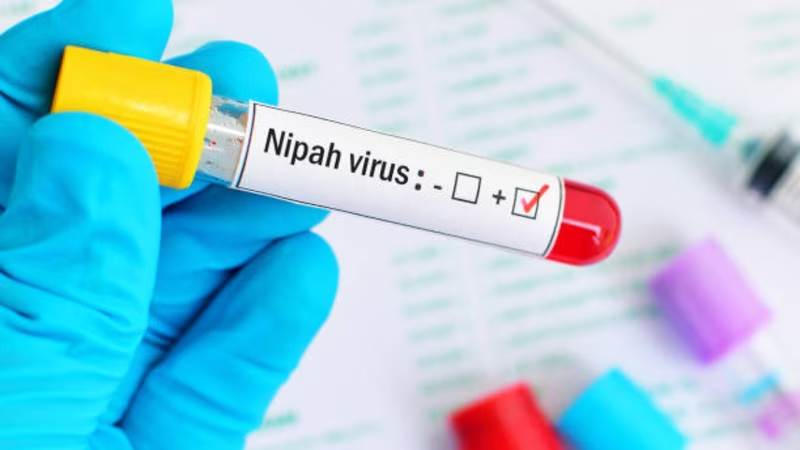
A quiet hospital ward in West Bengal has become the epicenter of a potential public health emergency. Two nurses—frontline caregivers now fighting for their lives—have tested positive for the Nipah virus in India, reigniting fears of a deadly pathogen that has haunted the subcontinent for over two decades. One patient is in a coma; the other battles high fever, respiratory distress, and neurological symptoms. As the Union Health Ministry pledges full support, millions are asking: Could this spread? And more importantly—how do I protect myself?
Table of Contents
- What Is the Nipah Virus?
- Nipah Virus in India: The 2026 West Bengal Outbreak
- How Does Nipah Spread?
- Symptoms to Watch For
- No Cure—but Early Supportive Care Helps
- Doctor-Recommended Dos and Don’ts to Stay Safe
- Government Response and Containment Measures
- Conclusion: Vigilance Over Panic
- Sources
What Is the Nipah Virus?
First identified in 1999 during an outbreak among pig farmers in Malaysia, the Nipah virus (NiV) is a zoonotic pathogen—meaning it jumps from animals to humans. Its natural reservoir? Fruit bats (Pteropus species), commonly known as flying foxes, which carry the virus without showing symptoms.
In India, outbreaks have occurred sporadically since 2001, primarily in West Bengal and Kerala. The virus is notorious for its high mortality rate (40–75% according to the World Health Organization) and its ability to cause severe encephalitis (brain inflammation) and acute respiratory illness.
Nipah Virus in India: The 2026 West Bengal Outbreak
The latest cases, confirmed in January 2026, involve two female nurses working in the same healthcare facility. Both developed sudden high fever, headache, and breathing difficulties within days of each other. One rapidly deteriorated into a coma, raising alarms about possible human-to-human transmission—a hallmark of past Indian outbreaks .
While the exact source is under investigation, health authorities suspect exposure to contaminated bodily fluids or possibly contact with bat-infested areas. Notably, neither patient reported consuming raw date palm sap—a known vector in previous Kerala outbreaks—but environmental sampling is underway.
How Does Nipah Spread?
Transmission occurs through several routes:
- From bats to humans: Via consumption of fruits or raw date palm sap contaminated with bat saliva or urine.
- From animals to humans: Through contact with infected pigs or other domestic animals (less common in India).
- Human-to-human: Through direct contact with infected people’s secretions—saliva, blood, urine, or respiratory droplets. This is especially risky for healthcare workers and family caregivers.
Crucially, Nipah is not airborne like measles or tuberculosis. Close, prolonged contact is typically required for transmission.
Symptoms to Watch For
Symptoms usually appear 4–14 days after exposure and can range from mild to fatal:
- Fever and headache (often the first signs)
- Drowsiness, disorientation, or mental confusion
- Respiratory issues: cough, difficulty breathing
- Seizures or coma in severe cases
Some survivors report long-term neurological complications, including persistent convulsions and personality changes.
No Cure—but Early Supportive Care Helps
There is currently no specific antiviral treatment or vaccine
- Maintaining hydration and oxygen levels
- Managing fever and seizures
- Using ventilators for respiratory failure
Experimental drugs like remdesivir and monoclonal antibodies have shown promise in lab studies but are not yet standard clinical practice in India.
Doctor-Recommended Dos and Don’ts to Stay Safe
Dr. Ananya Sen, an infectious disease specialist consulted by the Times of India, shared these critical guidelines :
✅ DO:
- Wash hands frequently with soap and water, especially before eating or after being outdoors.
- Thoroughly wash and peel fruits before consumption. Avoid fallen or partially eaten fruits.
- Avoid raw date palm sap (toddyn/tari), especially in rural Bengal and Kerala.
- Use PPE if caring for sick individuals—masks, gloves, and gowns are essential.
- Seek medical help immediately if you develop unexplained fever and neurological symptoms.
❌ DON’T:
- Don’t consume unpasteurized fruit juices from unknown sources.
- Don’t enter abandoned wells or caves where bats may roost.
- Don’t touch dead bats or other wild animals.
- Don’t ignore early symptoms—early isolation can prevent community spread.
Government Response and Containment Measures
The Union Health Minister has assured full logistical and technical support to West Bengal. Immediate actions include:
- Contact tracing of all individuals who interacted with the infected nurses
- Setting up isolation wards in nearby district hospitals
- Deploying rapid response teams from the National Centre for Disease Control (NCDC)
- Public awareness campaigns via radio, SMS, and community health workers
[INTERNAL_LINK:nipah-virus-history-india] shows that swift containment has worked before—India must act fast again.
Conclusion: Vigilance Over Panic
While the re-emergence of the Nipah virus in India is deeply concerning, panic helps no one. The key is informed vigilance. By understanding transmission routes, recognizing early symptoms, and following simple hygiene protocols, communities can drastically reduce risk. For now, West Bengal is ground zero—but with coordinated action, this outbreak can be contained before it becomes an epidemic.
Sources
[1] Times of India: “Nipah virus in India: As cases emerge from West Bengal, doctor shares dos and don’ts to stay safe” – https://timesofindia.indiatimes.com/health/…/articleshow/126517974.cms
[2] World Health Organization (WHO) – Nipah Virus Fact Sheet: https://www.who.int/news-room/fact-sheets/detail/nipah-virus
[3] National Centre for Disease Control (NCDC), India – Zoonotic Disease Guidelines
[4] CDC – Nipah Virus Information for Public Health Professionals