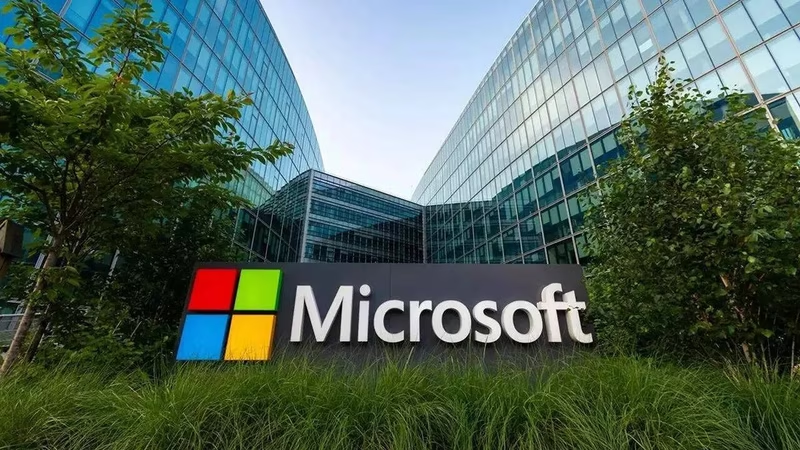
As artificial intelligence reshapes the global economy, one unintended consequence is sparking serious local backlash: the massive energy and water demands of AI data centers. From Wisconsin to Arizona, communities are pushing back against tech giants, fearing skyrocketing utility bills, strained infrastructure, and environmental harm.
Enter Microsoft. In a rare and proactive move, the tech titan has just rolled out a groundbreaking five-point pledge directly aimed at American residents living near its current or future AI facilities. And the headline promise? Your electricity bill won’t go up because of us.
This isn’t just PR fluff. Microsoft is putting real money and policy behind these commitments in an effort to turn skeptics into partners. With AI development accelerating at breakneck speed, this framework could set a new standard for how Big Tech engages with local communities. So what exactly has Microsoft promised—and can they actually deliver?
Table of Contents
- The Five Microsoft AI Promises Explained
- Why These Promises Matter Now
- Microsoft AI Promises: A Deep Dive
- Industry Reaction and Precedents
- What This Means for Local Communities
- Conclusion: A New Social Contract for AI?
- Sources
The Five Microsoft AI Promises Explained
Microsoft’s framework, announced in early January 2026, outlines five concrete commitments designed to address the top concerns raised by municipalities and residents:
- No Increased Electricity Bills: Microsoft will fully offset any additional electricity costs incurred by local ratepayers due to its data center operations.
- 100% Water Replenishment: For every drop of water used in cooling its facilities, Microsoft will fund projects that restore an equal amount to the local watershed.
- Local Job Creation: Prioritize hiring from the host community and invest in workforce development programs aligned with tech-sector needs.
- Full Property Tax Compliance: Pay all applicable property taxes without seeking excessive abatements or loopholes.
- Free AI Education: Offer free, accessible AI literacy and skills training to residents, students, and small businesses in the region.
These aren’t vague aspirations—they’re operational policies Microsoft says it will implement in every U.S. location where it builds or expands AI-capable data centers.
Why These Promises Matter Now
AI data centers consume up to 10 times more power than traditional ones, according to the International Energy Agency . A single AI server farm can draw as much electricity as a small city. In regions already grappling with aging grids and climate-related stress, this surge is causing real anxiety.
Recent protests in places like Cheyenne, Wyoming, and Navajo County, Arizona, have forced companies to pause or redesign projects. Microsoft’s pledge is a direct response to this growing “not in my backyard” (NIMBY) sentiment—but reframed as “yes, in my backyard, if you treat us fairly.”
Microsoft AI Promises: A Deep Dive
Let’s unpack what each commitment really means on the ground:
No Electricity Bill Increases
Microsoft will enter into agreements with local utilities to cover the marginal cost of its energy use, ensuring residential rates remain stable. This could involve direct payments or investments in grid modernization funded by Microsoft—not taxpayers.
Water Replenishment
In drought-prone states like Texas and Nevada, this is critical. Microsoft plans to partner with NGOs like The Nature Conservancy to fund wetland restoration, irrigation efficiency, and aquifer recharge projects—verified by third-party audits.
Local Hiring & Training
Beyond construction jobs, Microsoft commits to creating long-term tech roles and funding coding bootcamps at local community colleges. [INTERNAL_LINK:how-to-get-into-ai-jobs-without-a-degree] could become a reality for many.
Property Taxes
Unlike some firms that negotiate decades-long tax holidays, Microsoft vows to pay fair market value—boosting school and emergency service budgets in host counties.
Free AI Education
Through its AI Skills Initiative, Microsoft will offer online and in-person courses on AI fundamentals, prompt engineering, and responsible AI use—open to all, no tech background required.
Industry Reaction and Precedents
While Google and Amazon have made similar environmental pledges, Microsoft’s explicit guarantee on electricity bills is unprecedented. Analysts at Brookings Institution call it “a potential game-changer for community relations in the AI era” .
However, skepticism remains. Critics point to past corporate promises that faded after ribbon-cutting ceremonies. The key, experts say, will be transparency: publishing annual impact reports and allowing independent oversight.
For authoritative insights into sustainable tech infrastructure, the International Energy Agency (IEA) provides global benchmarks on data center energy use and policy best practices.
What This Means for Local Communities
If fully implemented, Microsoft’s plan could transform AI expansion from a source of conflict into an engine of opportunity. Imagine:
- A rural town gaining high-speed internet and new tech jobs.
- Local schools receiving stable tax revenue for decades.
- Farmers benefiting from water restoration projects funded by a tech giant.
But success hinges on genuine co-creation with communities—not just top-down announcements.
Conclusion: A New Social Contract for AI?
Microsoft’s AI promises represent more than corporate responsibility—they’re an attempt to forge a new social contract for the AI age. By directly addressing fears about utility costs, water scarcity, and economic exclusion, Microsoft is betting that trust is the ultimate infrastructure needed for innovation to thrive.
Whether other tech giants follow suit—or whether these pledges hold up under scrutiny—will shape not just the future of AI, but the relationship between technology and the communities that host it.
Sources
- Times of India: “Microsoft makes 5 promises to everyone in America…” (January 14, 2026)
- International Energy Agency (IEA): “Data Centres and Data Transmission Networks” (2025 Report)
- Brookings Institution: “Governing the AI Infrastructure Boom” (December 2025)
- Microsoft Corporate Blog: “Our Commitment to Responsible AI Growth” (January 2026)