Imagine this: you live alone. One day, you have an accident at home—a fall, a sudden illness—and you’re unable to call for help. Days go by before anyone notices you’re missing. It’s a chilling thought, and for millions of people worldwide, it’s a very real fear.
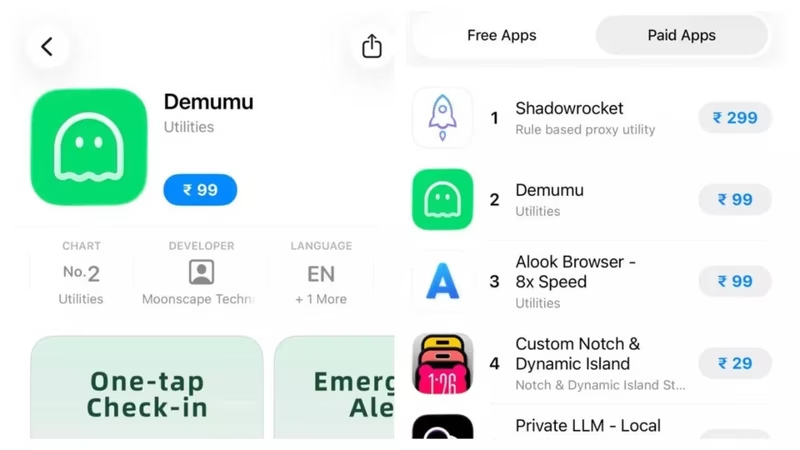
This deep-seated “safety anxiety” is the driving force behind the meteoric rise of the Are You Dead app, a brutally honest yet profoundly practical tool that’s now dominating China’s App Store and gaining traction globally . But what exactly is it, and why are so many people, especially iPhone users, willing to pay for peace of mind?
Table of Contents
- What is the ‘Are You Dead?’ App (Demumu)?
- How Does the App Actually Work?
- Why Has It Gone Viral Now?
- The Global Rise of Solo Living and Its Hidden Dangers
- How Demumu Stacks Up Against Other Safety Apps
- Privacy and Ethical Considerations
- Final Thoughts: A Simple Solution for a Complex Fear
- Sources
What is the ‘Are You Dead?’ App (Demumu)?
Known as “Sileme” (死了么) in Chinese, which translates literally to “Are you dead?”, the app has recently rebranded for its international audience as Demumu . This isn’t just a quirky name; it’s a direct reflection of its core function. The app serves as a digital “dead man’s switch,” a concept borrowed from engineering where a system is designed to trigger a safety protocol if the human operator becomes unresponsive .
Originally created for China’s massive population of solo dwellers—estimated at a staggering 125 million—the app’s utility is universal . Its recent global push, confirmed by its developers following a BBC feature, shows its potential to address a worldwide need .
How Does the App Actually Work?
The beauty of the Are You Dead app lies in its simplicity:
- Download & Setup: You download the paid app (priced at around $1 or 8 yuan) on your iPhone .
- Choose a Contact: You designate a trusted friend or family member as your emergency contact.
- Check-In Schedule: The app prompts you to check in every two days.
- The Trigger: If you fail to check in within the allotted time, the app automatically sends an alert to your pre-selected contact, notifying them that you may be in trouble and need immediate assistance .
It’s a no-frills, zero-false-alarm system that cuts through the noise of more complex safety platforms.
Why Has It Gone Viral Now?
The app’s timing is impeccable. Its surge in popularity highlights a growing societal trend: the normalization and increase of solo living, particularly among young professionals in urban centers across Asia and the West . Tragic news stories of individuals passing away alone in their apartments, only to be discovered weeks later, have fueled a collective sense of vulnerability . The Are You Dead app offers a tangible, affordable solution to this specific fear.
The Global Rise of Solo Living and Its Hidden Dangers
This isn’t just a Chinese phenomenon. In India, there’s been a significant 39% increase in single-person households between 2001 and 2011, a trend that has only accelerated since . Urban Indian millennials are increasingly choosing to live alone for work and personal freedom . Meanwhile, China projects its number of solo households to reach 200 million by 2030 . This demographic shift creates a massive market for products that address the unique challenges of independent living, with personal safety being paramount.
How Demumu Stacks Up Against Other Safety Apps
The market is full of emergency notification and personal safety apps like Omnilert or RedFlag, often geared towards corporate or campus-wide alerts . What sets Demumu apart is its singular, user-centric focus. It doesn’t track your location in real-time or monitor your messages. It simply asks one question: “Are you okay?” at regular intervals. This minimalist approach reduces battery drain, minimizes data collection, and is incredibly easy for anyone to use, making it a standout choice among iPhone safety apps for 2026 .
Privacy and Ethical Considerations
Given its sensitive nature, privacy is a top concern. Demumu’s model is relatively low-risk because it doesn’t require constant background access to your location or other personal data. Its primary function is a scheduled check-in. However, users should always review an app’s privacy policy before granting permissions. The ethical weight of the app’s name and function is also worth noting—it forces a direct confrontation with mortality, which can be unsettling for some but empowering for others seeking control over their safety.
Final Thoughts: A Simple Solution for a Complex Fear
The viral success of the Are You Dead app is less about its morbid name and more about its profound empathy for a modern human condition. For the millions navigating life alone, it provides a crucial lifeline—a simple, automated way to ensure that someone will notice if they vanish. In a world that’s increasingly connected yet often isolating, Demumu offers a powerful reminder that we don’t have to be truly alone. It’s a small app with a big promise: peace of mind.
Sources
[1] Times of India: ‘Are You Dead?’ app goes viral: Tops China’s app store; Why iPhone users worldwide are spending on it. https://timesofindia.indiatimes.com/technology/tech-news/are-you-dead-app-tops-chinese-app-store-all-about-the-app-that-iphone-users-in-china-america-singapore-hong-kong-are-spending-most-on-right-now/articleshow/126504458.cms
[2] Web Search Results on ‘Are You Dead?’ app, solo living statistics, and safety app comparisons.