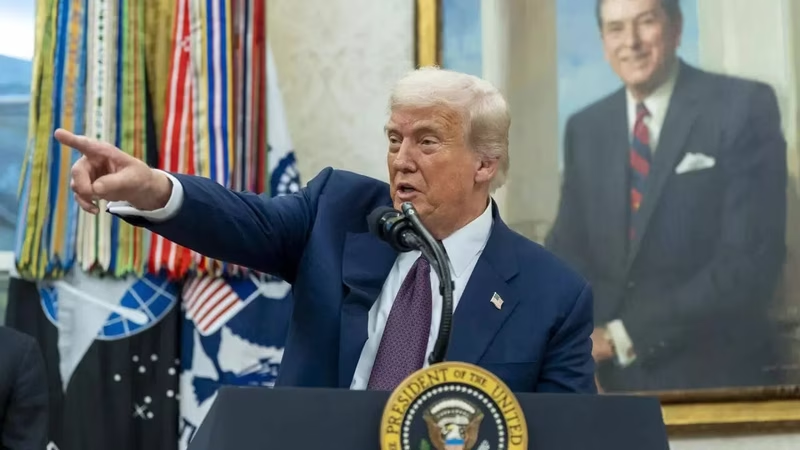
In a move that has reignited global debate over U.S. interventionism and rhetorical support for foreign uprisings, former President Donald Trump issued a bold and controversial directive to Iranian protesters: “Take over your institutions.” Speaking from Mar-a-Lago, Trump not only promised that “help is on its way” but also announced he had severed all diplomatic contact with Iranian officials until the “senseless killing of protesters” ends .
The statement—delivered with characteristic bluntness—comes amid renewed anti-government demonstrations in Iran following reports of violent crackdowns by security forces. But it’s Trump’s invocation of a slogan eerily reminiscent of his own campaign mantra that has drawn the most attention: “Make Iran Great Again” (MIGA), a phrase he used while vowing accountability for those responsible for protester deaths.
Table of Contents
- Trump’s Message to Iranian Protesters: Full Context
- What Is ‘MIGA’ and Why It Matters
- Diplomatic Rupture: Trump Cancels All Iran Meetings
- Historical Precedent: U.S. Support for Foreign Protests
- Global and Domestic Reactions
- Legal and Strategic Implications
- What This Means for 2026 U.S. Foreign Policy
- Sources
Trump’s Message to Iranian Protesters: Full Context
Addressing reporters on January 12, 2026, Trump framed the Iranian protests as a legitimate popular uprising against tyranny. “The people of Iran are brave,” he said. “They’re tired of corruption, oppression, and lies. They deserve freedom—and they should take back their country.”
His call to “take over your institutions” echoes revolutionary language rarely used by sitting or former U.S. leaders when addressing foreign populations. While past administrations have expressed solidarity with protesters—such as during the 2009 Green Movement or the 2022 Mahsa Amini protests—explicit encouragement to seize state power crosses a rhetorical line that many foreign policy experts consider dangerous .
What Is ‘MIGA’ and Why It Matters
Perhaps the most striking element of Trump’s statement was his use of “Make Iran Great Again”—a clear play on his iconic “Make America Great Again” slogan. By coining “MIGA,” Trump positioned himself not just as a critic of the Iranian regime, but as a visionary for Iran’s future.
Analysts interpret this as both a branding tactic and a geopolitical signal. It suggests Trump envisions a post-regime Iran aligned with U.S. interests—one that could potentially abandon its nuclear ambitions and regional proxy warfare. However, critics argue that such slogans oversimplify complex sociopolitical realities and risk appearing patronizing to Iranians fighting for self-determination.
Diplomatic Rupture: Trump Cancels All Iran Meetings
Trump confirmed he has “cancelled all meetings with Iranian officials” until the violence stops—a significant declaration given that, as a private citizen, he holds no official authority over U.S. diplomacy. Nevertheless, his influence within the Republican Party and among conservative voters means his stance could shape future policy if he returns to office in 2028.
Notably, Trump added: “Anyone involved in killing innocent protesters will be held accountable. We know who you are.” While vague, this threat aligns with his administration’s past use of targeted sanctions and travel bans against Iranian officials under the Global Magnitsky Act .
Historical Precedent: U.S. Support for Foreign Protests
The U.S. has a complicated history of backing foreign uprisings:
- 1953 Iran Coup: CIA-backed overthrow of democratically elected PM Mossadegh—later widely condemned.
- 1989 Eastern Europe: Reagan’s “Tear down this wall!” speech symbolically supported anti-communist movements.
- 2011 Arab Spring: Obama administration offered rhetorical support but avoided direct intervention in most cases.
- 2022 Iran Protests: Biden imposed sanctions on morality police but stopped short of calling for regime change.
Trump’s latest remarks place him firmly in the “regime change” camp—a stance that contrasts sharply with the current Biden administration’s focus on nuclear diplomacy and human rights pressure without overt calls for overthrow .
Global and Domestic Reactions
Reactions have been swift and polarized:
- Iranian Government: State media dismissed Trump as a “warmonger” and accused the U.S. of fomenting sedition.
- Iranian Diaspora: Many activists welcomed the support, though some warned against American paternalism.
- U.S. Democrats: Criticized Trump for reckless rhetoric that could endanger protesters by giving the regime pretext to label them as foreign agents.
- Republican Allies: Senators like Tom Cotton echoed Trump, calling for stronger action against Tehran.
Legal and Strategic Implications
While Trump’s words carry no legal weight today, they signal a potential foreign policy doctrine should he win the 2028 election. Key implications include:
- Sanctions Expansion: Likely targeting Iran’s Revolutionary Guard Corps (IRGC) and judiciary.
- Support for Opposition Groups: Possible covert or overt aid to exile organizations—though this risks violating neutrality norms.
- Alliance Realignment: Closer coordination with Israel and Gulf states to isolate Iran diplomatically.
However, as the Council on Foreign Relations notes, regime change rarely succeeds through external pressure alone—and often backfires by strengthening hardliners .
What This Means for 2026 U.S. Foreign Policy
With the 2026 midterms approaching and Trump positioning himself as the GOP’s de facto leader, his Iran comments are as much about domestic politics as global strategy. By championing Iranian protesters, he reinforces his image as a strong anti-tyranny leader—appealing to both neoconservatives and populist nationalists.
Yet the core question remains: does rhetorical support help or harm grassroots movements? History suggests that when foreign leaders appear to “own” a protest, local legitimacy can erode. Iranian activists have long insisted they want solidarity—not saviors.
Conclusion
Donald Trump’s message to Iranian protesters—urging them to “take over your institutions” and invoking “MIGA”—is more than political theater. It’s a declaration of ideological war against the Islamic Republic and a preview of a potential second-term foreign policy centered on assertive regime confrontation. Whether this approach empowers Iranian citizens or endangers them remains one of the most urgent questions in global diplomacy today.
Sources
- [1] Times of India: ‘Keep protesting, take over your institution’: Trump invokes MIGA, suspends meetings with Iranian officials
- [2] BBC News: Iran protests: What you need to know
- [3] U.S. Department of State: Global Magnitsky Sanctions Program
- [4] The New York Times: Biden Administration’s Response to Iran Protests
- [5] Council on Foreign Relations: U.S.-Iran Relations: A Brief History