When Zohran Mamdani stepped through the doors of Gracie Mansion, he didn’t just inherit a historic home—he inherited a symbol. For nearly two centuries, this Federal-style estate on the East River has housed New York City’s mayors, often serving as a gilded emblem of power, privilege, and political distance. But Mamdani, the city’s youngest and most progressive mayor in decades, has made it clear: his tenure at Gracie Mansion will be different. Very different.
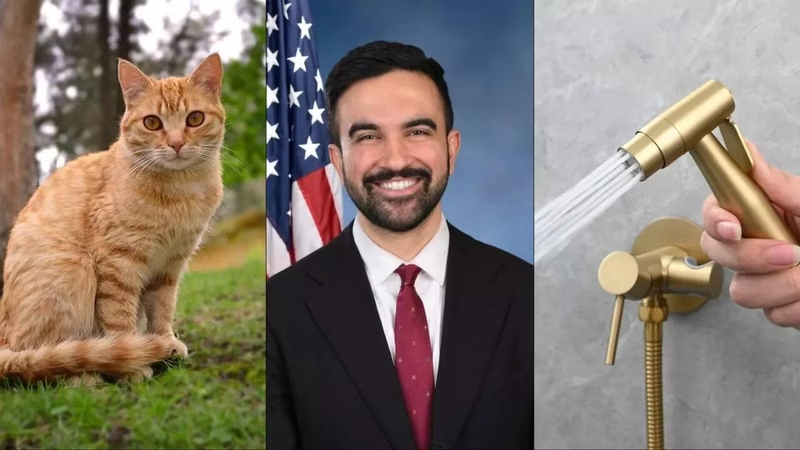
Forget crystal chandeliers and closed-off parlors. Mamdani’s first announced changes? Installing bidets in the bathrooms and adopting a rescue cat from a local shelter. These aren’t just quirky lifestyle choices—they’re deliberate statements about his governing philosophy: grounded, practical, and relentlessly people-centered. In an era where public trust in institutions is fragile, Mamdani is using the very fabric of the mayoral residence to rebuild connection.
Table of Contents
- Who Is Zohran Mamdani? The People-First Mayor
- Gracie Mansion: A Brief History of Power and Exclusivity
- The Gracie Mansion Makeover: Bidets, Cats, and Open Doors
- Beyond Decor: Democratizing a Symbolic Space
- How Does This Compare to Past Mayors’ Residences?
- Why It Matters: Redefining Leadership in Modern America
- Conclusion: A Home for the People
- Sources
Who Is Zohran Mamdani? The People-First Mayor
Elected on a platform of housing justice, climate action, and economic equity, Zohran Mamdani rose to prominence as a fiery City Council member representing Queens. The son of Ugandan-Indian immigrants, he built his reputation by sleeping on subway platforms to highlight homelessness and championing tenant protections against corporate landlords. His campaign slogan—“Power to the People”—was more than rhetoric; it was a blueprint.
Now, as mayor, he faces the challenge of translating that grassroots energy into governance from within one of the city’s most elite addresses. His decision to move into Gracie Mansion—which some progressive allies urged him to reject—signals not assimilation, but reclamation. “This house belongs to New Yorkers,” he recently told reporters. “Not just to the mayor.”
Gracie Mansion: A Brief History of Power and Exclusivity
Built in 1799 by Archibald Gracie, a Scottish merchant, the mansion became the official mayoral residence in 1942 under Fiorello La Guardia. Since then, it’s hosted dignitaries, state dinners, and private family moments for every NYC mayor—from Ed Koch’s flamboyant tenure to Bill de Blasio’s controversial use of a separate private home.
Historically, access to Gracie Mansion has been tightly controlled. While public tours exist (managed by the nonprofit Gracie Mansion Conservancy), the residence itself has largely remained a sealed-off world of political power—a stark contrast to the diverse, bustling city just beyond its wrought-iron gates .
The Gracie Mansion Makeover: Bidets, Cats, and Open Doors
Mamdani’s proposed changes are refreshingly human:
- Bidet Installation: Citing hygiene, sustainability, and global norms, Mamdani plans to retrofit bathrooms with bidets—a move that aligns with his environmental values and challenges American taboos around bathroom habits.
- Adopting a Shelter Cat: The mayor intends to adopt a cat from a NYC animal shelter, turning the mansion into a pet-friendly space and spotlighting the city’s animal welfare programs.
- Community Art Rotations: Local artists from all five boroughs will be invited to display their work in the mansion’s public rooms, replacing traditional portraits of past mayors with living, evolving expressions of the city’s culture.
These aren’t cosmetic tweaks. They’re part of a broader vision to make Gracie Mansion feel less like a fortress and more like a shared civic living room.
Beyond Decor: Democratizing a Symbolic Space
Mamdani’s most significant promise is to “open the doors wider than ever before.” He’s proposed expanding public access through monthly community gatherings, youth leadership forums, and even neighborhood potluck dinners held on the mansion grounds. This directly tackles what critics have long called the “ivory tower” problem of executive residences.
By doing so, he’s following in the footsteps of leaders like former First Lady Eleanor Roosevelt, who used the White House as a platform for public engagement—but with a distinctly 21st-century, urban twist. As noted by the New York Times, such symbolic acts can reshape public perception of leadership itself .
How Does This Compare to Past Mayors’ Residences?
Previous mayors have left their marks: Rudy Giuliani hosted high-profile fundraisers; Michael Bloomberg rarely lived there; Bill de Blasio faced backlash for maintaining a private Brooklyn home while officially residing at Gracie Mansion. None, however, have explicitly framed their occupancy as an act of democratic reclamation.
Mamdani’s approach stands in sharp contrast. Where others saw a perk, he sees a platform. Where others sought privacy, he seeks participation. This shift reflects a generational change in political expectations—especially among younger voters who demand authenticity over ceremony.
Why It Matters: Redefining Leadership in Modern America
In a polarized political climate, small symbols carry outsized weight. Mamdani’s bidet might seem trivial, but it signals a willingness to embrace practical solutions over tradition. His rescue cat isn’t just a pet—it’s a statement about compassion and second chances. And his open-door policy? That’s a direct challenge to the growing disconnect between citizens and their leaders.
This is where [INTERNAL_LINK:progressive-urban-leadership] meets everyday life. By humanizing Gracie Mansion, Mamdani isn’t just redecorating—he’s reimagining what public service looks like in a city that prides itself on diversity, resilience, and innovation.
Conclusion: A Home for the People
Zohran Mamdani’s transformation of Gracie Mansion is more than a list of home improvements. It’s a manifesto in action. From bidets to feline companions to open invitations, every change reinforces his core message: power should serve the people, not isolate itself from them. Whether these symbolic gestures translate into lasting policy impact remains to be seen—but for now, they’ve already succeeded in making one of America’s oldest executive homes feel newly alive with the spirit of New York City itself.
Sources
- Times of India: Installing bidets, adopting a cat: What NYC Mayor Zohran Mamdani plans to change in Gracie Mansion
- Gracie Mansion Conservancy: Official History and Public Programs
- The New York Times: Coverage on NYC Mayoral Residences and Public Access