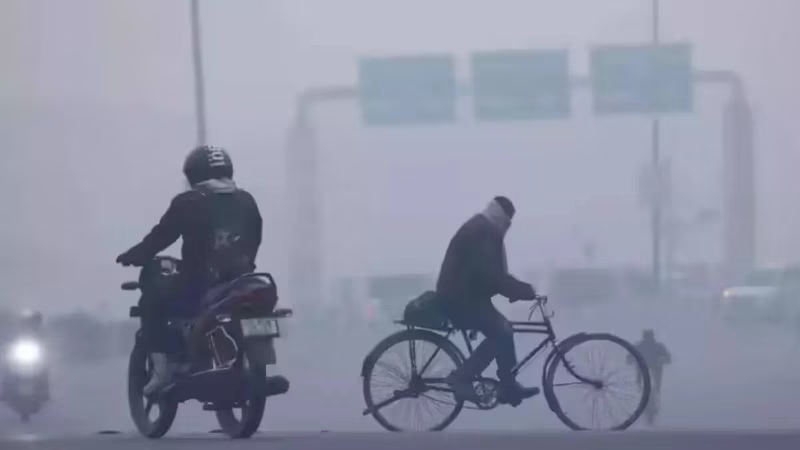
Blankets weren’t enough. Heaters were on full blast. And early-morning commuters squinted through thick, milky fog as Delhi shivered through its coldest morning since January 2023. On Tuesday, January 13, 2026, the mercury at Safdarjung Observatory—the city’s official weather station—plummeted to just **3.2°C**, officially marking the onset of a severe Delhi cold wave.
The India Meteorological Department (IMD) responded by issuing an orange alert for the national capital, warning of “very dense fog” and “significant disruption” to transport, health, and daily life. With icy winds sweeping down from the snow-laden Himalayas and moisture trapped under a stable high-pressure system, the biting chill gripped the city from dawn until late afternoon.
But there’s light at the end of the tunnel: a western disturbance is expected to bring cloud cover and slightly milder temperatures by Thursday, offering much-needed relief. Until then, residents are urged to take precautions—especially the elderly, children, and those with respiratory conditions.
Table of Contents
- What Is a Cold Wave—and Did Delhi Qualify?
- Why Did Temperatures Plunge to 3.2°C?
- Delhi Cold Wave: Health Risks and Safety Tips
- Travel Disruptions Due to Dense Fog
- When Will the Cold Wave End?
- Historical Context: Delhi’s Coldest January Mornings
- Conclusion: Staying Safe in Extreme Cold
- Sources
What Is a Cold Wave—and Did Delhi Qualify?
According to the IMD, a Delhi cold wave is declared when the minimum temperature drops to 10°C or below *and* is at least 4.5°C below normal for two consecutive days.
This week’s reading of 3.2°C—well below the season’s normal of 7.6°C—easily meets that threshold. In fact, it’s the lowest January morning temperature since 2023, when Delhi recorded 2.9°C.
“This is a classic radiational cooling event,” explains Dr. R.K. Singh, a senior scientist at IMD. “Clear skies, dry air, and calm winds allowed heat to escape rapidly overnight, while icy northerly winds from Jammu & Kashmir amplified the chill.”
Why Did Temperatures Plunge to 3.2°C?
Three key factors converged to create this deep freeze:
- Strong Western Himalayan Outflow: A high-pressure system over northwest India funneled frigid air from snow-covered regions into the plains.
- Absence of Cloud Cover: Clear skies enabled maximum heat loss during the night—a phenomenon known as radiational cooling.
- Dry Air Mass: Low humidity prevented any insulating effect, making the cold feel even sharper.
Notably, pollution levels remained in the “moderate” range, meaning the cold wasn’t exacerbated by smog—a rare winter reprieve for Delhi’s lungs.
Delhi Cold Wave: Health Risks and Safety Tips
Prolonged exposure to such low temperatures can lead to serious health issues:
- Hypothermia: Core body temperature drops below 35°C—symptoms include shivering, confusion, and drowsiness.
- Frostnip: Early stage of frostbite affecting fingers, toes, ears, and nose.
- Respiratory flare-ups: Asthma, bronchitis, and COPD often worsen in cold, dry air.
Expert Safety Tips:
- Dress in layers—wool and fleece trap heat better than cotton.
- Keep extremities covered: wear gloves, scarves, and insulated footwear.
- Stay hydrated; dehydration increases cold sensitivity.
- Avoid prolonged outdoor exposure between 5–9 AM, when temperatures are lowest.
- Check on elderly neighbors—they’re especially vulnerable.
For more on winter wellness, see our guide on [INTERNAL_LINK:winter-health-tips-for-north-india].
Travel Disruptions Due to Dense Fog
The orange alert isn’t just about cold—it’s about visibility. Dense fog reduced visibility to under 50 meters in parts of Delhi-NCR, causing major disruptions:
- Flights: Over 30 departures and arrivals at Indira Gandhi International Airport were delayed by 1–3 hours.
- Trains: Several intercity trains, including the Shatabdi Express, ran 2+ hours behind schedule.
- Roads: Multiple pile-ups reported on the Delhi-Meerut Expressway and NH-44; authorities advised against non-essential travel.
Delhi Traffic Police deployed additional personnel at key intersections and activated fog-warning systems on major highways.
When Will the Cold Wave End?
Relief is on the horizon. A fresh western disturbance is expected to approach northwest India by Wednesday night, bringing cloud cover that will act like a “thermal blanket,” trapping heat near the surface.
IMD forecasts show minimum temperatures rising to 6–7°C by Thursday and stabilizing around 8–9°C by the weekend. Daytime highs may also climb from 18°C to 22°C, making afternoons significantly more comfortable.
Historical Context: Delhi’s Coldest January Mornings
While 3.2°C is severe, it doesn’t break records. Delhi’s all-time lowest January temperature was **1.1°C**, recorded on January 11, 1967, at Safdarjung. More recently:
- January 8, 2023: 2.9°C
- January 6, 2021: 3.3°C
- January 10, 2013: 2.5°C
Climate scientists note that while extreme cold events still occur, their frequency has declined due to urbanization and global warming—a paradox where hotter summers coexist with occasional intense cold spells.
Conclusion: Staying Safe in Extreme Cold
The Delhi cold wave of January 13, 2026, is a stark reminder that winter in North India demands respect. While the picturesque fog might look serene, it masks real dangers—from health emergencies to transport chaos. By staying informed, dressing wisely, and heeding official alerts, residents can navigate these freezing days safely. And with warmer weather just days away, this deep freeze will soon be a memory—but one that underscores the importance of preparedness in an era of climate volatility.
Sources
- Times of India: Delhi’s coldest morning in 3 years as Safdarjung logs 3.2°C
- India Meteorological Department (IMD): Cold Wave Guidelines and Alerts
- World Health Organization (WHO): Health Effects of Cold Weather