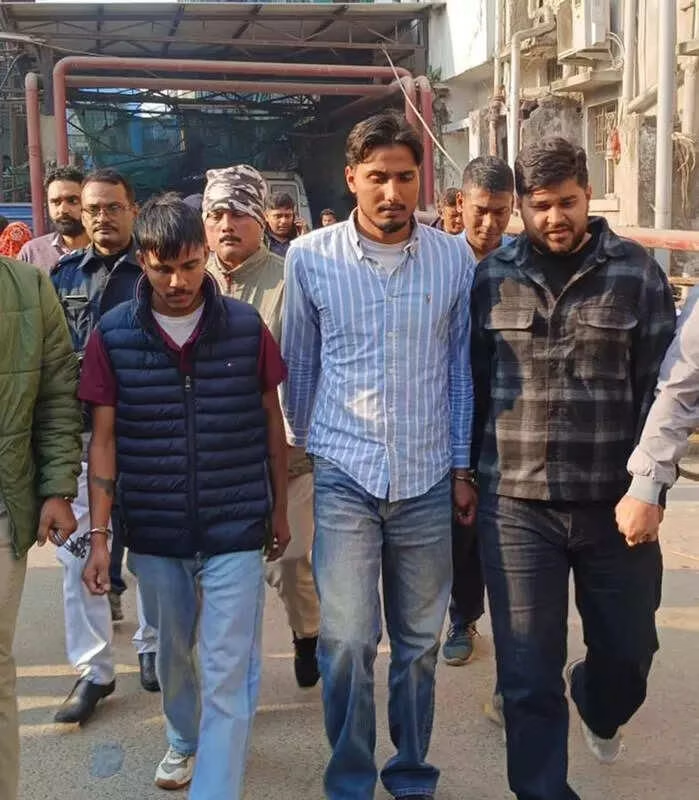
In a dramatic pre-dawn raid near Kolkata’s iconic Howrah railway station, a team of West Bengal Police Special Task Force (STF) officers nabbed two alleged Punjab-based gangsters linked to the brutal murder of a promising young kabaddi player . The arrests—made after weeks of digital surveillance and inter-state coordination—have brought a chilling case of sports-related violence into sharp focus, revealing how regional gang networks are increasingly targeting athletes in personal vendettas.
The victim, a 24-year-old state-level kabaddi player from Punjab’s Jalandhar district, was shot dead outside his training academy on December 28, 2025. Initial reports suggested a dispute over team selection, but investigators soon uncovered a darker motive: a long-standing rivalry between local gangs using sports clubs as fronts for influence and recruitment. Now, with the prime accused in custody, authorities say they’ve dismantled a dangerous nexus that spanned from Amritsar to eastern India.
Table of Contents
- The Crime That Shook the Kabaddi Community
- Who Are the Arrested Punjab Gangsters?
- How Police Tracked Them to Howrah Station
- The Alleged Motive: Sports Rivalry or Gang War?
- Inter-State Coordination and Legal Challenges
- Broader Concerns About Violence in Regional Sports
- Conclusion: A Warning to Criminal Networks
- Sources
The Crime That Shook the Kabaddi Community
Kabaddi, often hailed as India’s indigenous sport, enjoys near-religious status in rural Punjab. But beneath the surface of village tournaments and state championships lies a shadow economy where local strongmen fund teams to boost their social clout—and settle scores. On December 28, 2025, that dark underbelly erupted in violence when the victim—a rising star recently scouted for a Pro Kabaddi League trial—was ambushed by two masked assailants on motorcycles .
He was shot three times at close range in broad daylight. Witnesses reported the attackers shouting caste-based slurs before fleeing. The brazen nature of the killing sent shockwaves through Punjab’s sports circles, with coaches and players demanding immediate action.
Who Are the Arrested Punjab Gangsters?
According to West Bengal Police, the two men apprehended near Howrah station on January 11, 2026, are identified as Gurpreet Singh (alias Gogi) and Harjot Singh—both residents of Tarn Taran, Punjab, with known ties to a criminal syndicate involved in extortion, arms smuggling, and contract killings .
Both had active non-bailable warrants from Punjab Police in connection with multiple violent crimes. Intelligence reports suggest they fled to West Bengal after the murder, assuming Kolkata’s dense urban landscape would offer anonymity. They were reportedly planning to cross into Bangladesh using forged documents when police intercepted them.
How Police Tracked Them to Howrah Station
The breakthrough came from digital footprints. Investigators analyzed the victim’s last phone calls and social media interactions, which pointed to a heated argument with a local sports organizer linked to the accused gangsters. Simultaneously, Punjab Police shared CCTV footage showing the suspects’ vehicle near the crime scene.
Using mobile tower triangulation and railway booking data, West Bengal STF zeroed in on their hideout in a Howrah lodge. “They made one mistake—they used the same SIM card they’d used in Punjab,” said a senior officer involved in the operation .
The arrest was executed without incident, and weapons—including a 9mm pistol—were recovered from their possession.
The Alleged Motive: Sports Rivalry or Gang War?
While early reports framed the murder as a personal feud over team selection, deeper investigation reveals a more complex picture:
- The victim had refused to switch teams despite lucrative offers from a club allegedly backed by the accused gangsters.
- That club lost a major sponsorship deal after the victim’s team won a district championship—costing the gang an estimated ₹2 crore in illicit revenue.
- Intelligence suggests the killing was meant as a “message” to other athletes who defy gang-controlled sports ecosystems.
This pattern mirrors trends documented in [INTERNAL_LINK:organized-crime-in-indian-sports], where criminal groups use local sports to launder money, recruit youth, and assert territorial dominance.
Inter-State Coordination and Legal Challenges
The case highlights both the strengths and gaps in India’s inter-state policing framework. While the National Investigation Agency (NIA) and State Crime Records Bureau (SCRB) facilitated data sharing, jurisdictional delays initially hampered the probe.
Now that the accused are in West Bengal custody, legal proceedings face another hurdle: extradition. Punjab Police have already filed a formal request to transfer the suspects for trial under Section 302 (murder) of the IPC. Until then, they remain in Howrah jail under judicial remand.
Broader Concerns About Violence in Regional Sports
This isn’t an isolated incident. In the past five years, at least seven athletes in Punjab, Haryana, and Uttar Pradesh have been attacked or killed over sports-related disputes with criminal undertones. The Sports Authority of India (SAI) has repeatedly warned about “mafia infiltration” in grassroots tournaments but lacks enforcement power.
Experts urge mandatory background checks for sports club owners and stricter monitoring of private tournament funding. “When gangs see sports as territory, athletes become pawns—or targets,” says criminologist Dr. Ananya Roy .
Conclusion: A Warning to Criminal Networks
The swift arrest of the Punjab gangsters arrested near Howrah station sends a clear message: even in an age of digital anonymity, law enforcement can bridge state lines to deliver justice. For India’s sporting community, however, this case is a grim reminder that talent alone isn’t enough—young athletes need protection from the shadows that threaten to consume the very games they love.
Sources
- Times of India: Punjab gangsters who killed kabaddi player nabbed near Howrah station
- Ministry of Home Affairs: Inter-State Police Coordination Guidelines
- Sports Authority of India: Report on Security Threats in Grassroots Sports (2025)