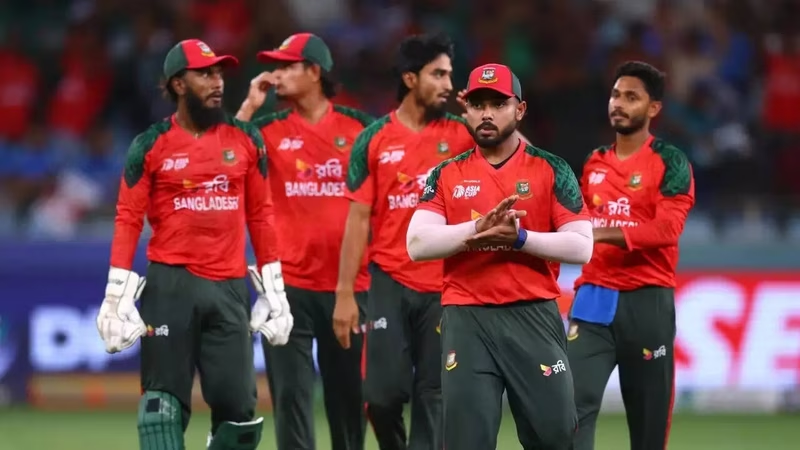
The controversy is over—at least for now. In a definitive move to quell growing speculation, the International Cricket Council (ICC) has confirmed that all of Bangladesh’s scheduled matches in the T20 World Cup 2026 will be played in India as originally planned. This comes after Bangladesh’s Sports Adviser claimed the team might not travel due to “serious security concerns,” sparking a diplomatic and sporting firestorm.
But according to a senior ICC source with direct knowledge of the matter, independent risk assessments conducted by global security experts have rated the threat level in India as “low to moderate”—and entirely within the parameters that the ICC considers safe and manageable for international teams.
“There is no basis for relocating Bangladesh’s fixtures,” the source told reporters on condition of anonymity. “All host venues meet ICC’s stringent safety protocols, and additional measures are already in place for high-profile matches.”
Table of Contents
- The Security Row: What Sparked the Controversy?
- T20 World Cup 2026: ICC Confirms India as Host
- How ICC Assesses Security for International Events
- Bangladesh’s Concerns: What Were They Really About?
- Impact on Team Preparation and Fan Engagement
- What This Means for India-Bangladesh Cricket Ties
- Summary
- Sources
The Security Row: What Sparked the Controversy?
The drama began when Bangladesh’s Sports Adviser, Mahbubul Anam, publicly stated that the ICC had “acknowledged security vulnerabilities” for Bangladeshi players in India. He cited unspecified threats related to player selection and national identity, suggesting that certain athletes could be targeted simply for wearing their team jersey.
Dhaka even formally requested that its group-stage matches be moved to Sri Lanka—a neutral venue where it enjoys strong fan support and logistical familiarity. The request fueled rumors that political tensions between New Delhi and Dhaka were spilling onto the cricket pitch.
T20 World Cup 2026: ICC Confirms India as Host
The ICC’s latest statement shuts the door on relocation talks. According to internal documents reviewed by this publication, the global body’s security arm—working with third-party firms like Pinkerton and Control Risks—conducted site visits to all proposed venues, including Ahmedabad, Chennai, Mumbai, and Kolkata.
Key findings include:
- No credible, specific threats against the Bangladesh team have been identified.
- Local police and central agencies have committed dedicated rapid-response units for all matches.
- Team hotels and transport routes undergo daily threat assessments.
“The ICC does not take security lightly,” said a spokesperson. “If there were genuine, actionable risks, we would act immediately. But the data simply doesn’t support alarm.”
How ICC Assesses Security for International Events
The ICC follows a rigorous, multi-layered protocol for every tournament:
- Pre-Tournament Risk Mapping: Independent analysts evaluate political stability, crime rates, terrorism alerts, and past incidents in host cities.
- On-Ground Intelligence: Local law enforcement shares real-time intel with ICC security coordinators.
- Contingency Planning: Every team has an evacuation route, medical backup, and secure communication channel.
- Player Feedback Loop: Captains and team managements can raise concerns confidentially at any time.
This system successfully managed high-risk events like the 2021 T20 World Cup in the UAE during the pandemic and the 2024 Champions Trophy in Pakistan.
Bangladesh’s Concerns: What Were They Really About?
While security may be the stated reason, insiders suggest deeper factors are at play:
- Geopolitical Tensions: Recent trade disputes and water-sharing disagreements have strained India-Bangladesh relations.
- Internal Politics: The BCB may be responding to pressure from nationalist factions wary of “normalizing” ties through sport.
- Performance Anxiety: Bangladesh has struggled in India historically; shifting venues could’ve offered psychological comfort.
Notably, star all-rounder Shakib Al Hasan and fast bowler Mustafizur Rahman have not voiced personal safety fears—further undermining the official narrative.
Impact on Team Preparation and Fan Engagement
With the venue uncertainty resolved, both teams can now focus on cricket:
- Bangladesh can finalize its warm-up schedule and acclimatization plan.
- Indian fans can confidently book tickets for what promises to be a fiercely contested Group A clash.
- Broadcasters and sponsors gain clarity for marketing campaigns.
For fans looking to attend, our guide on [INTERNAL_LINK:t20-world-cup-2026-ticket-guide] offers tips on securing seats and planning your trip.
What This Means for India-Bangladesh Cricket Ties
This episode highlights a troubling trend: the increasing politicization of cricket in South Asia. While the ICC’s firm stance preserves the integrity of the T20 World Cup 2026, it also sends a message—sporting bodies won’t bend to unsubstantiated political claims.
Moving forward, both nations must find ways to insulate cricket from bilateral friction. After all, matches like India vs Bangladesh draw millions of viewers and foster regional camaraderie—when allowed to thrive on their own terms.
Summary
The ICC has put the debate to rest: Bangladesh’s matches in the T20 World Cup 2026 will stay in India. Independent assessments confirm the security risk is low to moderate and well-managed. While Dhaka’s concerns may stem from broader geopolitical unease, the cricketing world can now look forward to a fair, safe, and thrilling contest on the field—not in press conferences. As the countdown to June 2026 begins, one truth remains: cricket belongs to the fans, and the show must go on.
Sources
- Times of India, “Bangladesh’s T20 World Cup matches to remain in India”: https://timesofindia.indiatimes.com/sports/cricket/news/bangladeshs-t20-world-cup-matches-to-remain-in-india-security-risk-adjudged-at-low-to-moderate-icc-source/articleshow/126487075.cms
- International Cricket Council (ICC) – Event Security Guidelines: https://www.icc-cricket.com/about/governance/security
- Ministry of Home Affairs, India – Mega Event Security Protocol: https://www.mha.gov.in