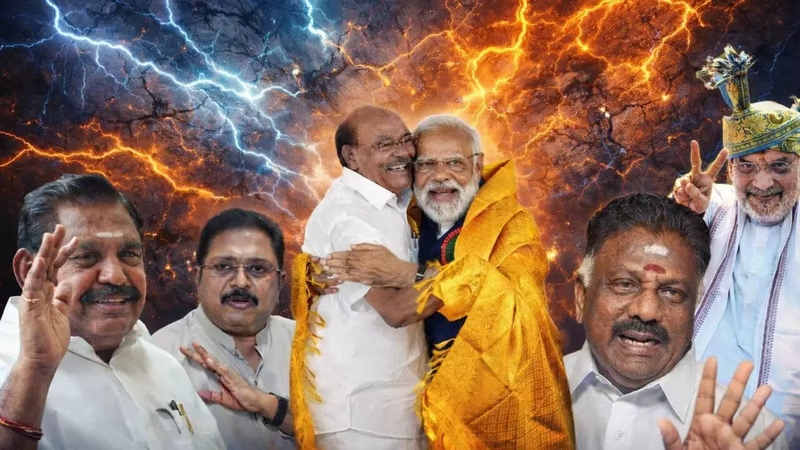
The political ground in Tamil Nadu is shifting—fast. What was once seen as a strategic revival of the NDA in Tamil Nadu is now teetering on the edge of collapse, caught between two competing visions: Kattuppadu (domination by the BJP) and Koottani (a true coalition of equals). And at the center of it all stands Edappadi K. Palaniswami (EPS), the AIADMK general secretary, who has just drawn a bold red line that could make or break the alliance before the 2026 elections even begin.
For a state steeped in Dravidian identity, fiercely protective of its linguistic and cultural autonomy, the idea of ceding ground to a Hindi-heartland party like the BJP has always been contentious. But now, with the BJP pushing for greater control over seat-sharing and campaign messaging, tensions have boiled over. The AIADMK—still reeling from its 2021 electoral defeat—is wary of becoming a junior partner in its own backyard.
Table of Contents
- What Is the Kattuppadu vs Koottani Debate?
- EPS’s Red Line and the Future of NDA in Tamil Nadu
- Why the BJP Struggles in the South
- AIADMK’s Dilemma: Balancing Power and Pride
- Historical Context: Dravidian Politics and National Alliances
- What Happens Next? Scenarios for 2026
- Summary
- Sources
What Is the Kattuppadu vs Koottani Debate?
In Tamil political slang, Kattuppadu means “dictation” or “imposition”—a top-down command with no room for negotiation. Koottani, on the other hand, translates to “alliance” or “partnership,” implying mutual respect and shared decision-making.
The current rift within the NDA in Tamil Nadu hinges entirely on this distinction. BJP leaders, emboldened by national dominance, are reportedly insisting on final say over candidate selection, manifesto content, and even public rallies—classic Kattuppadu. But EPS and senior AIADMK figures are demanding Koottani: equal status, regional autonomy in messaging, and protection of Dravidian identity.
As one AIADMK insider put it: “We’re not a franchise. We’re a legacy party with 50 years of grassroots connect. You can’t treat us like a branch office of Delhi.”
EPS’s Red Line and the Future of NDA in Tamil Nadu
Edappadi Palaniswami has made his stance crystal clear: any move toward Kattuppadu will result in the AIADMK walking away from the alliance. This isn’t just posturing—it’s a survival tactic.
After the death of J. Jayalalithaa and the messy O. Panneerselvam (OPS) split, EPS rebuilt the AIADMK around discipline and unity. But that unity is fragile. Grassroots cadres, especially in rural Tamil Nadu, view the BJP with deep suspicion. Pushing too hard could trigger mass defections or voter apathy.
Moreover, the DMK-led ruling front is already capitalizing on this tension, painting the AIADMK as “Delhi’s puppet”—a dangerous label in a state that prides itself on anti-Hindi, anti-centralization sentiment.
Why the BJP Struggles in the South
Despite massive national success, the BJP’s footprint in Tamil Nadu remains minimal. In the 2024 Lok Sabha elections, it won **zero seats** in the state—even as part of the NDA. Its vote share hovers around 5–7%, mostly concentrated in urban pockets and among migrant worker communities.
Several structural barriers explain this:
- Cultural Mismatch: The BJP’s Hindutva narrative often clashes with Tamil Nadu’s rationalist, secular Dravidian ethos.
- Linguistic Identity: Aggressive promotion of Hindi is seen as cultural imperialism.
- Weak Local Leadership: The state unit lacks charismatic, mass-connect leaders.
- Overreliance on Alliance: Without AIADMK, the BJP has no credible path to power.
Ironically, the more the BJP pushes for control, the weaker its position becomes—a classic paradox of southern politics.
AIADMK’s Dilemma: Balancing Power and Pride
The AIADMK is trapped between two unappealing options:
- Stay with the NDA: Gain access to BJP’s national machinery and funds but risk alienating core voters and losing identity.
- Go Solo or Pivot: Regain Dravidian credibility but face a near-impossible battle against the well-funded, united DMK front.
EPS knows that without an alliance, the AIADMK could be reduced to a third force—like the Congress. But with an unequal alliance, it risks becoming irrelevant anyway. It’s a lose-lose scenario wrapped in political quicksand.
For deeper insights into regional party strategies, see our analysis on [INTERNAL_LINK:southern-alliances-in-indian-politics].
Historical Context: Dravidian Politics and National Alliances
Tamil Nadu has a long history of tactical alliances—but always on its own terms. Both the DMK and AIADMK have partnered with national parties (Congress, BJP) when convenient, but they’ve never allowed those partners to dictate state politics.
When the AIADMK first allied with the BJP in 1998, it was under Jayalalithaa’s iron rule—and she famously kept the BJP at arm’s length, refusing to fly its flag at party events. That precedent still looms large today.
According to the Election Commission of India, regional autonomy has consistently trumped national loyalty in Tamil Nadu’s voting patterns since the 1960s.
What Happens Next? Scenarios for 2026
Three outcomes seem plausible:
- Scenario 1 – Fractured NDA: AIADMK stays but negotiates strict Koottani terms. BJP gets limited influence, but the alliance survives.
- Scenario 2 – Clean Break: Talks collapse. AIADMK goes solo or explores a grand opposition unity (including Congress, Left, and smaller Dravidian groups).
- Scenario 3 – BJP Backs Down: The central leadership reins in state BJP leaders, accepts AIADMK’s conditions, and prioritizes long-term presence over short-term control.
Right now, Scenario 1 seems most likely—but only if both sides show restraint.
Summary
The future of the NDA in Tamil Nadu hangs in the balance as the clash between Kattuppadu and Koottani reaches a boiling point. EPS’s red line is not just about power—it’s about preserving the soul of Dravidian politics in an era of centralized nationalism. If the BJP insists on domination, it may win the argument but lose Tamil Nadu forever. But if it embraces true partnership, there’s still a narrow path forward. One thing is certain: in Tamil Nadu, no alliance lasts unless it respects the soil it stands on.
Sources
- Times of India, “Will NDA’s house of cards hold in Tamil Nadu?”: https://timesofindia.indiatimes.com/india/will-ndas-house-of-cards-hold-in-tamil-nadu-balancing-between-koottani-and-kattuppadu-power-and-alliance/articleshow/126483423.cms
- Election Commission of India – Historical Data: https://eci.gov.in
- Centre for Policy Research, “Federalism and Regional Parties in India”: https://www.cprindia.org