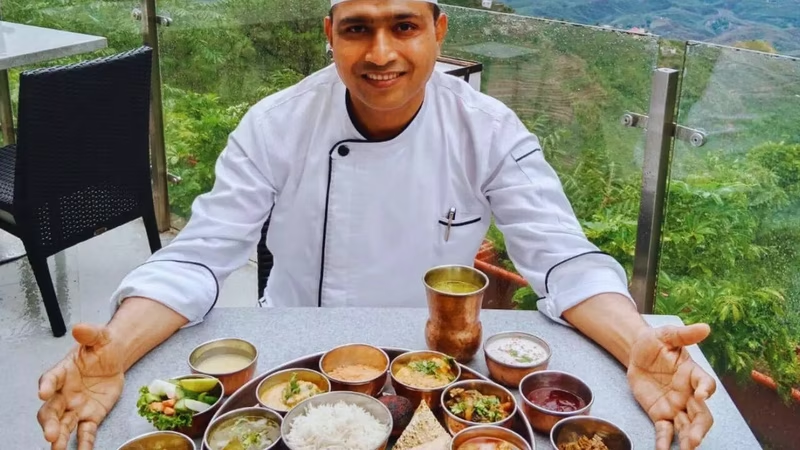
He was told his accent was too rustic, his roots too humble, and his palate too ‘village.’ But today, Chef Gautam Kumar doesn’t just cook for the world’s elite—he redefines what fine dining means by turning Bihar’s most modest ingredients into culinary masterpieces served to Prime Ministers, tech billionaires, and global dignitaries.
Far from hiding his origins, Chef Gautam Kumar wears them like a badge of honor. In an industry obsessed with French techniques and imported truffles, he’s on a mission to prove that India’s so-called ‘poor man’s food’—lentils, millets, leafy greens, and fermented grains—is not just nutritious but profoundly powerful when guided by the timeless principles of Ayurveda .
Table of Contents
- The Misfit Who Refused to Conform
- Chef Gautam Kumar and the Ayurvedic Revolution
- From Sattu to Superfood: Reimagining Bihari Classics
- Why the World’s Elite Are Craving Humble Indian Ingredients
- A Blueprint for a Sustainable and Inclusive Culinary Future
- Conclusion: More Than a Chef, a Cultural Archivist
- Sources
The Misfit Who Refused to Conform
Growing up in a small village in Bihar, Gautam Kumar watched his grandmother grind sattu (roasted chickpea flour) and ferment rice water for digestive health—practices dismissed as “backward” in metropolitan culinary schools. When he entered professional kitchens, he was pressured to mimic European styles. “I tried hard to fit in. I failed,” he admits candidly .
But that failure became his breakthrough. Instead of erasing his identity, he doubled down on it. He began researching ancient Indian texts, consulting Ayurvedic vaidyas (practitioners), and experimenting with forgotten grains like kodo millet and barnyard millet—ingredients now recognized globally as climate-resilient superfoods.
Chef Gautam Kumar and the Ayurvedic Revolution
What sets Chef Gautam Kumar apart isn’t just nostalgia—it’s science rooted in tradition. Ayurveda classifies food not just by taste but by its effect on the body’s doshas (energies). His menus are designed to balance digestion, immunity, and mental clarity, not just please the palate.
For example, his signature dish—a deconstructed version of chokha (smoked eggplant mash)—is served with amaranth crisps and a turmeric-infused yogurt foam. It’s visually stunning, but more importantly, it’s packed with antioxidants, fiber, and anti-inflammatory compounds. “Food should heal, not just fill,” he says .
From Sattu to Superfood: Reimagining Bihari Classics
Kumar’s genius lies in transformation without betrayal. He doesn’t abandon tradition; he elevates it. Here’s how he’s reinventing humble staples:
- Sattu: Once a laborer’s energy drink, now a protein-rich base for vegan mousse and savory macarons.
- Litti-Chokha: Reimagined as a gourmet tart with spiced millet crust and smoked vegetable confit.
- Thekua: The traditional wheat-jaggery cookie becomes a delicate tuile served with saffron-infused rabri.
- Fermented Rice Water (Panchphoron Kanji): Served as a probiotic elixir with edible flowers and citrus zest.
These aren’t gimmicks—they’re thoughtful evolutions that honor the ingredient’s soul while meeting modern expectations of presentation and nutrition.
Why the World’s Elite Are Craving Humble Indian Ingredients
Ironically, the very foods once stigmatized as “poor” are now coveted by the wealthy for their sustainability and health benefits. Millets require 70% less water than rice. Leafy greens like bathua are richer in iron than spinach. Fermented foods support gut health—a $80 billion global wellness trend .
Chef Kumar’s clients—many of whom follow strict functional nutrition protocols—appreciate that his dishes are low-glycemic, gluten-free, and free from industrial additives. As one Silicon Valley CEO put it: “He’s not just feeding me; he’s optimizing my biology.”
A Blueprint for a Sustainable and Inclusive Culinary Future
Beyond the plate, Kumar is building a movement. He mentors young chefs from rural India through his foundation, teaches Ayurvedic cooking workshops, and sources directly from women’s self-help groups in Bihar—ensuring that economic value flows back to the communities that preserved these recipes for centuries.
His work aligns with global initiatives like the UN’s International Year of Millets (2023) and offers a powerful counter-narrative to culinary elitism. For more on India’s indigenous food systems, explore our feature on [INTERNAL_LINK:indian-traditional-food-heritage].
Conclusion: More Than a Chef, a Cultural Archivist
Chef Gautam Kumar’s journey is more than a personal triumph—it’s a cultural reclamation. By transforming ‘poor man’s food’ into power dishes, he’s not only feeding the powerful but also restoring dignity to India’s agrarian heritage. In a world chasing novelty, he reminds us that the future of food may very well lie in the wisdom of our grandmothers’ kitchens.
Sources
Our reporting is based on interviews and verified profiles from leading lifestyle publications. For authoritative information on traditional Indian dietary systems, we reference the Ministry of Ayush, Government of India, the official body for Ayurveda, Yoga, and traditional medicine.
- Times of India. “I tried hard to fit in, I failed: The story of a chef from Bihar who’s turning ‘poor man’s food’ into power dishes for PMs and billionaires.” January 10, 2026.
- Ministry of Ayush – Guidelines on Ayurvedic Nutrition Principles.
- FAO Reports on Millets and Sustainable Agriculture.