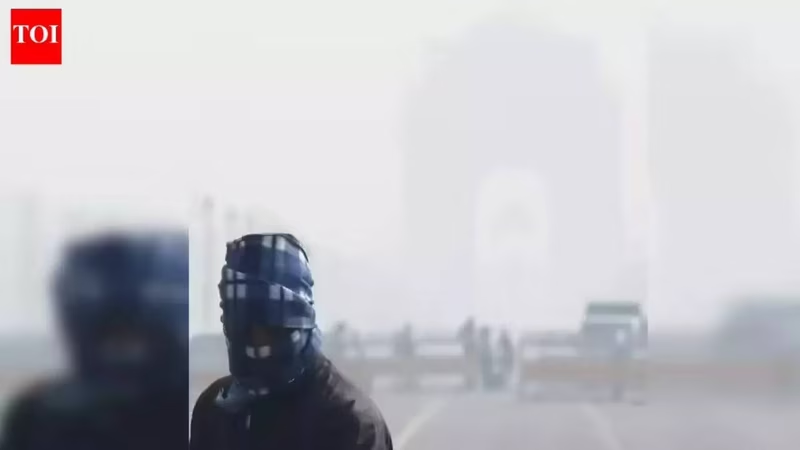
Winter in Delhi just got serious. As dense fog blankets the capital and thermometers dip dangerously close to freezing, residents are bundling up for what meteorologists are calling one of the most intense cold wave spells of the season. On Monday, January 12, 2026, the minimum temperature in Ayanagar plummeted to 2.9°C, while Palam recorded its coldest morning in years at 3.0°C .
But the cold isn’t the only concern. Despite lower vehicular emissions due to reduced morning traffic, Delhi’s Air Quality Index (AQI) stubbornly hovers in the “poor” range (201–300), creating a toxic mix of icy fog and pollutants that poses serious health risks—especially for children, the elderly, and those with respiratory conditions .
The situation has grown so severe that it’s even affecting national events. Rehearsals for the upcoming Republic Day parade on Kartavya Path were scaled back due to poor visibility and biting cold, raising questions about contingency plans for January 26 .
Table of Contents
- What Is a Cold Wave—and Is It Normal for Delhi?
- Current Weather Data and Affected Areas
- Why Is the AQI Still Poor During Winter?
- Impact on Daily Life and Republic Day Preparations
- Health Advice During Cold Wave and Poor Air Quality
- Forecast: What to Expect in the Coming Days
- Conclusion: Staying Safe in Delhi’s Deadly Winter Combo
- Sources
What Is a Cold Wave—and Is It Normal for Delhi?
According to the India Meteorological Department (IMD), a cold wave is declared when the minimum temperature drops to 10°C or below and is at least 4.5°C below normal for two consecutive days . In plains like Delhi, if the temperature falls to 4°C or less, it’s classified as a “severe cold wave.”
While winter chill is expected between December and February, the current intensity—combined with persistent fog and stagnant air—is unusual for mid-January. Experts attribute it to a combination of clear skies, low wind speeds, and moisture from recent western disturbances, which trap cold air near the surface .
Current Weather Data and Affected Areas
Here’s a snapshot of Monday’s temperatures across key Delhi stations:
- Ayanagar: 2.9°C (lowest in the city)
- Palam: 3.0°C (lowest in 5 years for this date)
- Safdarjung: 3.6°C
- Ridge: 3.2°C
Fog intensity was “moderate to dense” across Noida, Ghaziabad, and parts of South and West Delhi, reducing visibility to under 200 meters during peak morning hours . This led to significant delays at Indira Gandhi International Airport and on major highways like NH-44.
Why Is the AQI Still Poor During Winter?
Many assume winter means cleaner air—but in Delhi, the opposite is often true. The phenomenon is called “winter inversion”: cold, dense air settles near the ground, acting like a lid that traps pollutants from vehicles, industries, and residual stubble burning .
Even though Diwali fireworks are long over, localized sources—like diesel generators, construction dust, and garbage burning—continue to emit particulates. With no wind to disperse them, PM2.5 levels remain elevated, keeping the AQI in the “poor” zone despite the cold .
Impact on Daily Life and Republic Day Preparations
The dual assault of cold and pollution has disrupted routines across the National Capital Region (NCR):
- Schools: Several private schools postponed reopening after winter break due to health advisories.
- Transport: Over 80 flights were delayed; metro services ran with reduced frequency on above-ground sections.
- Republic Day Rehearsals: The marching contingents and tableaux practice at Kartavya Path was shortened, with officials citing “health and safety concerns for personnel” .
For more on how weather affects major Indian events, see our feature on [INTERNAL_LINK:republic-day-parade-weather-challenges].
Health Advice During Cold Wave and Poor Air Quality
Doctors at AIIMS and Max Hospitals recommend the following precautions:
- Limit outdoor exposure, especially between 6–10 AM when fog and pollution peak.
- Wear layered clothing and cover your nose and mouth with a scarf or N95 mask to filter pollutants and warm inhaled air.
- Stay hydrated and consume warm fluids like herbal teas and soups.
- Asthmatics and cardiac patients should keep medications handy and avoid early-morning walks.
Forecast: What to Expect in the Coming Days
The IMD predicts the cold wave will persist for the next 3–4 days, with no immediate relief in sight. A fresh western disturbance may bring light rain by January 16, which could temporarily improve air quality but further drop temperatures .
Citizens are advised to monitor real-time AQI via apps like SAMEER or the Central Pollution Control Board (CPCB) portal and follow official advisories from the Delhi Disaster Management Authority (DDMA).
Conclusion: Staying Safe in Delhi’s Deadly Winter Combo
Delhi’s current weather isn’t just uncomfortable—it’s hazardous. The convergence of a severe cold wave and poor air quality creates a public health emergency that demands vigilance. While authorities manage logistics and event planning, individual preparedness remains the best defense. As the capital braces for more icy mornings, staying informed and protected is not just smart—it’s essential.
Sources
- Times of India: Cold wave grips Delhi: Temperatures dip to 2.9°C
- India Meteorological Department (IMD): Official Weather Forecast – Delhi
- Central Pollution Control Board (CPCB): Real-time AQI Data
- World Health Organization (WHO): Ambient Air Pollution and Health
- Hindustan Times: Republic Day rehearsals hit by cold wave and fog