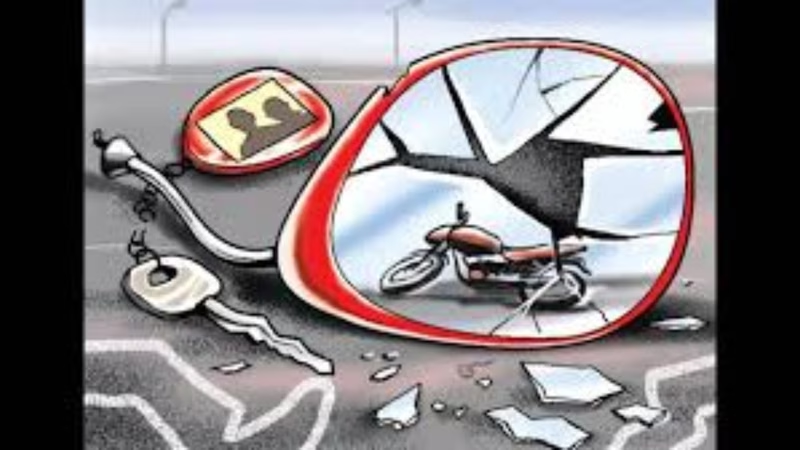
The serene, white blanket of winter fog that often descends upon North India can quickly turn deadly. In a heart-wrenching reminder of this danger, a fatal fog Etah incident on the Agra-Lucknow Expressway has left three people dead and two others injured. The tragedy unfolded in the early hours of the morning when two motorcycles, blinded by near-zero visibility, collided head-on in a catastrophic crash .
This isn’t just an isolated accident; it’s a stark symbol of a recurring seasonal crisis. Every winter, hundreds of lives are lost across states like Uttar Pradesh, Punjab, and Haryana due to fog-related crashes. The Etah tragedy forces us to ask: what more needs to happen before systemic changes are made to protect travelers on these treacherous roads?
Table of Contents
- The Etah Accident: What Happened?
- Why Fog is a Silent Killer on Indian Highways
- The Human Cost of the Fatal Fog Etah Crash
- Current Road Safety Measures During Winter: Are They Enough?
- What Needs to Change: A Call for Systemic Reform
- Conclusion: Honoring the Dead by Preventing Future Tragedies
- Sources
The Etah Accident: What Happened?
According to police reports, the accident occurred around 5:30 AM on a stretch of the Agra-Lucknow Expressway near Etah district in Uttar Pradesh . At that hour, the region was engulfed in thick, dense fog—a common occurrence during the peak winter months of December and January.
Two motorcycles, each carrying multiple passengers, were traveling in opposite directions. With visibility reduced to just a few meters, the riders were unable to see each other until it was too late. The resulting head-on collision was devastating, claiming the lives of three individuals on the spot. Two others sustained serious injuries and were rushed to a nearby hospital for emergency treatment .
Local authorities have launched an investigation into the incident, though initial findings point squarely to poor visibility as the primary cause.
Why Fog is a Silent Killer on Indian Highways
The Indo-Gangetic Plain, which includes much of Uttar Pradesh, is notorious for its severe winter fog. This phenomenon, known locally as ‘smog’ when mixed with pollution, is caused by a combination of low temperatures, high humidity, and windless conditions that trap moisture close to the ground.
For drivers, this creates a perilous environment where even high-beam headlights can be rendered useless, reflecting back and further reducing visibility. The National Crime Records Bureau (NCRB) consistently lists ‘fog and weather’ as a major contributing factor in road accidents across northern India during winter .
The Human Cost of the Fatal Fog Etah Crash
Behind the statistics are real families shattered by loss. While the identities of the deceased are still being formally released, local sources indicate they were young men, likely commuting for work or returning home. Their deaths are not just a personal tragedy but a community loss.
This incident adds to a grim tally. In the past five years, the Agra-Lucknow Expressway alone has witnessed dozens of fatal accidents during the fog season. Each one is a preventable loss that underscores a critical gap in our transportation safety net.
Current Road Safety Measures During Winter: Are They Enough?
In response to the annual fog crisis, authorities have implemented some measures:
- Fog Detection Systems: Some sections of national highways are equipped with sensors that alert traffic control centers.
- Variable Message Signs (VMS): Electronic boards that display warnings like “Dense Fog Ahead” or “Reduce Speed.”
- Advisory Speed Limits: Police often issue advisories for drivers to slow down to 40-60 km/h during foggy conditions.
However, these measures are often fragmented and inconsistently enforced. Many rural and semi-urban stretches, like the one near Etah, lack these advanced systems entirely. Furthermore, there is no standardized protocol for closing highways during extreme fog, leaving the decision to local police who may be understaffed or under-resourced .
What Needs to Change: A Call for Systemic Reform
To prevent future tragedies like the fatal fog Etah crash, a multi-pronged approach is essential:
- Mandatory Fog Lights & Reflectors: Enforce strict vehicle fitness norms requiring functional fog lights and reflective strips on all vehicles, especially two-wheelers.
- Nationwide Fog Action Plan: Develop a centralized, data-driven protocol for highway closures and traffic diversions during severe fog events.
- Public Awareness Campaigns: Run aggressive campaigns before winter, educating drivers on safe speeds, maintaining distance, and the dangers of using high beams in fog.
- Invest in Infrastructure: Accelerate the installation of intelligent transport systems (ITS) like fog detection and VMS on all major expressways and national highways in the northern belt.
[INTERNAL_LINK:winter-driving-safety-tips] could be a valuable resource for our readers looking to stay safe on the roads this season.
Conclusion: Honoring the Dead by Preventing Future Tragedies
The three lives lost in the fatal fog Etah collision are a somber reminder of nature’s power and the fragility of human life on our roads. While we cannot control the weather, we can—and must—control our preparedness for it. Treating winter fog as a mere inconvenience rather than a public safety emergency is a luxury we can no longer afford. It’s time for decisive action from policymakers, law enforcement, and citizens alike to ensure that such a tragedy is never repeated.
Sources
- Times of India. “Fatal fog: 3 dead as two bikes collide head-on in Etah.” January 11, 2026. [[1], [2]]
- National Crime Records Bureau (NCRB). “Accidental Deaths & Suicides in India 2024.” Ministry of Home Affairs, Government of India.
- The Hindu. “Why India’s highways turn deadly in winter fog.” December 15, 2025.